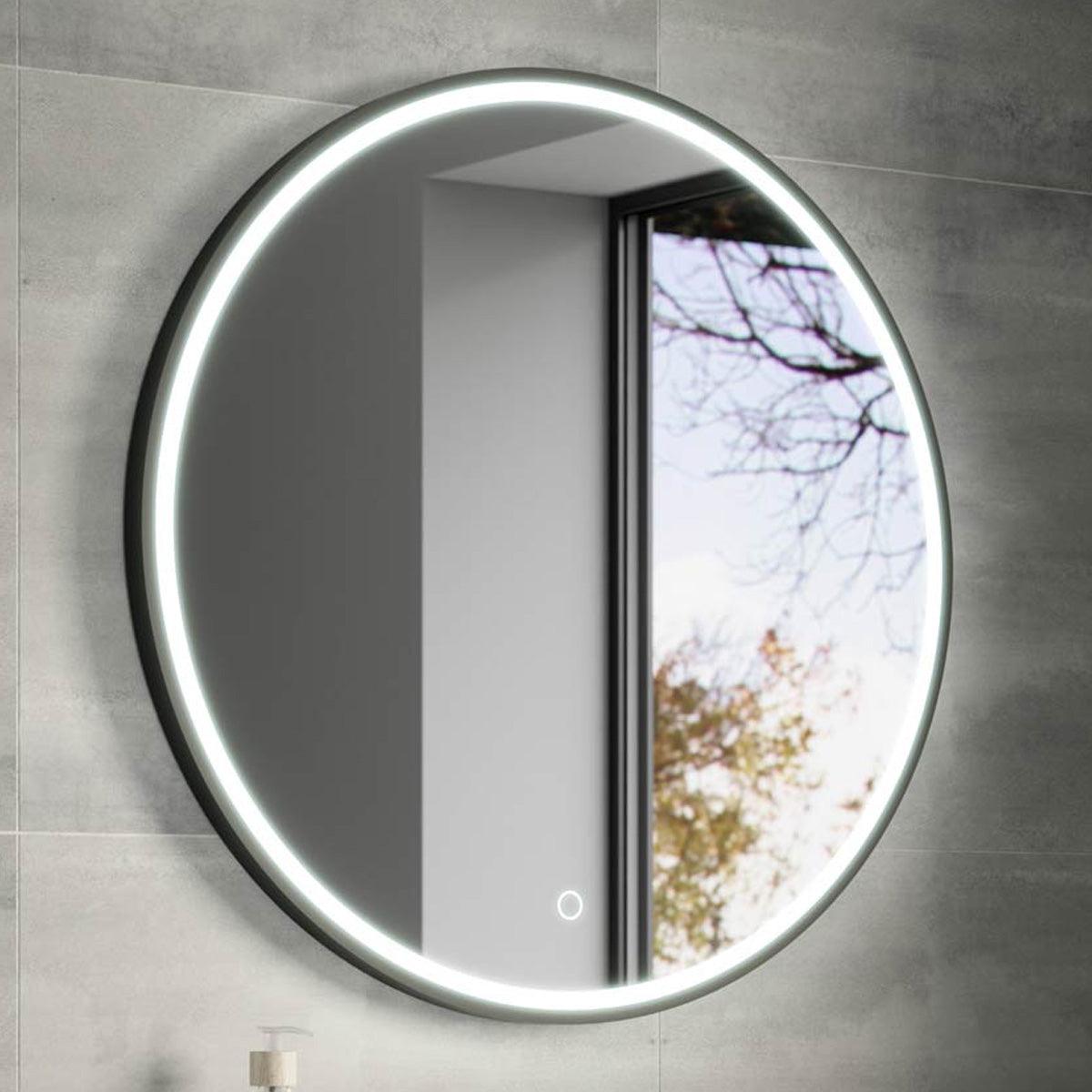
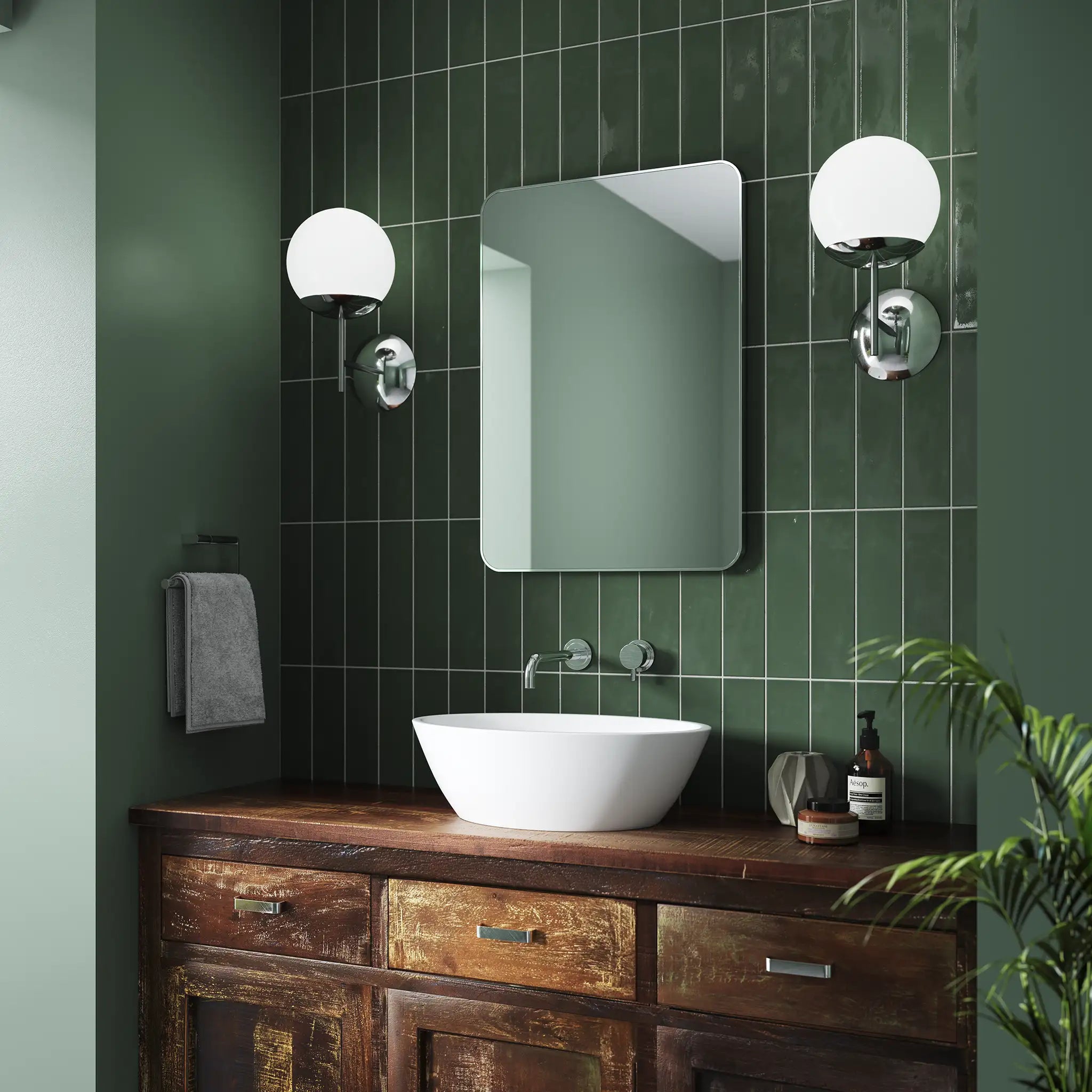
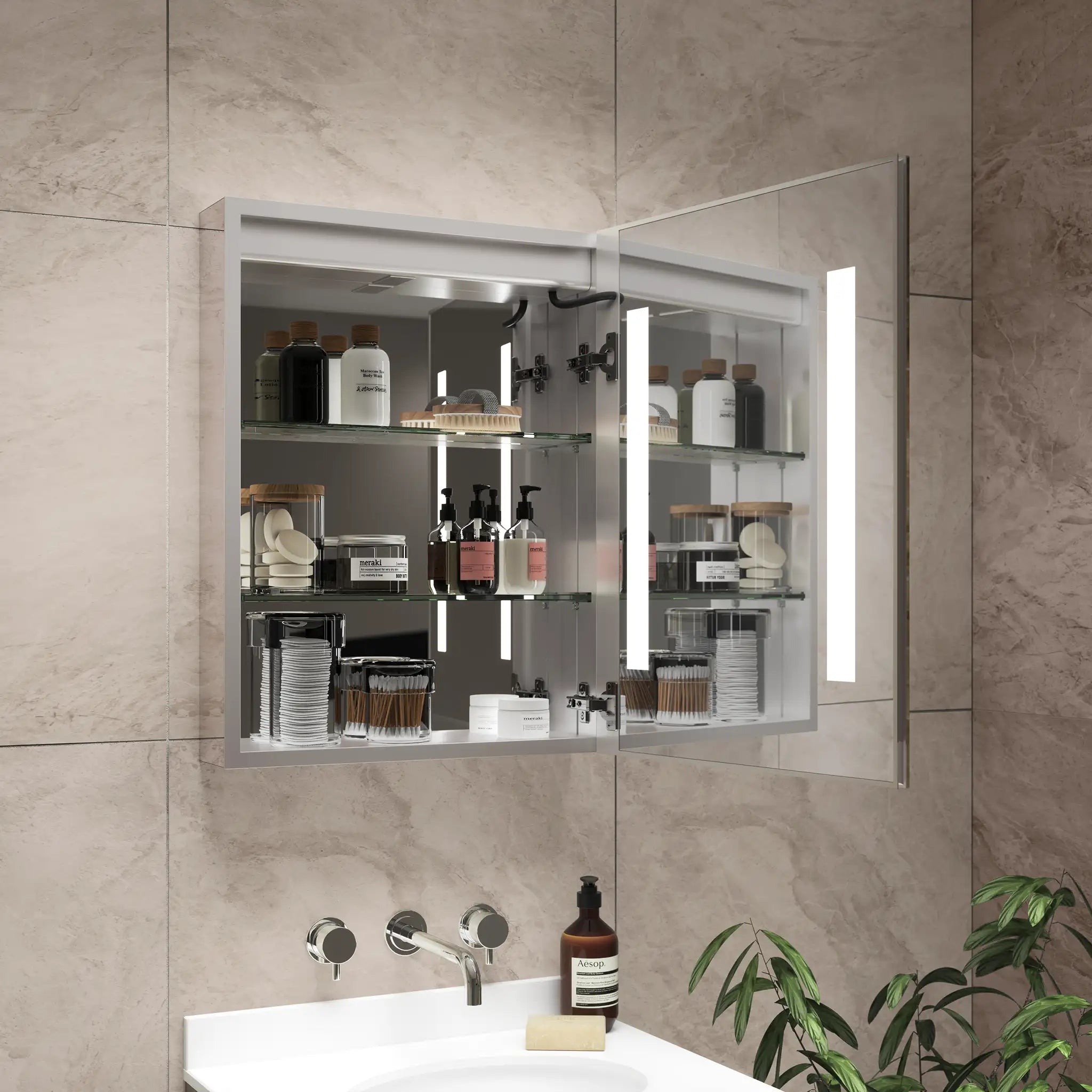
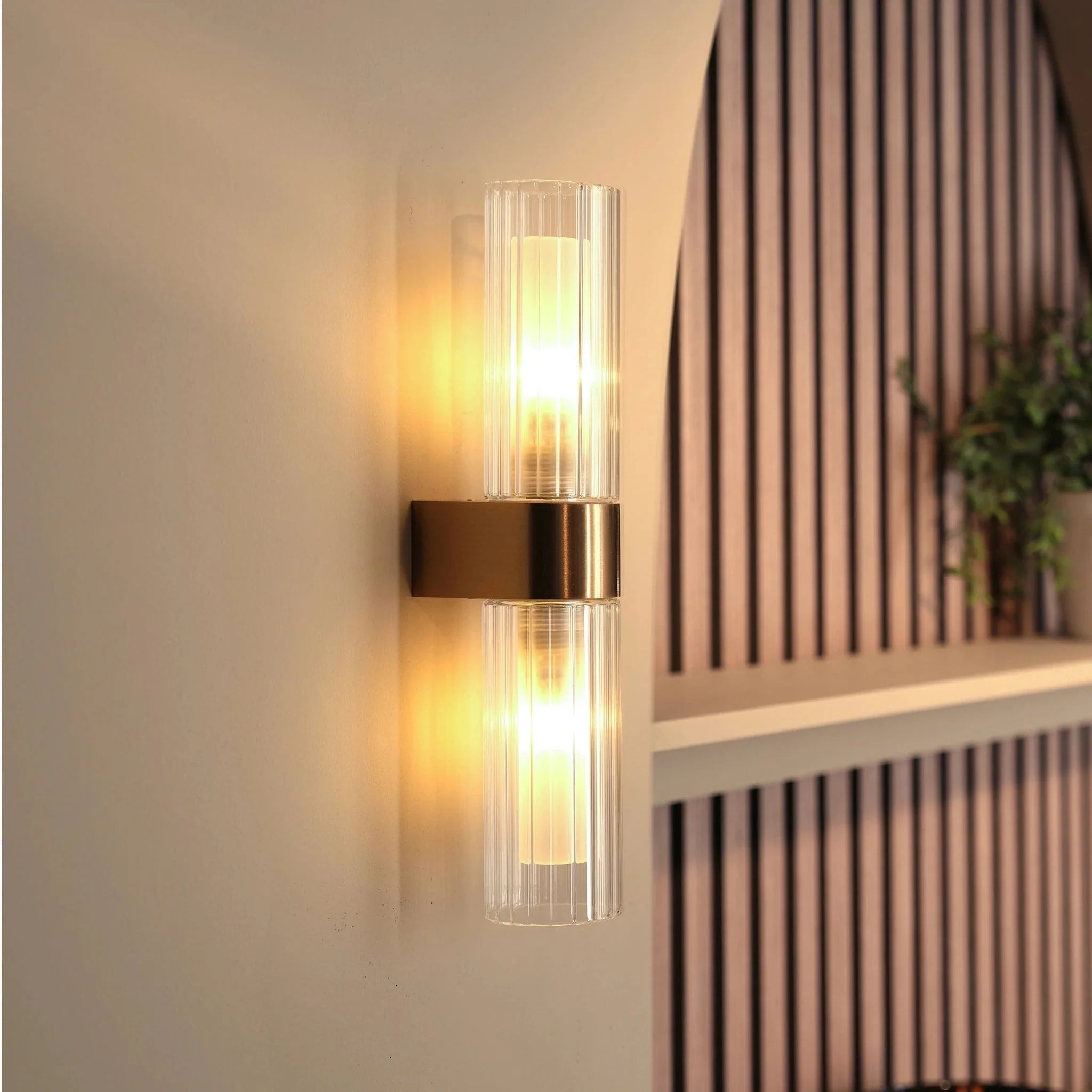
Quick answer: Warm white (2,700K to 3,000K) gives a soft, relaxing light. Natural white (about 4,000K) is the best all-rounder for a bathroom used for everything, including make-up. Cool white (5,000K to 6,500K) is crisp and bright, best for shaving and precise grooming. If people in your home want different things, choose a colour-adjustable mirror and switch between them.
- Shop colour-adjustable LED mirrors
- Shop CCT downlights you can set after fitting
At a glance
- Warm white, 2,700K to 3,000K: golden and cosy. Best for relaxing baths and evening light.
- Natural white, about 4,000K: clean and close to daylight. The safest single choice.
- Cool white, 5,000K to 6,500K: crisp with a slight blue tint. Best for shaving and detail.
- Make-up: natural white shows colours most like they'll look outside.
- Mixed use: a colour-adjustable mirror gives you all three.
What is colour temperature?
Colour temperature describes the colour of white light, measured in kelvin (K). The lower the number, the warmer and more golden the light. The higher the number, the cooler and crisper it looks. Candlelight is around 1,800K, and midday daylight is around 5,500K to 6,500K. Bathroom mirrors and lights usually sit between about 2,700K and 6,500K.

What's the difference between warm, natural and cool white?
Warm white (2,700K to 3,000K) has a slight golden tint and a soft, calming feel, which is why it's used in bedrooms and lounges. In a bathroom it suits evening baths and calm colour schemes. It flatters skin, but its yellow cast makes it harder to judge make-up colour.
Natural white (about 4,000K) is close to daylight from a north-facing window: clean and bright without being harsh. It's bright enough for grooming and make-up while still feeling comfortable.
Cool white (5,000K to 6,500K) is bright with a slight blue tint and the closest to midday daylight. It's ideal for shaving and precise work, but in a family bathroom it can feel clinical.
Which colour temperature is best for a bathroom?
For most bathrooms, natural white is the best single choice because it works for getting ready in the morning and still feels comfortable in the evening. Choose warm white if your bathroom is mainly for relaxing, and cool white for an en-suite used mostly for getting ready. If you can't decide, a colour-adjustable mirror lets you change it whenever you like.
- A bathroom mainly for relaxing: warm white.
- A bathroom used for make-up, shaving and everyday routines: natural white.
- A dedicated dressing or make-up space: natural or cool white.
- A bathroom shared by people who want different things: colour-adjustable light.
What's the best colour temperature for applying make-up?
Natural white, around 4,000K, is best for make-up because colours look closest to how they'll appear in daylight. Warm light can make foundation look darker or more yellow than it is, and very cool light can wash skin out. Light from the front or sides of the mirror matters too, because it avoids shadows under the eyes and chin. Our guide to mirror lighting for make-up and shaving covers this in detail.
What's the best colour temperature for shaving?
Natural to cool white, from about 4,000K upwards, is best for shaving because the crisp light shows fine hairs and the jawline clearly. A front-lit mirror, which shines light onto your face rather than the wall, helps most. See front-lit bathroom mirrors.
Which is best for a small or windowless bathroom?
Natural or cool white makes a small or windowless bathroom feel brighter and more open, because it's closer to daylight. Warm white can make a small room feel cosy but also smaller and dimmer. In a room without a window, the mirror is often the main light for your face, so a colour-adjustable mirror is a good choice: bright natural light in the morning, softer warm light at night. Read how to add light to a bathroom without a window.
Should all the lights in my bathroom be the same colour temperature?
Yes, as far as you can. Mixing warm ceiling lights with a cool mirror makes both look odd and can give your reflection a patchy colour. Keep your mirror, ceiling lights and wall lights at the same kelvin figure, or choose products you can adjust so they match. Our CCT downlights let you choose the colour after fitting.
Is colour-adjustable lighting worth it?
It's worth it if more than one person uses the bathroom or you want different light at different times of day. Many of our illuminated mirrors let you adjust brightness and colour temperature: some switch between set options of cool, natural and warm, and others let you move along the kelvin scale to the shade you want. Browse our colour-changing LED mirrors.
Does colour temperature change how much a light costs to run?
No. Running cost depends on a light's power use in watts, not its colour. A warm white and a cool white LED of the same wattage cost the same to run. Brightness is shown in lumens; see what are lumens?
How do I find the colour temperature on a product page?
Look for "colour temperature" or "CCT" (correlated colour temperature) in the product details. It's shown in kelvin, such as 3,000K, or as a range if the light is adjustable. "Warm white" and "cool white" can mean slightly different things between brands, so the kelvin number is the most reliable guide.


What guarantee do I get?
Every LED mirror and cabinet comes with 12 months' cover as standard, extended free to 10 years when you register within 30 days (iron and PVC models excluded). Our lighting is covered for 5 years when registered. See our guarantee page.
Shop the range: Colour-changing mirrors · LED bathroom mirrors · Ceiling lights · CCT downlights
More guides: Bathroom lights buyer's guide · How to choose bathroom ceiling lights · Mirror lighting for make-up and shaving