



A bathroom mirror does two jobs: it reflects, and it defines. The shape you choose will influence how the room feels, how your eye moves around the space, and whether the overall look holds together as a considered design. The good news is that there's no single right answer — there's a right answer for your bathroom, and this guide will help you find it.
The Main Shapes Available
The contemporary bathroom mirror market offers far more variety than it did even a decade ago. Round, rectangular, arched, square, and statement shapes all have a legitimate place, and each brings something different to the room.
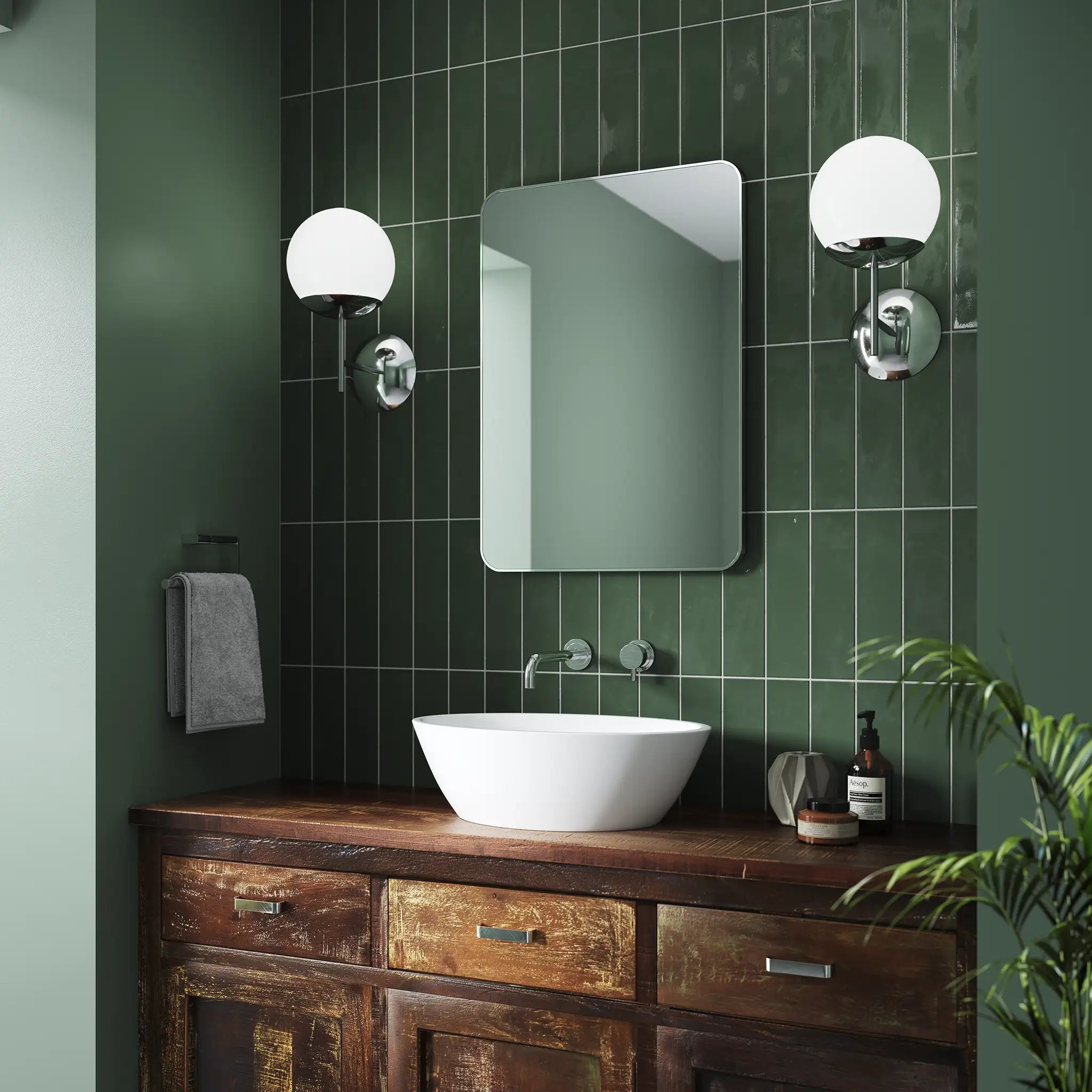
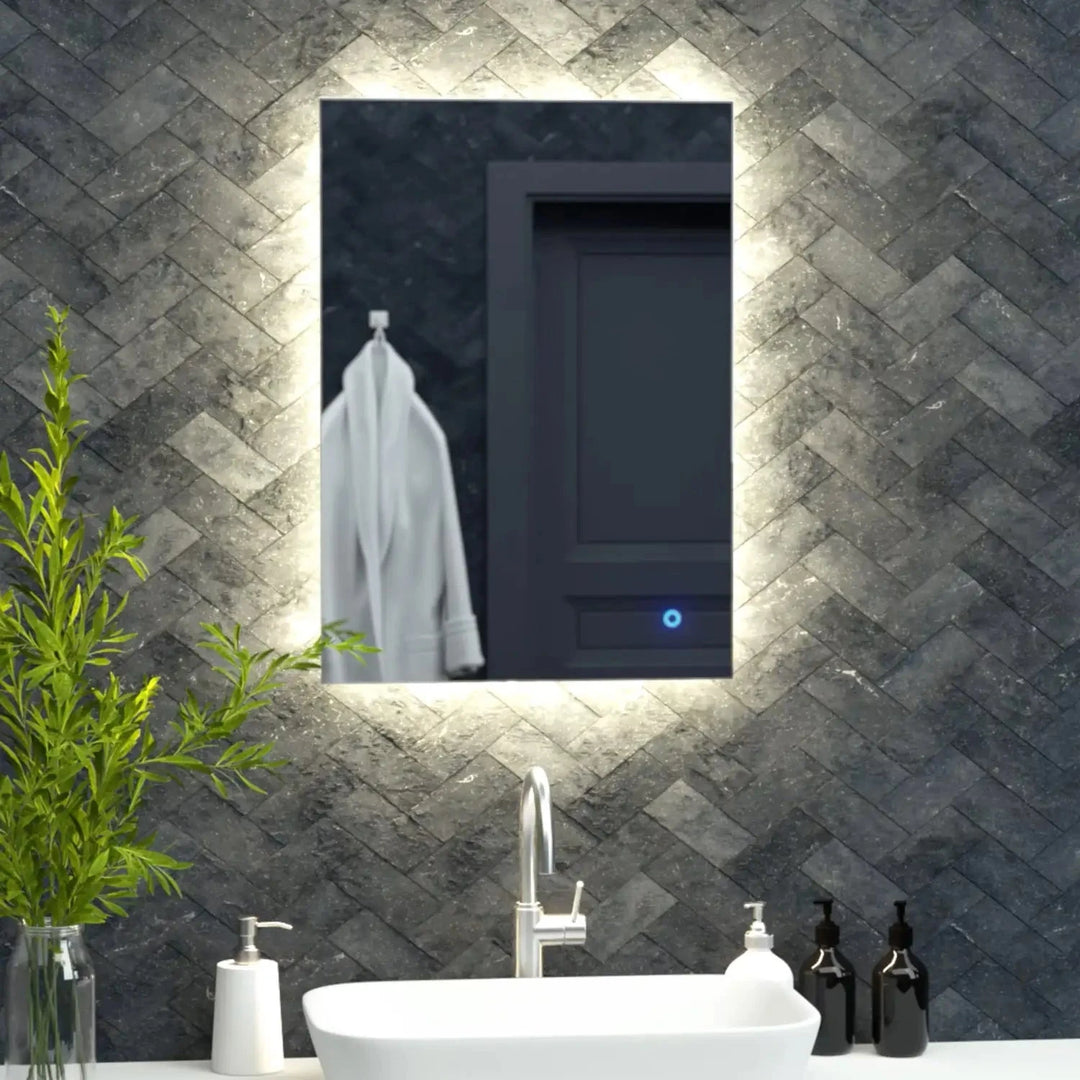
Rectangular portrait mirrors are the most traditional form — taller than they are wide, positioned vertically above a basin. They suit almost any bathroom style, from classic to contemporary, and they're highly practical because they show a full reflection from face to chest. Tall portrait mirrors also make a room feel higher, which is useful in bathrooms with lower ceilings.
Rectangular landscape mirrors run wider than they are tall, and are particularly effective over a double basin or a wide vanity unit. They create a sense of generous horizontal space and work well in longer, narrower bathrooms where you want the eye to travel sideways rather than up. A wide landscape mirror above a pair of basins can be one of the most cohesive and satisfying design choices in a shared bathroom.
Square mirrors occupy an interesting middle ground: structured like a rectangle, but more considered in proportion. They tend to work well in symmetrical settings — a square mirror over a square basin in a modernist bathroom, for example — and in rooms where the design language is deliberately geometric.


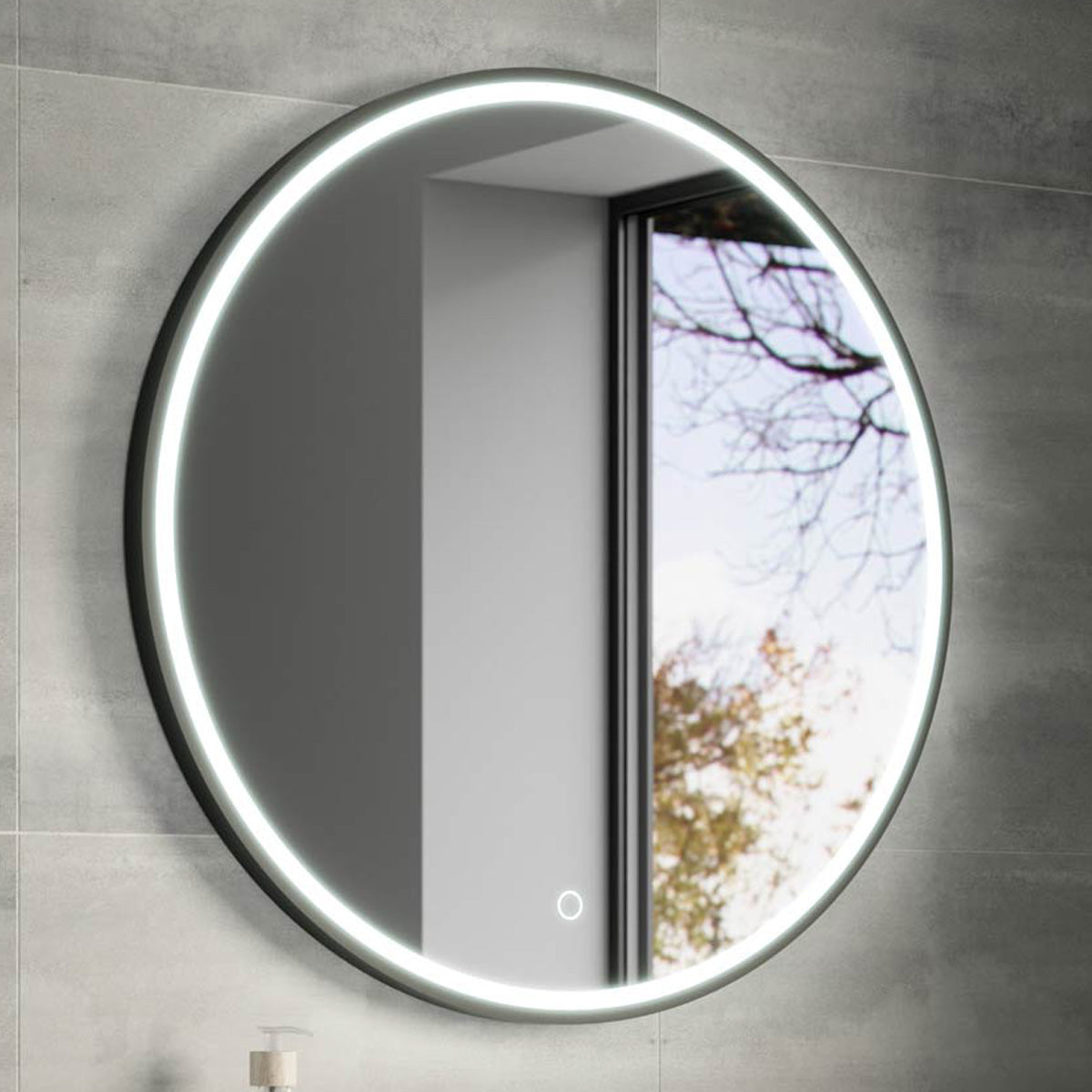
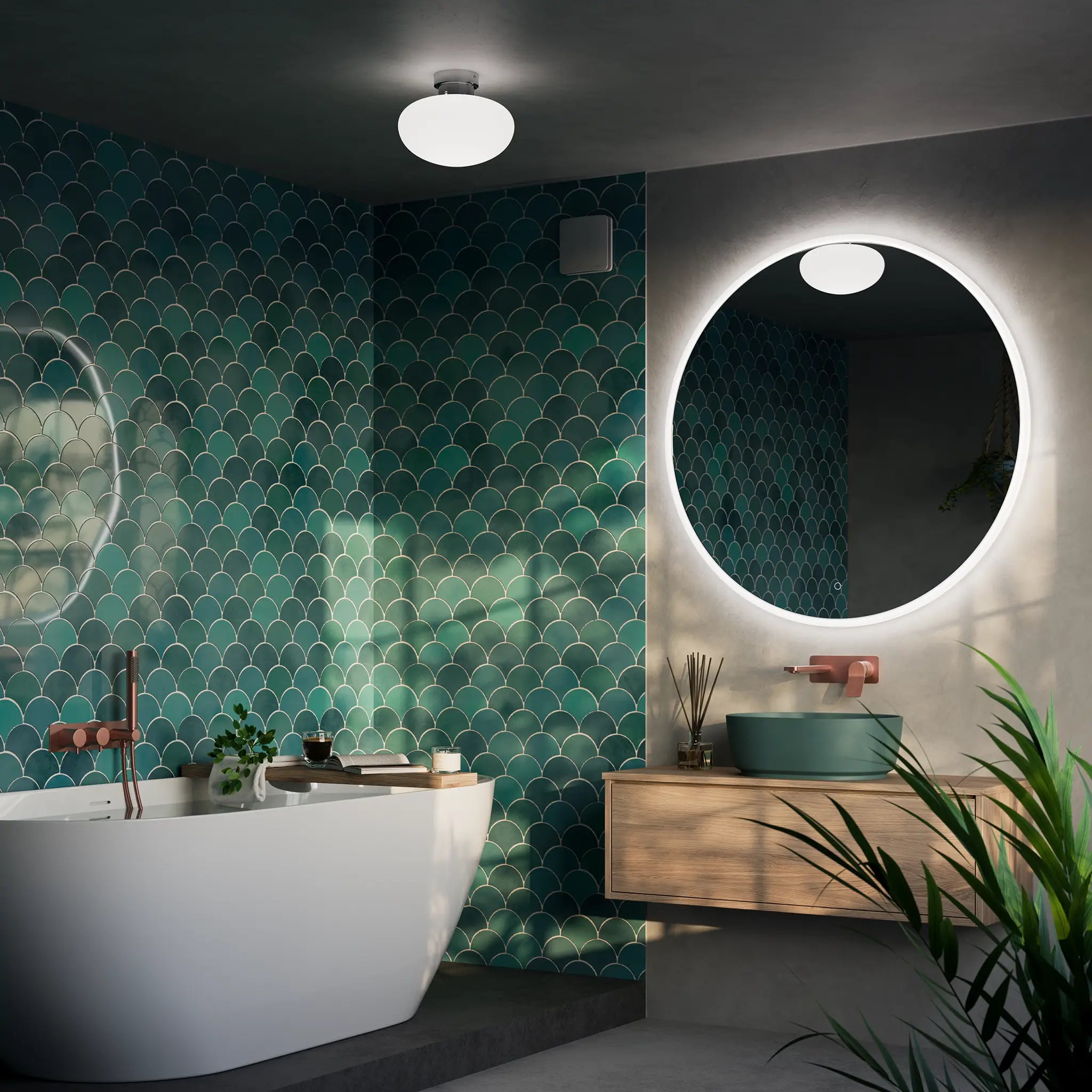
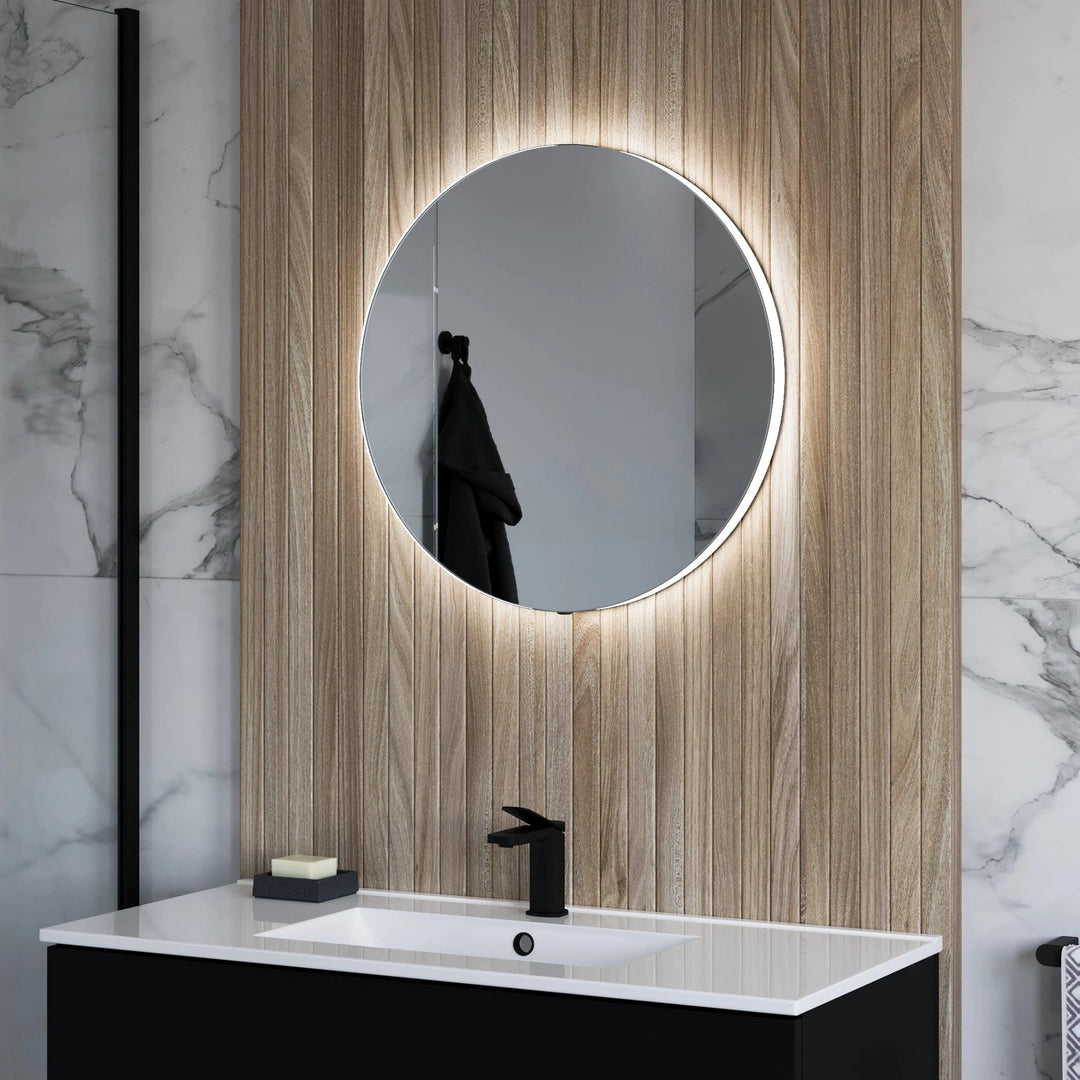
Round mirrors have moved from a trend to a standard option in recent years, and for good reason. A circle is inherently soft, and in a bathroom that already has strong horizontal lines — the basin, the bath edge, the tiles, the shelving — a round mirror introduces a welcome curve that softens the room. Round mirrors work particularly well in modern minimal bathrooms, where a rectangle might feel too expected, and in smaller bathrooms where the absence of corners stops the mirror from feeling imposing.


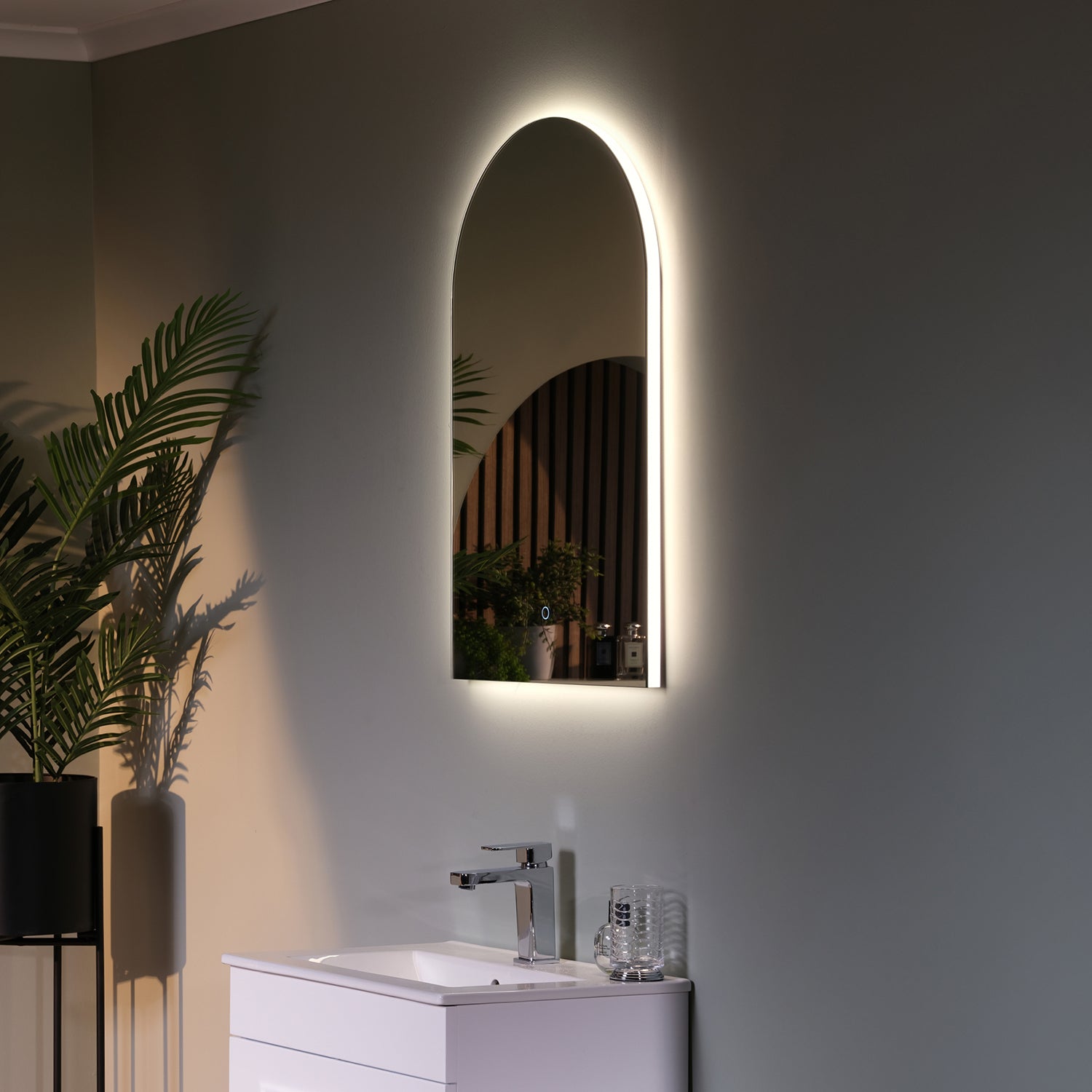
Arched mirrors — with a flat bottom and a semicircular or pointed top — bring a strong architectural character to a bathroom. They suit classical or transitional interiors well, and their vertical emphasis makes them particularly effective in rooms with high ceilings. An arched mirror can function almost as a piece of furniture, giving the basin area the same visual weight as a window or a doorway. They're a bolder choice, but when they work, they really work.
Statement and irregular shapes — ovals, asymmetric forms, and custom shapes — are for bathrooms that treat the mirror as a focal point in its own right. These choices suit maximalist interiors, eclectic spaces, and anyone who wants their bathroom to feel curated rather than simply functional.


How Shape Affects Perceived Space
Shape is one of the most powerful tools in a bathroom where space is limited or proportions are awkward.
A tall portrait mirror in a bathroom with a low ceiling will draw the eye upward and make the room feel taller than it is. The reverse is also true: a wide landscape mirror can make a narrow room feel broader. Round mirrors are particularly effective in compact bathrooms because they have no corners to interrupt the eye — the space feels more open and less enclosed.
In a very small bathroom, a round or arched mirror often looks better in proportion than a large rectangle, which can dominate. In a generous bathroom, a large landscape rectangle — or even a pair of portrait mirrors over a double basin — can fill the space with confidence.
Practical Considerations
The most common practical question is whether a round mirror works above a rectangular basin. The short answer is yes, reliably so — provided the mirror's diameter relates sensibly to the width of the basin beneath it. A round mirror that is roughly 60–80% of the basin width tends to look well-proportioned. Going smaller starts to look unintentional; going wider can work, but requires the rest of the room to have room to breathe around it.
With rectangular mirrors, the standard guidance is to keep the mirror narrower than the vanity unit or basin furniture below it, or the same width, but rarely wider. Matching or slightly under-sizing the mirror to the furniture below anchors the look.
Whatever shape you choose, give the mirror room. A mirror crammed between tiles or fittings with no breathing space around it tends to look crowded regardless of how good the mirror is in isolation.
Matching Shape to Bathroom Style
Classic and traditional bathrooms — panelled baths, pedestal basins, period sanitaryware — tend to suit rectangular portrait mirrors with defined edges, or arched mirrors that echo architectural proportions. Strong symmetry and a calm sense of order tend to feel right in these rooms.
Modern and minimal bathrooms have the most flexibility. Round, rectangular landscape, and square mirrors all sit comfortably in clean contemporary settings. The key is that the shape feels deliberate rather than default.
Transitional bathrooms — which mix contemporary fittings with warm materials and soft details — often do best with a shape that has a little character without being dominant. An arch works beautifully here, as does a round mirror with a slightly larger frame than the minimal norm.
Maximalist and eclectic bathrooms can support bolder statements: an oversized round mirror, a gallery of smaller mirrors, or an irregular form that invites a second look.
What's Trending — and What's Timeless
Round mirrors have had a sustained moment for several years now, and they're not going away. Their versatility and their gentleness make them a reliable choice. Arched mirrors have gathered significant momentum in recent years, driven by the broader trend toward softer architectural forms and natural materials.
Rectangular mirrors — particularly the wide landscape format — remain the workhorse of the market and will never look dated. When in doubt, a well-proportioned rectangle is the choice you'll never regret.
Statement shapes are genuinely exciting, but they tie the room to a particular aesthetic moment. If you're designing a bathroom for the long term, it's worth asking whether you'll still love an unusual shape in ten years, or whether the excitement is partly novelty.
Explore the full range of shapes and sizes at Pebble Grey, and find the mirror that makes your bathroom feel exactly as it should.