Quick answer: To choose the best bathroom lighting, check the zone first, then pick lights for each job. Anything above a bath or shower (Zone 1) should be IP65, and elsewhere in the bathroom IP44 is the usual minimum. Then layer the light: ceiling lights or downlights for general light, and wall lights or an illuminated mirror for clear light on your face.
- Above the bath or shower: IP65 downlights
- General light across the room: bathroom ceiling lights
- Either side of the mirror: bathroom wall lights
- All styles in one place: bathroom lights
Register free within 30 days of purchase to extend the guarantee on our bathroom lights to 5 years. 12 months as standard.
Bathrooms are the one room where water and electricity sit side by side, so bathroom lights have to be chosen a little more carefully than lights for the rest of the house. This guide explains the zones, what the IP numbers mean, which type of light suits each part of the room, and how to get light that's bright enough for shaving and make-up without feeling harsh.
What are bathroom zones?
UK wiring rules split a bathroom into zones based on how close a light is to water:
- Zone 0: inside the bath or shower tray itself.
- Zone 1: directly above the bath or shower, up to 2.25m from the floor.
- Zone 2: the area around the bath or shower, up to 0.6m out from its edge.
- Outside the zones: the rest of the room.
The zone decides the minimum IP rating your light needs. Our guide to UK bathroom zones and IP ratings explains them in more detail, and your electrician will confirm the zones in your room.
What IP rating do bathroom lights need?
The IP rating shows how well a light is sealed against dust (first number) and water (second number). As a guide:
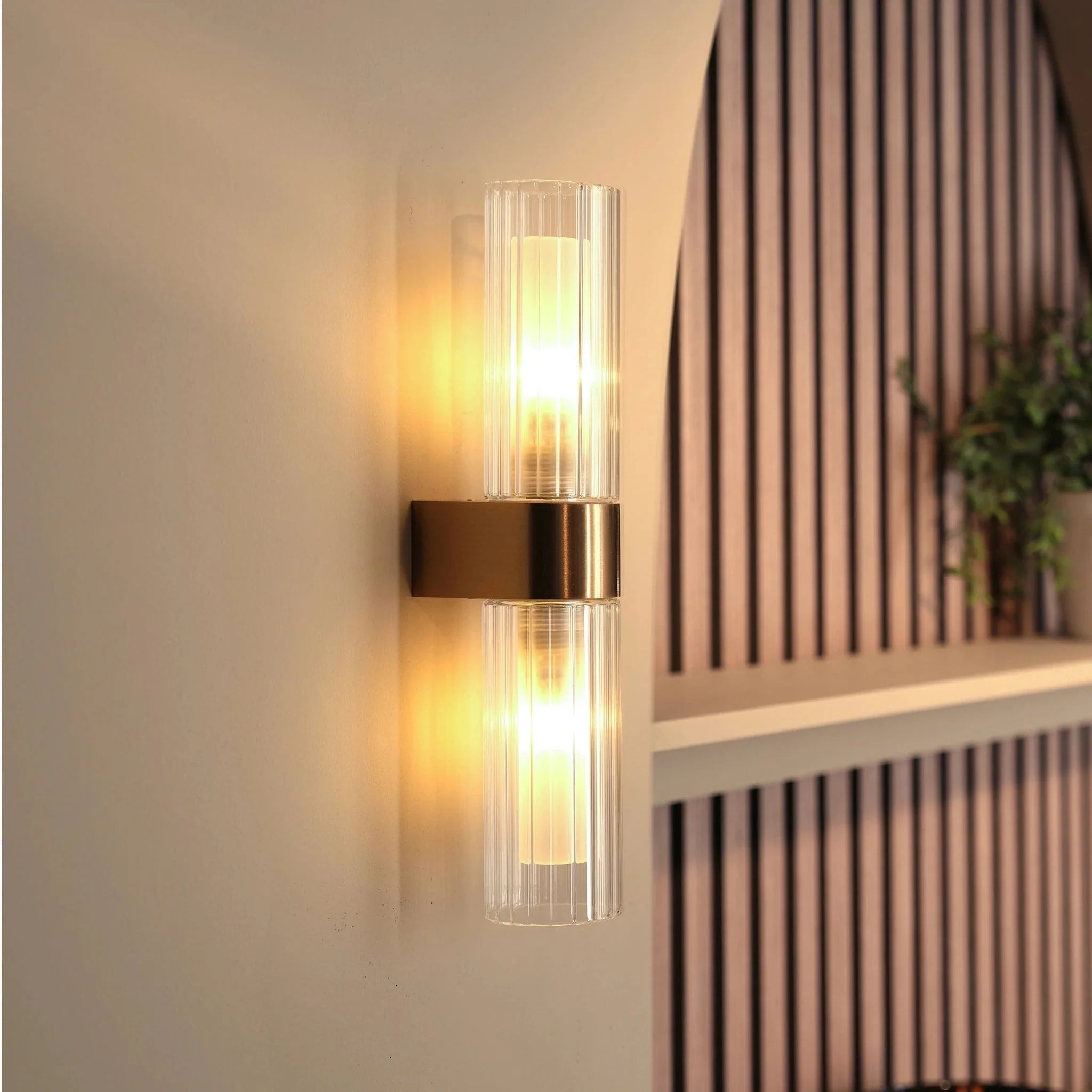
- IP65: protected against water jets. Choose this above a bath or shower in Zone 1. All of our bathroom downlights are IP65 and fire rated, and the Ava up and down wall light is IP65 too.
- IP44: protected against splashes from any direction. This is the usual minimum for Zone 2 and a sensible choice anywhere in a bathroom. Most of our ceiling and wall lights are IP44.
If you're unsure, go one step higher than you think you need. A higher rating is never a problem.
Can you put any light in a bathroom?
No. A bathroom needs lights that are sealed against water and steam. Many lights made for other rooms aren't, so they aren't suitable. Choose a light with an IP rating that suits where it will go: IP65 directly above a bath or shower, and IP44 as the usual minimum elsewhere in the bathroom. This applies to ceiling lights as well as wall lights. Check each light's IP rating on its product page, and have a qualified electrician confirm the zones in your room.
Is LED lighting good for bathrooms?
Yes. LED is the usual choice for bathroom lights today. LEDs give far more light per watt than old bulbs, so they're energy efficient. On our downlights the LED is sealed into the fitting, which helps keep their IP65 rating. Many LED lights are dimmable or colour-adjustable, so one bathroom can have bright light for getting ready and softer light for a bath. If a light takes bulbs, such as G9 or GU10 fittings, choose LED bulbs.
Which type of bathroom light should I choose?
Most bathrooms look and work best with two or three types of light working together:
- Ceiling lights: one or two flush or semi-flush lights give even general light. Flush lights suit low ceilings; semi-flush suit taller rooms.
- Downlights: recessed into the ceiling, so they suit low ceilings and look clean. Use them in a grid for even light, or over the bath and shower where you need IP65.
- Spotlights: on a bar or plate, so you can point light where you want it, such as over the basin or into a shower.
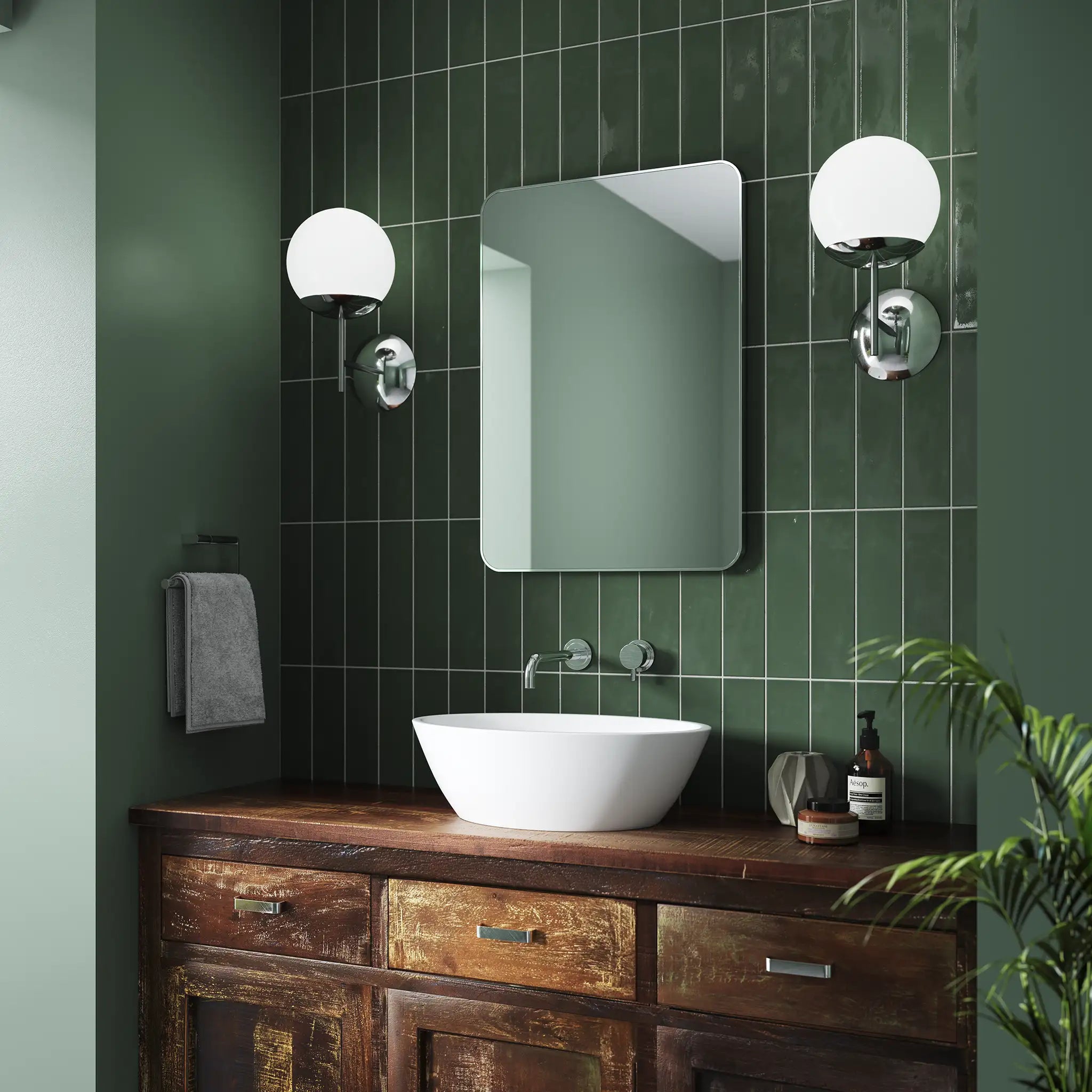
- Wall lights: either side of the mirror they light your face evenly, with fewer shadows than a light overhead. Our guide to bathroom wall lights covers where to place them.
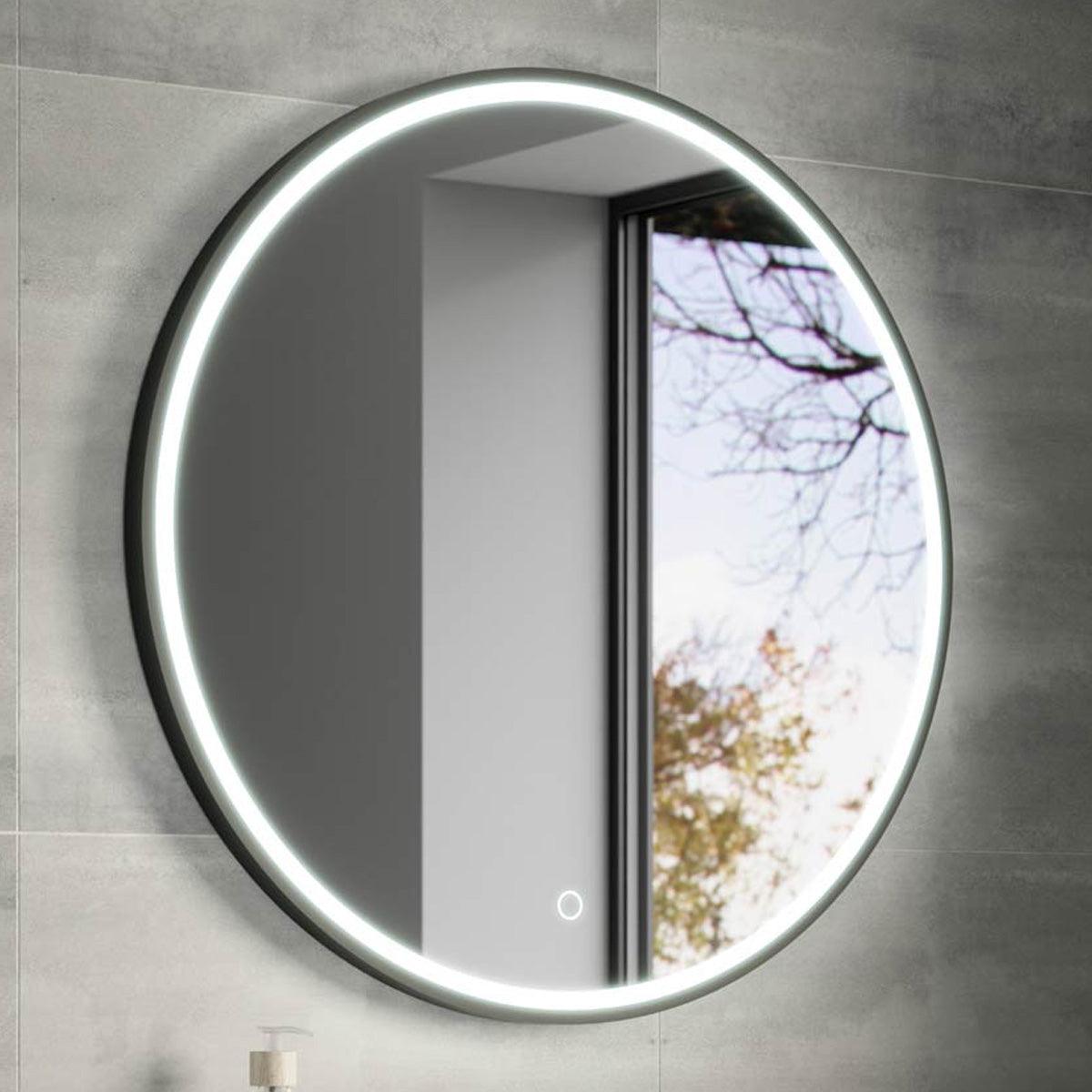
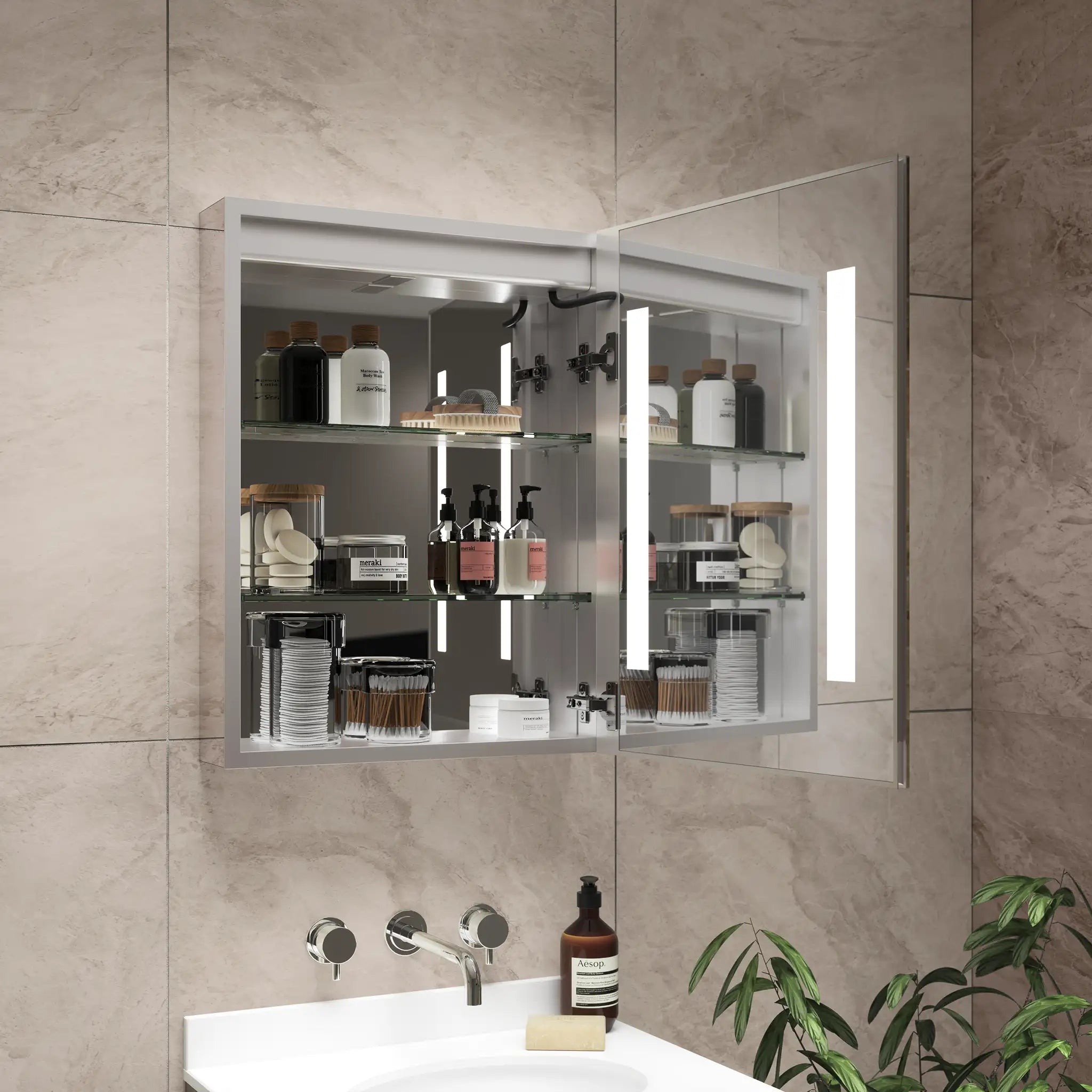
- An illuminated mirror: puts light exactly where you need it for shaving and make-up, and can replace wall lights in a small bathroom.
How bright should bathroom lighting be?
Brightness is measured in lumens, not watts. A bathroom needs to be bright enough for shaving and make-up at the mirror, with softer light for relaxing in the bath. The easiest way to manage both is to put the main light and the mirror or wall lights on separate switches, or choose dimmable lights. Our guide to lumens explains how to compare brightness.
As a rough guide, an average bathroom works well with around 1,500 to 2,000 lumens in total across the ceiling lights and the mirror. A larger room, dark tiles or no window will need more. Make the mirror area the brightest part of the room.
Warm white or cool white for a bathroom?
Cool or natural white is clearer for shaving, make-up and cleaning. Warm white feels more relaxing in the evening. Many of our lights let you choose: colour-adjustable (CCT) downlights switch between cool, natural and warm, and the Edge wall light switches between natural and warm. For lights that take a bulb, such as G9 and GU10 fittings, you choose the colour when you buy the bulb. See warm white vs cool white in the bathroom.
Integrated LED or bulbs?
Integrated LED lights have the LEDs built in, so there's no bulb to change. Bulb fittings, such as our G9 and GU10 lights, let you choose and replace the bulb yourself. Both are energy efficient when used with LED bulbs.
Can bathroom lights be dimmed?
Many can. Dimmable models are marked on the product page. Use a dimmer switch that's compatible with LED lighting, because the wrong dimmer can cause flickering.
Do I need an electrician to fit bathroom lights?
Yes. Bathroom lighting is wired into the mains and must be fitted by a qualified electrician in line with Part P of the Building Regulations. Our guarantee also requires it.
What guarantee comes with Pebble Grey lighting?
Every light comes with 12 months' cover as standard. Register free within 30 days of purchase and it extends to 5 years. Register your guarantee here.
Our lighting guides
- How to choose bathroom ceiling lights
- Bathroom wall lights: where to put them and which to choose
- Bathroom spotlights: bar or plate?
- How to choose bathroom downlights
- What are lumens? How bright your bathroom lights should be
- UK bathroom zones and IP ratings explained
- Shop all bathroom lights
Next steps: browse all bathroom lights, or read how to choose bathroom ceiling lights and where to put bathroom wall lights.