



If you've ever tried to buy an illuminated bathroom mirror and found yourself staring at "IP44" or "IP65" on a product spec without quite knowing what it means, you're not alone. These ratings come up on almost every bathroom electrical product, and understanding them takes about five minutes — after which you'll never worry about it again.
Here's everything you need to know, in plain English.
What Is an IP Rating?
IP stands for Ingress Protection. It's a standard classification system that tells you how well an electrical product is protected against solid particles (like dust) and liquids (like water). You'll see it written as "IP" followed by two digits.
The first digit refers to dust and solid particle protection, on a scale of 0 to 6. For most bathroom products, this number is either a 4 or a 5 — which means the product is protected against solid objects larger than 1mm, including most dust.
The second digit is the one that really matters in a bathroom. It refers to water protection, on a scale of 0 to 8. The higher the number, the more water the product can handle:
- IP X4 — protected against water splashing from any direction
- IP X5 — protected against low-pressure water jets
- IP X6 — protected against powerful water jets
- IP X7 — can be submerged briefly in water
- IP X8 — can be submerged continuously
So an IP44 mirror is protected against splashes from any direction. An IP65 mirror can handle a direct jet of water. For the vast majority of bathroom mirror positions, IP44 is the minimum you'll want — and it's what most quality mirrors are rated at.
What Are Bathroom Zones?
UK wiring regulations (BS 7671) divide bathrooms into zones based on proximity to water sources. Each zone has a minimum IP rating requirement. Understanding which zone your mirror falls into tells you exactly what spec you need.

Zone 0
Is inside the bath or shower itself — literally submerged or directly in the water. You're not hanging a mirror here. Products in zone 0 need at least IP67.
Zone 1
Is the area directly above the bath or shower, up to a height of 2.25 metres from the floor. Products here need at least IP45, and all electrical work in this zone must be carried out by a Part P registered electrician.
Zone 2
Is the area stretching 0.6 metres horizontally beyond the edge of the bath or shower, and up to 2.25 metres high. The minimum requirement here is IP44. Most illuminated mirrors sit in zone 2, and IP44 is perfectly safe for this position.
Outside Zones
Covers the rest of the bathroom — typically the wall above the basin, or any position more than 0.6 metres from the bath or shower edge. There is no mandatory minimum IP rating for this area under the current regulations, though using a product rated at least IP44 is still good practice, and many building insurers expect it.
How to Work Out Which Zone Your Mirror Is In
Stand at your bath or shower and mentally draw a rectangle around it. Zone 1 is the air space directly above it. Zone 2 extends outward by 0.6 metres (about two feet) from that rectangle, up to 2.25 metres high.
If the wall above your basin is more than 0.6 metres from the nearest edge of the bath or shower, you're outside the zones. If it's closer, you're in zone 2. If your mirror would sit directly above a shower enclosure, you may be in zone 1 — and in that case, speak to a registered electrician before you buy.
In most UK bathrooms with a separate basin and shower or bath, the basin wall falls into zone 2 or outside the zones. An IP44-rated mirror covers both comfortably.
Why It Matters for Safety and Insurance
Using an electrical product with an insufficient IP rating in a wet area is a genuine safety risk. Water ingress into an unprotected fitting can cause short circuits, electric shocks, or fires. Beyond the physical risk, building insurers can and do refuse claims if a product installed in a bathroom doesn't meet the required standard for its position. Using a correctly rated product protects you, your home, and your cover.
What to Look For on a Product Spec
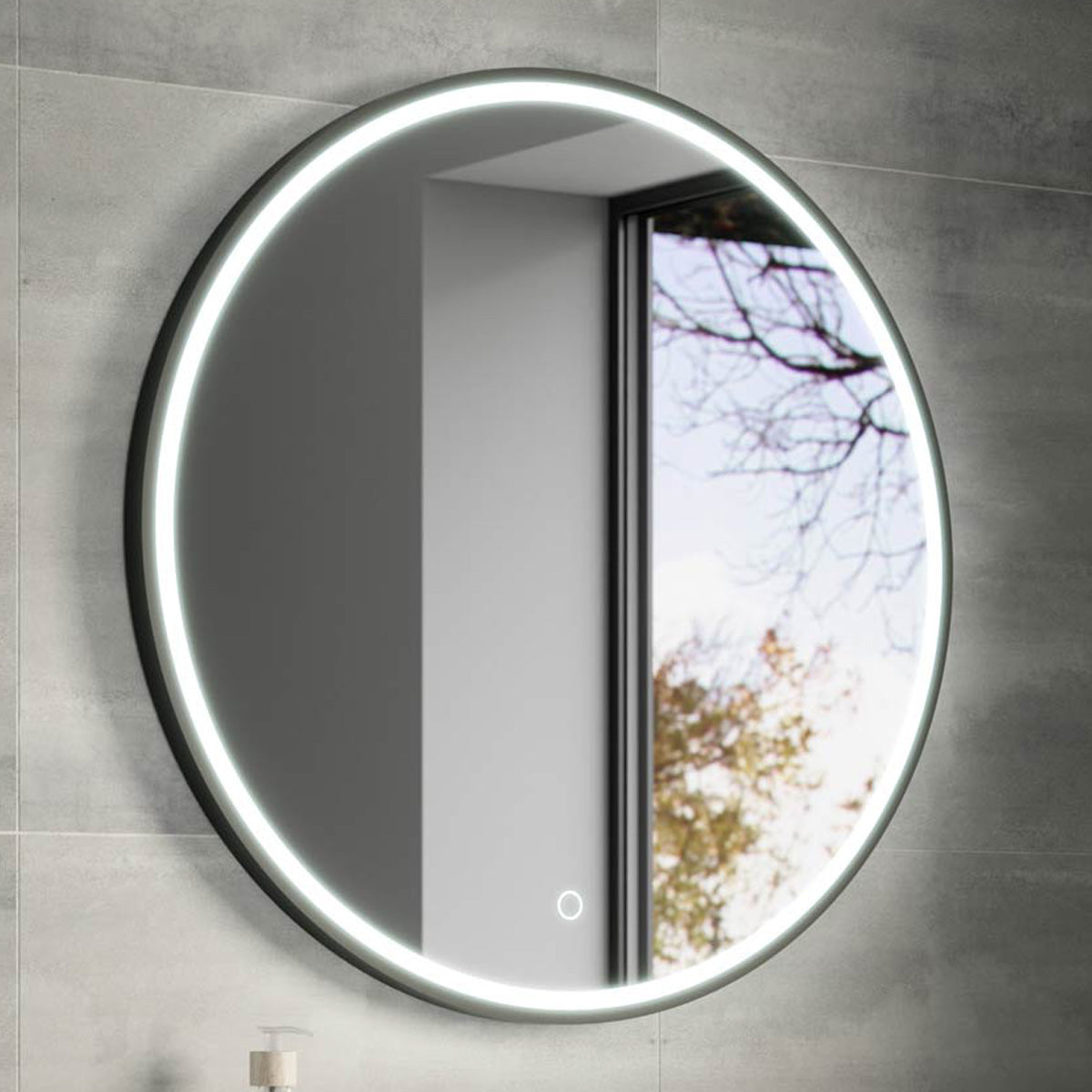
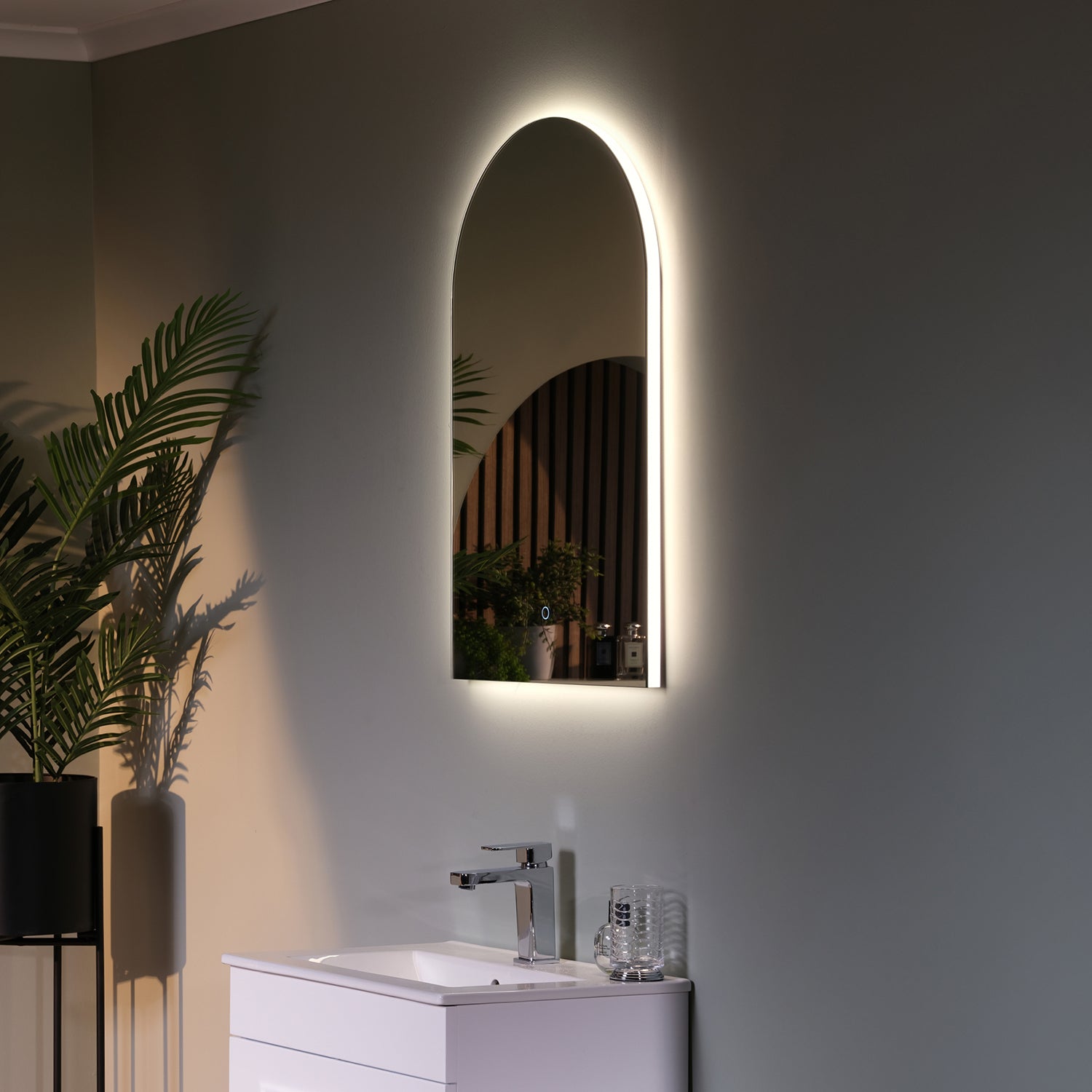
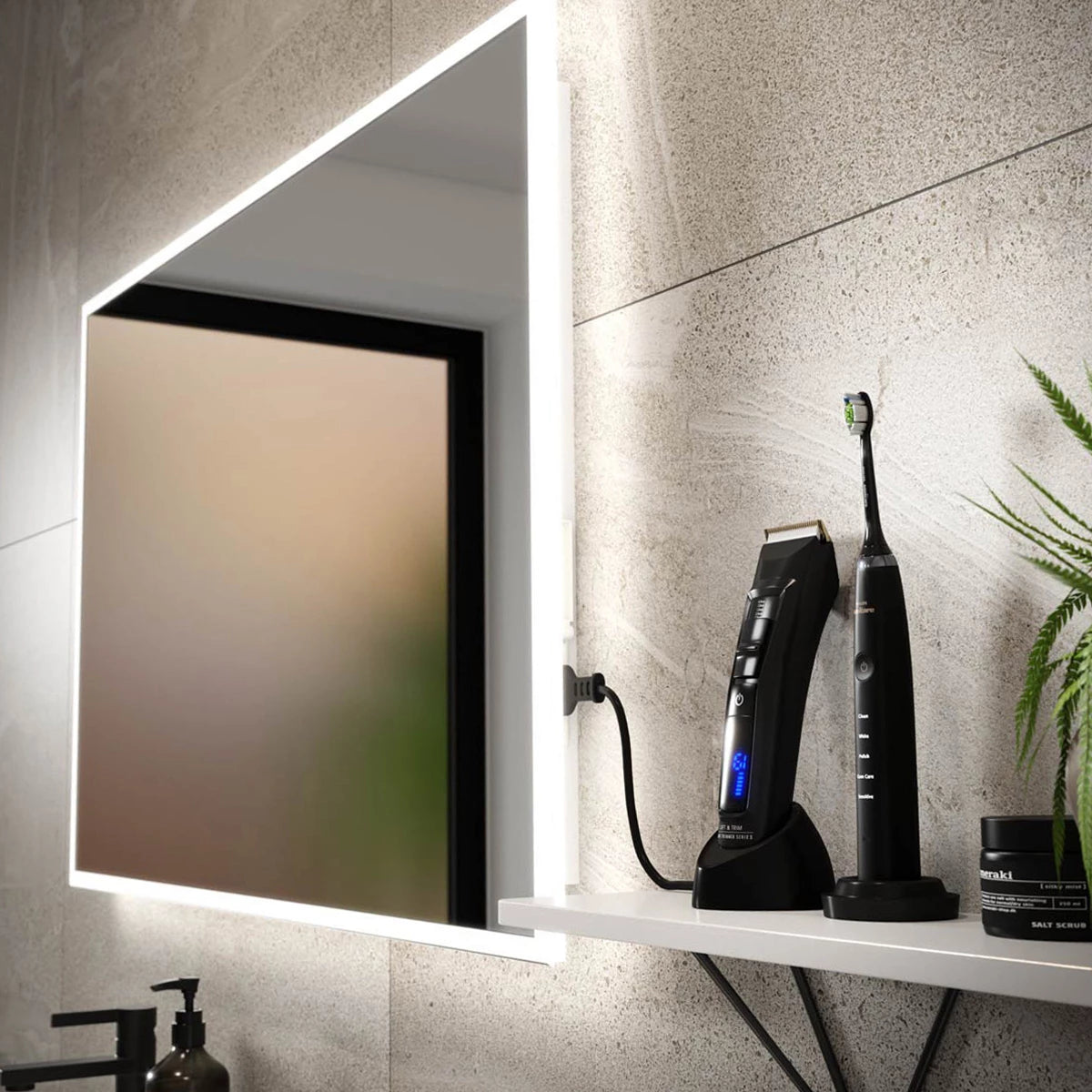
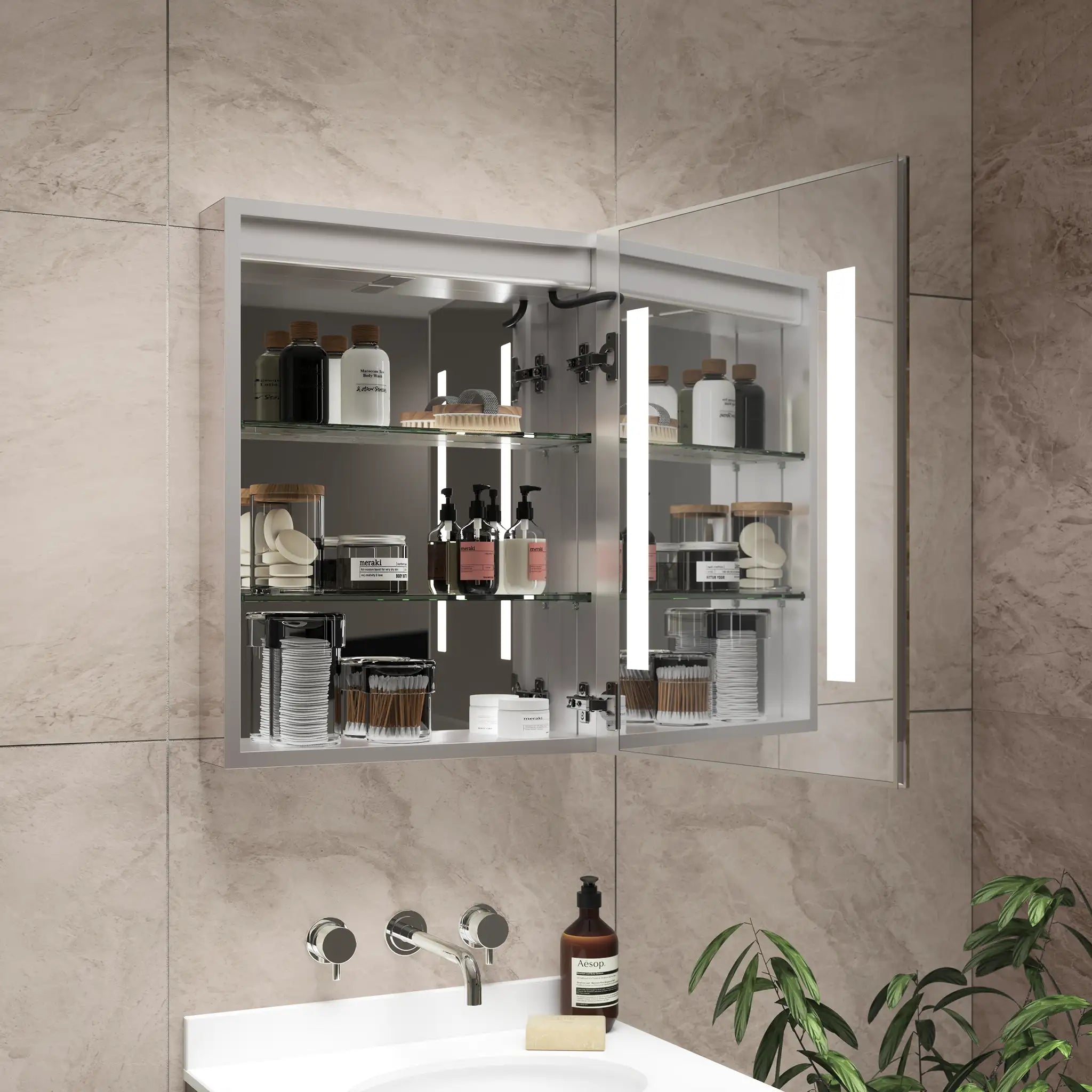
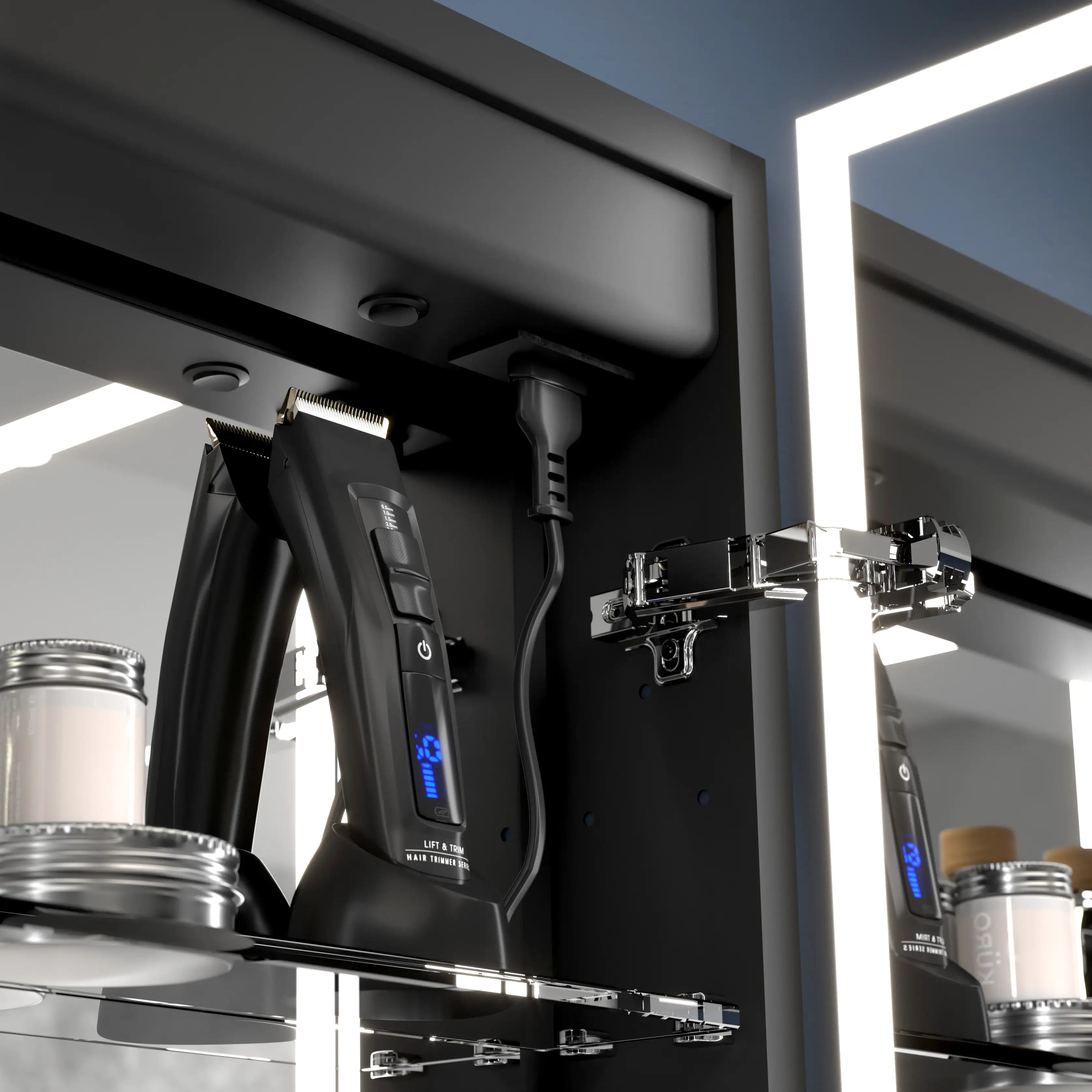
Every Pebble Grey illuminated mirror and cabinet carries a clearly stated IP rating on the product page. You can check before you buy exactly which zone your chosen mirror is suitable for. Most of the range is rated IP44 as a minimum, which covers the overwhelming majority of domestic bathroom positions.
If you're unsure about the position you have in mind, the spec page is your first stop — and if you still have questions, the Pebble Grey team is on hand to advise.


Extractor Fans
Now this is where things start to get tricky. Most extractor fans are placed in the outside zones of the bathroom. Although you may have an ensuite where you need your extractor fan is above your shower because of limited space.
Additionally, an extractor fan's efficiency goes off room size and volume. If you have a large room, you will need a powerful extractor fan, but you will likely be placing this fan in the outer zone. On the other hand, if you have a small bathroom, you don’t need a powerful extractor fan but will have to be cautious over placement in particular zones
Now that you’re up to speed with bathroom zones and IP ratings, you can make more informed lighting decisions for your bathroom.
Ceiling & Wall Lighting
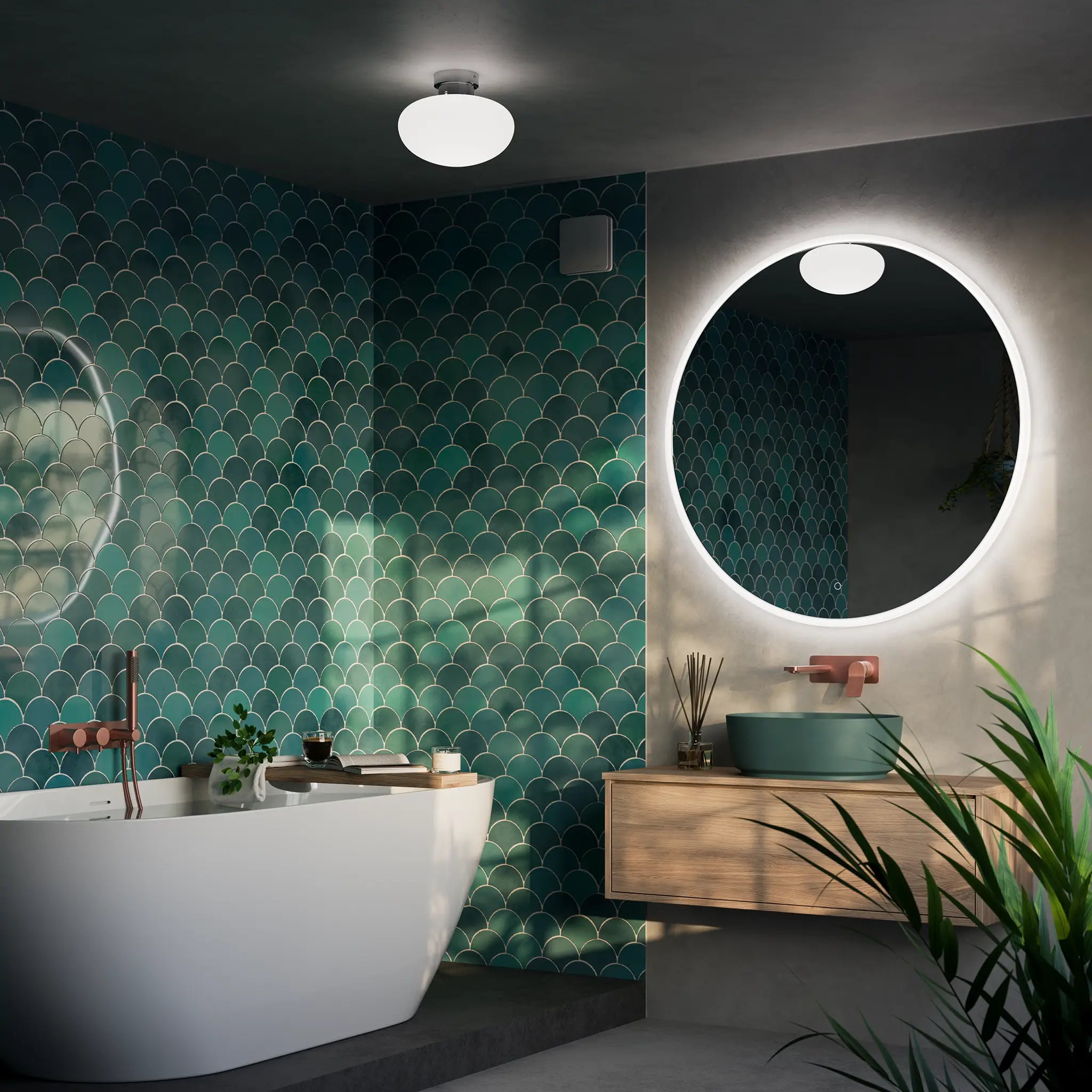
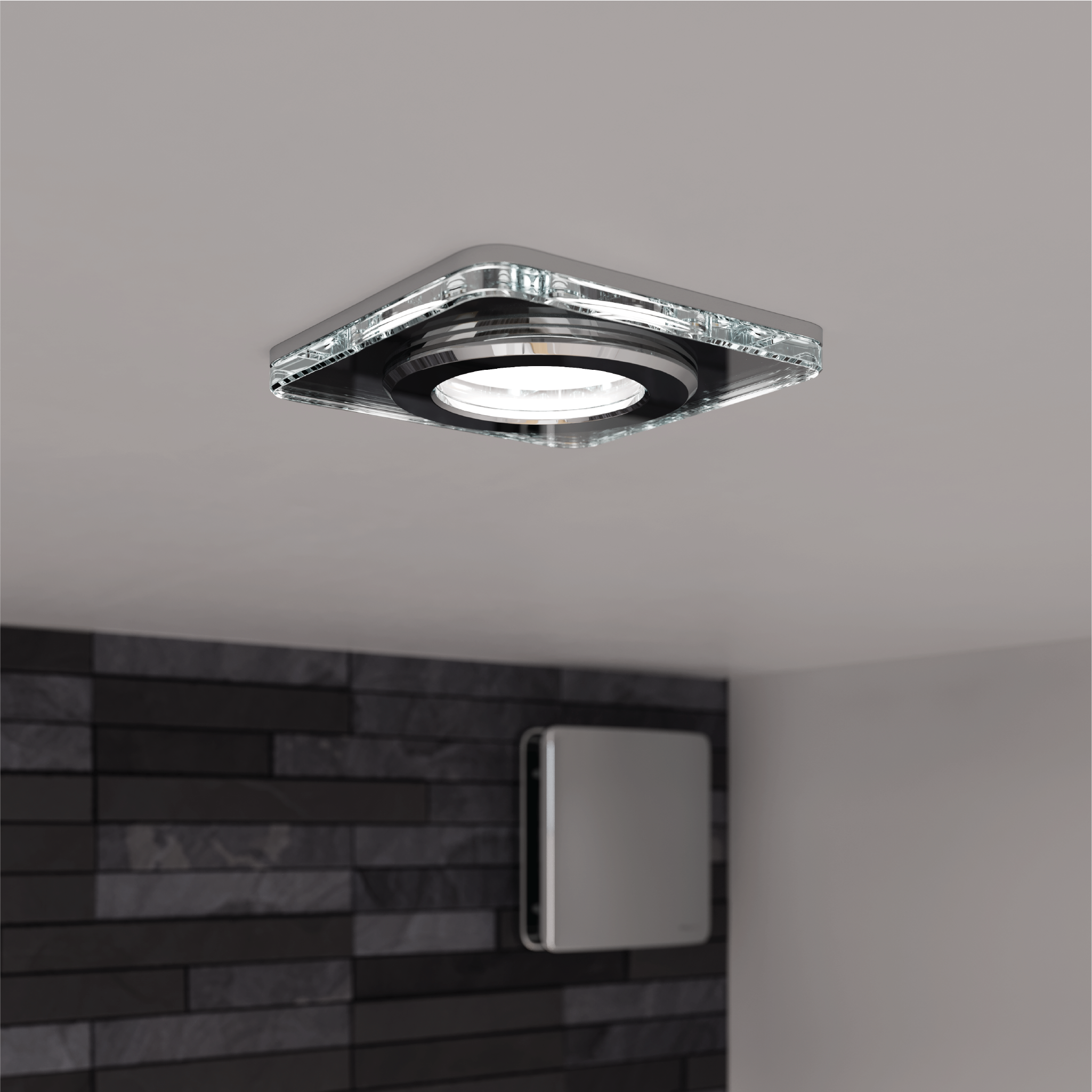
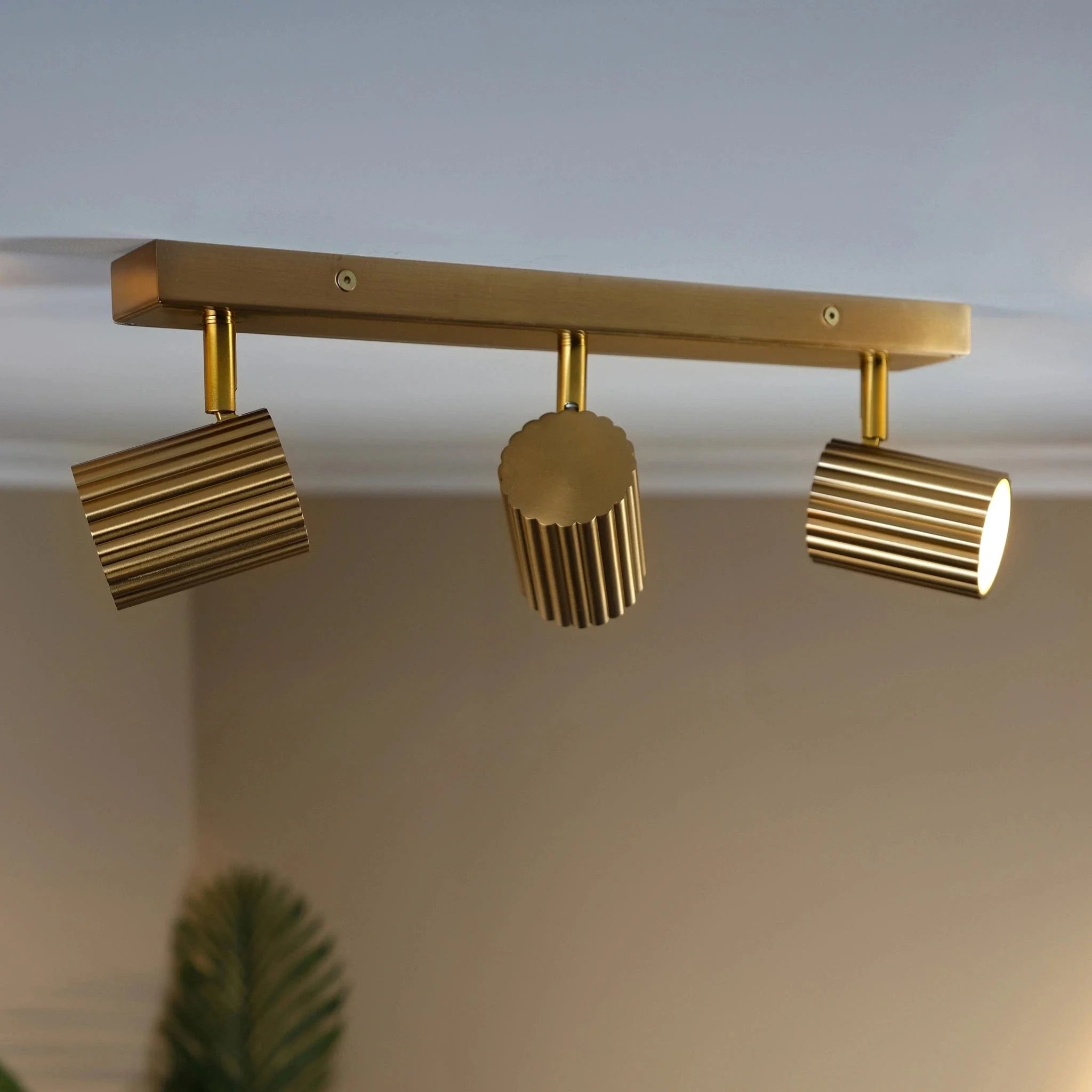
As a rule of thumb, the placement of ceiling lights that are not directly above your shower or bath are classed as outside zones which don’t require an IP rating. However, for extra reassurance much like our mirror and cabinets all our lights are minimum IP44 rated.
We also have a range of ceiling lights which are IP65 rated which can be placed in zone 1&2. Perfect for a romantic soak in the tub or an early morning shower.
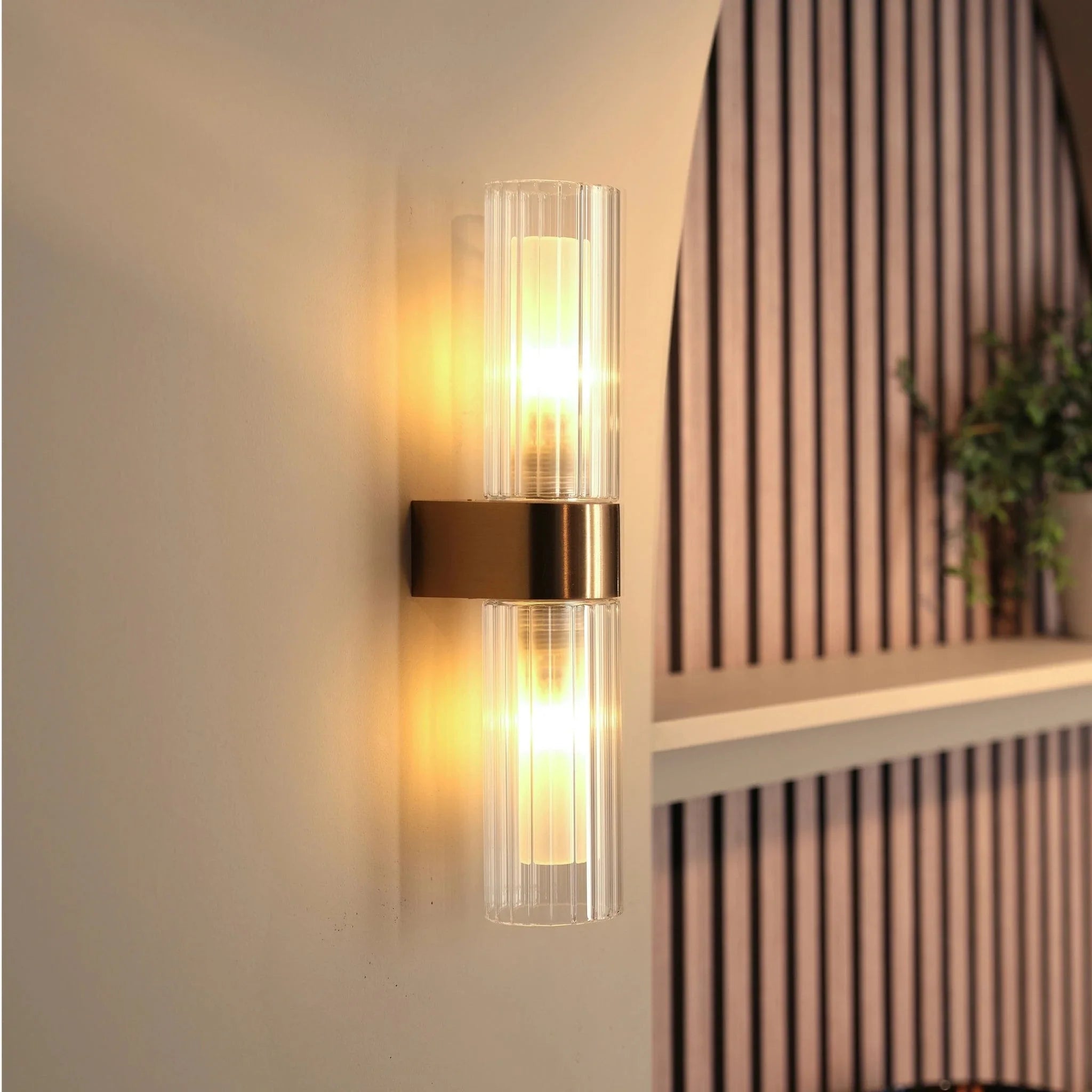
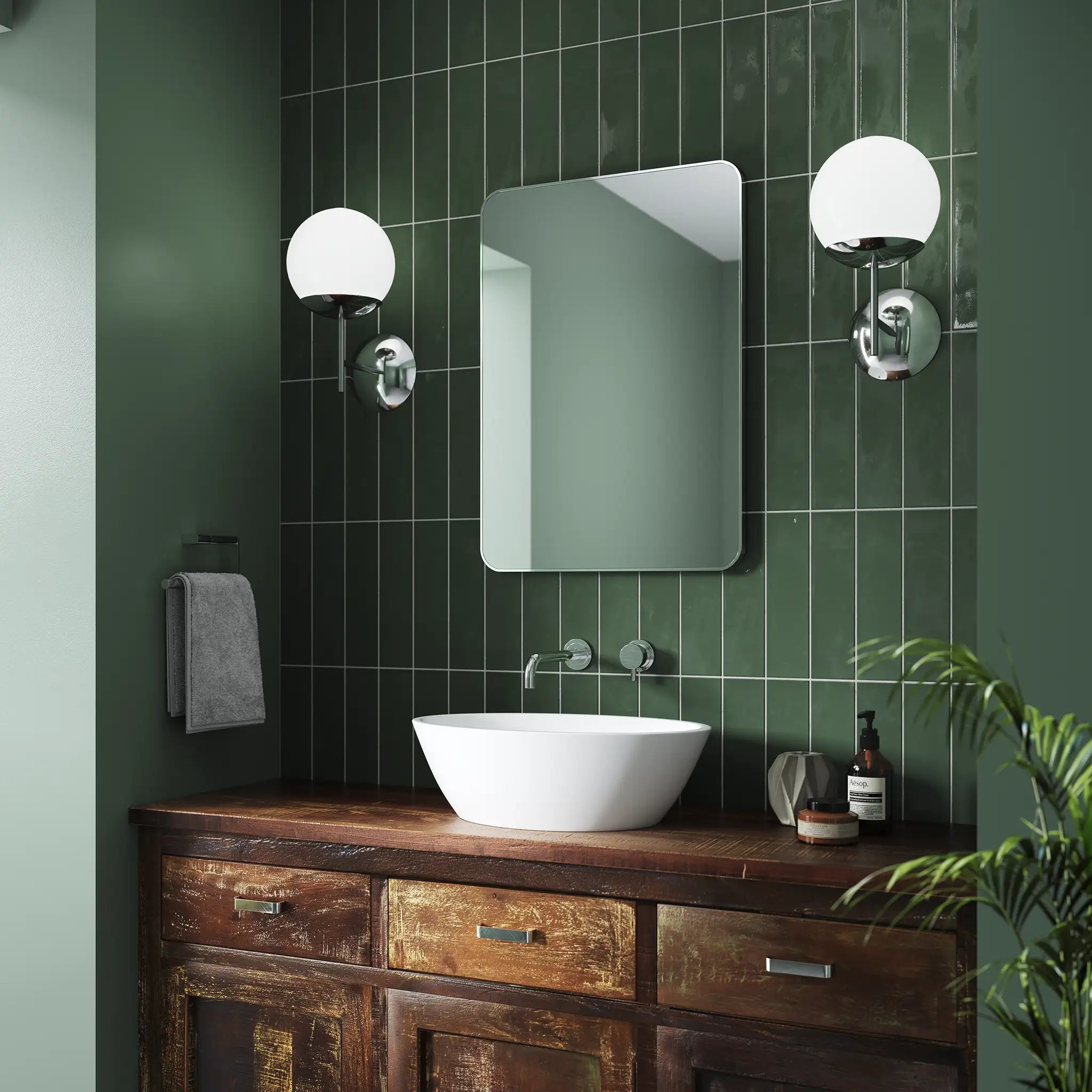
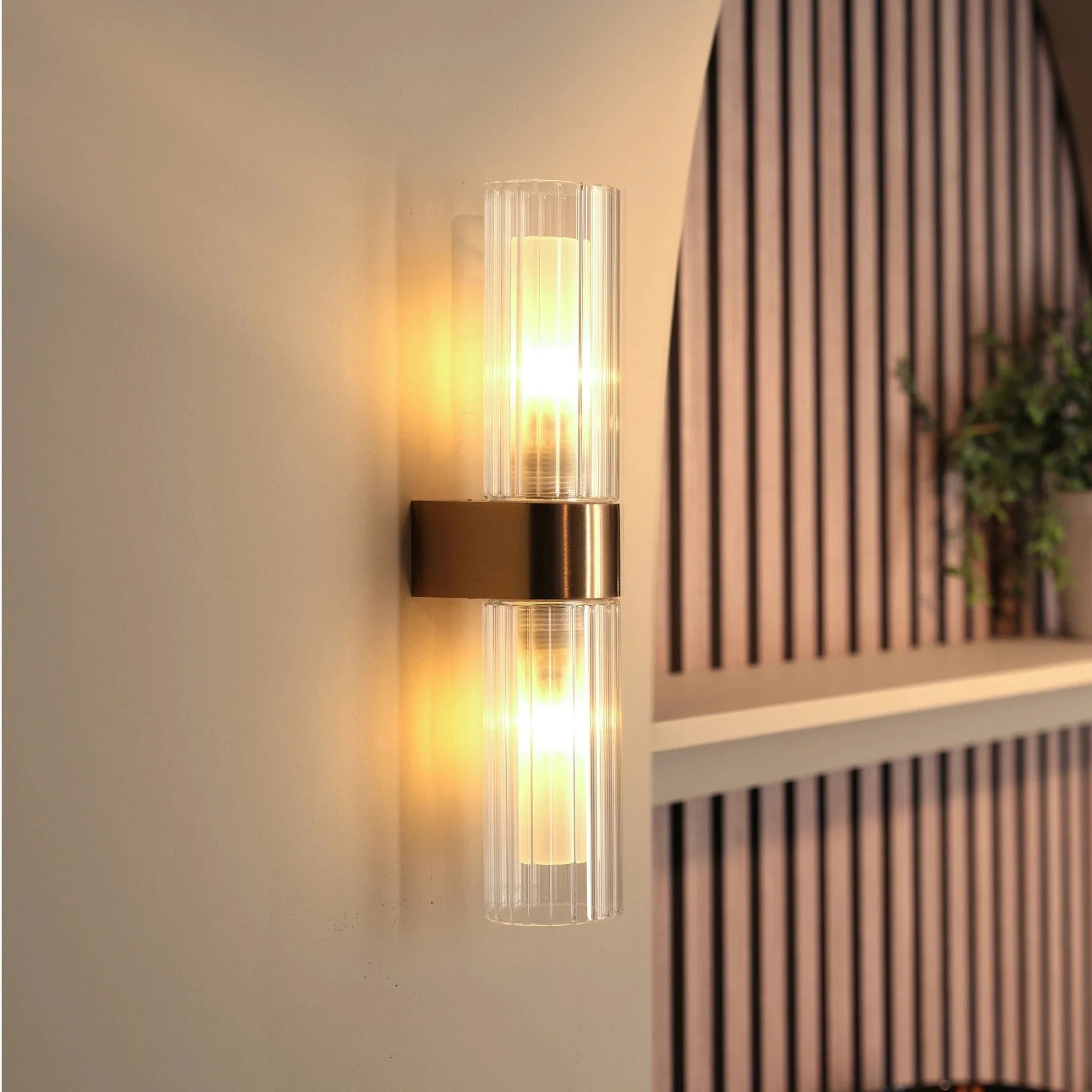
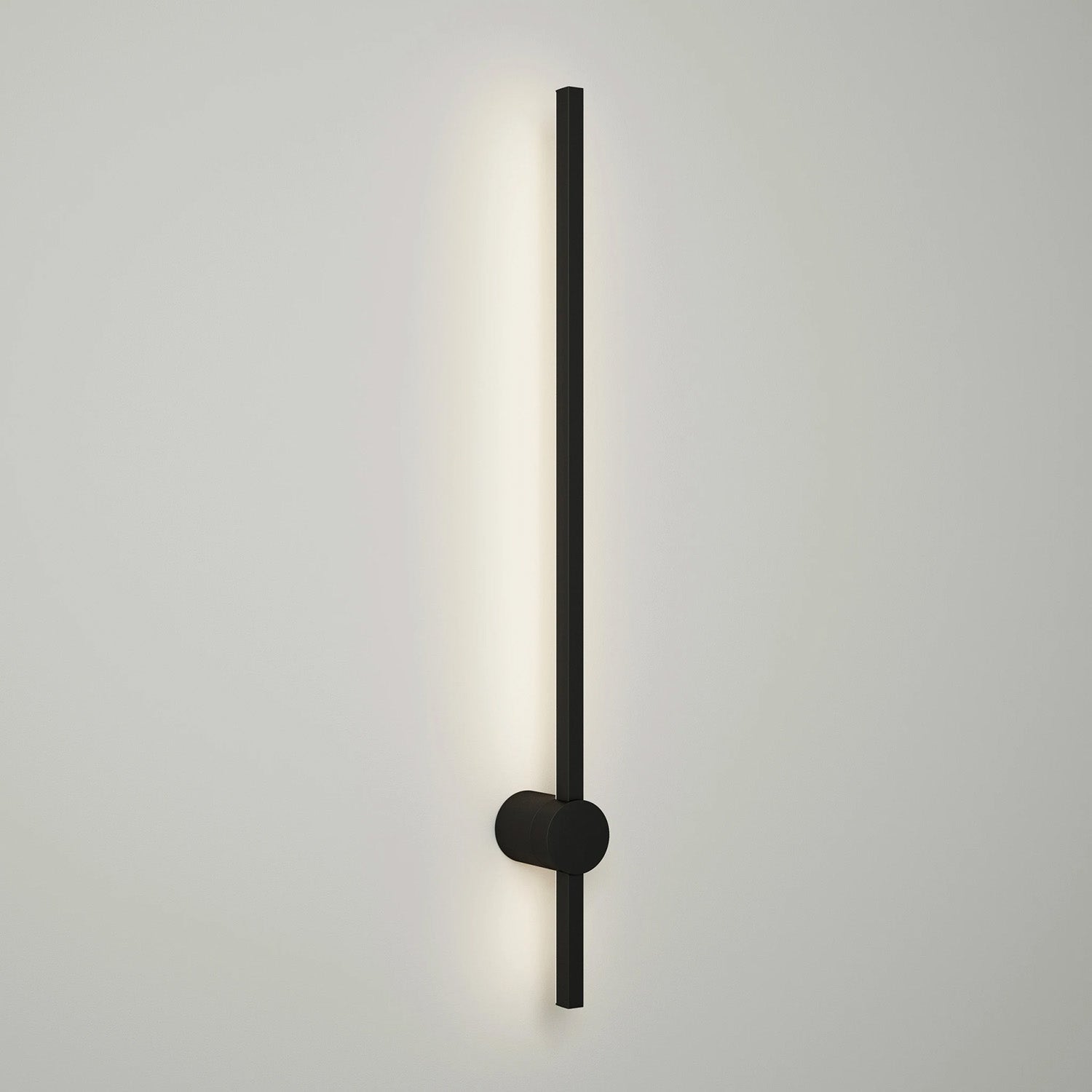
As for wall lights, you can use them to make a statement feature to frame your mirror to create a regency hotel inspired bathroom. As long as you keep them 600mm away from your water source, which is zone 2, you can create this look seamlessly and safely. Although as mentioned above all lights at Pebble Grey are IP44 rated including wall lights.