Quick answer: Hang your bathroom mirror so the centre of the glass sits at the average eye level of the people who use it, which for most adults is around 150cm to 160cm from the floor. Above a basin, leave at least 10cm between the top of the tallest tap and the bottom of the mirror. Keep a motion sensor mirror at least 15cm from walls, tiles and trims, and leave room to plug in a shaver if your mirror has a socket.
- Shop LED bathroom mirrors or all bathroom mirrors
- Choosing a size too? Read what size bathroom mirror do I need?
At a glance
- Centre height: at eye level, around 150cm to 160cm from the floor for most adults.
- Above the taps: at least 10cm from the top of the tallest tap to the bottom of the mirror.
- Above the mirror: leave at least 15cm to 20cm of clear wall below the ceiling.
- Motion sensors: 15cm clear around the sensor.
- Zones: LED mirrors go in Zone 2 or outside the zones, never in Zone 1.
How do I work out the right height?
Use eye level as your guide. Measure the eye height of the people who use the mirror most, take the average, and mark that point on the wall as the centre of the mirror. For most adults this lands at around 150cm to 160cm from the floor. Then check two things: that the bottom edge clears the tallest tap by at least 10cm, and that the top edge leaves at least 15cm to 20cm of wall below the ceiling or any overhead light. If both work, you've found your height. If the mirror would sit too close to the taps, raise it slightly and choose a mirror that's a little shorter.
What if my family are very different heights?
Aim for the middle. Most bathroom mirrors are 600mm to 800mm tall, so with the centre at an average eye level, both taller and shorter people can see themselves comfortably. Another way to check is to make sure the top of the glass sits a few centimetres above the eye level of the tallest person, while the centre still suits everyone else. If you have young children, a taller portrait mirror covers a wider range of heights than a wide landscape one.
How high should a mirror be above a basin?
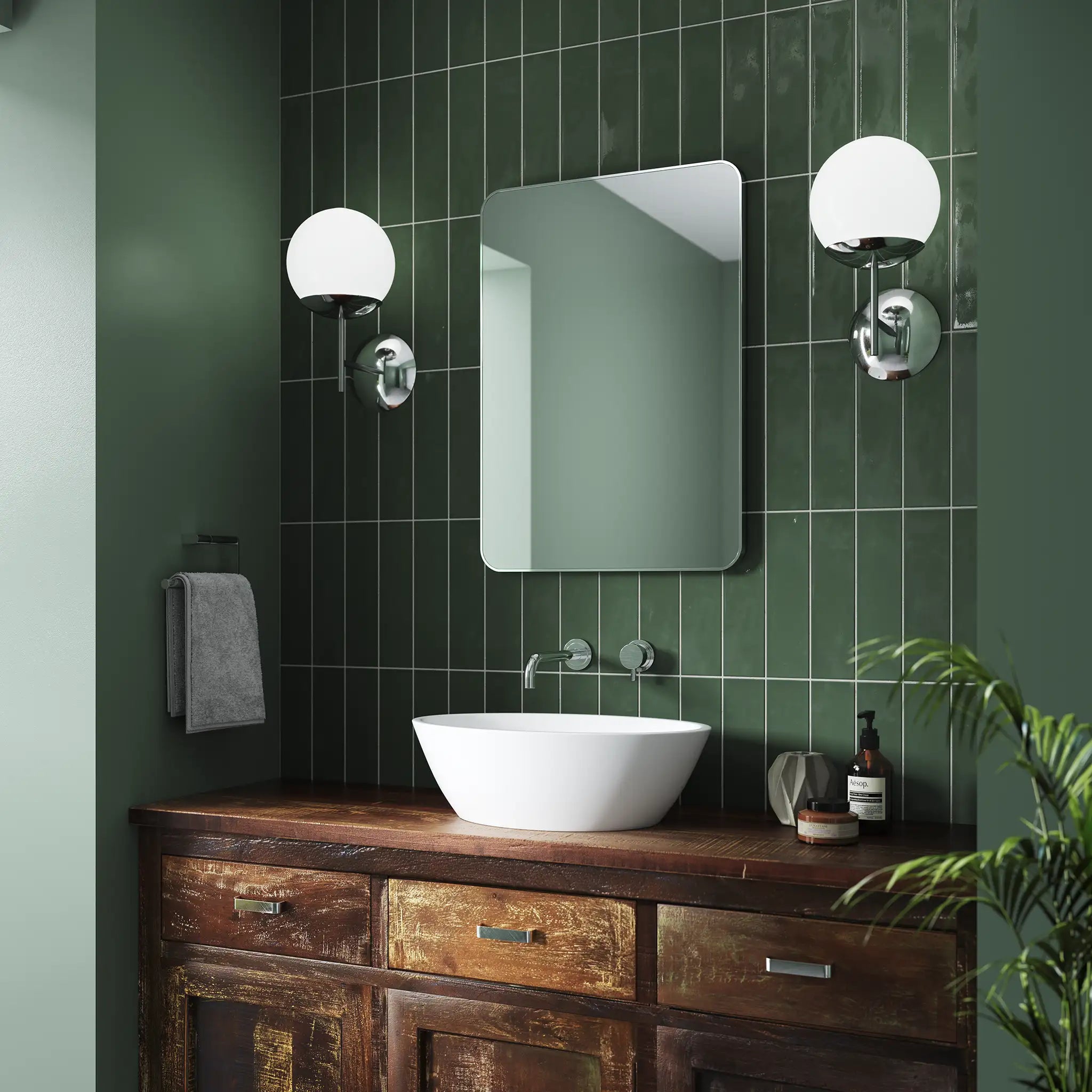
Leave at least 10cm between the top of the tallest tap and the bottom of the mirror. This keeps the glass clear of splashes and stops the taps and mirror looking cramped together. With a tall or statement tap, measure from the top of the spout, not the basin. With a wall-mounted tap, measure from the top of the tap body. If the mirror has a shaver socket, check you can still reach and use it comfortably at that height.
How high should a mirror cabinet be hung?
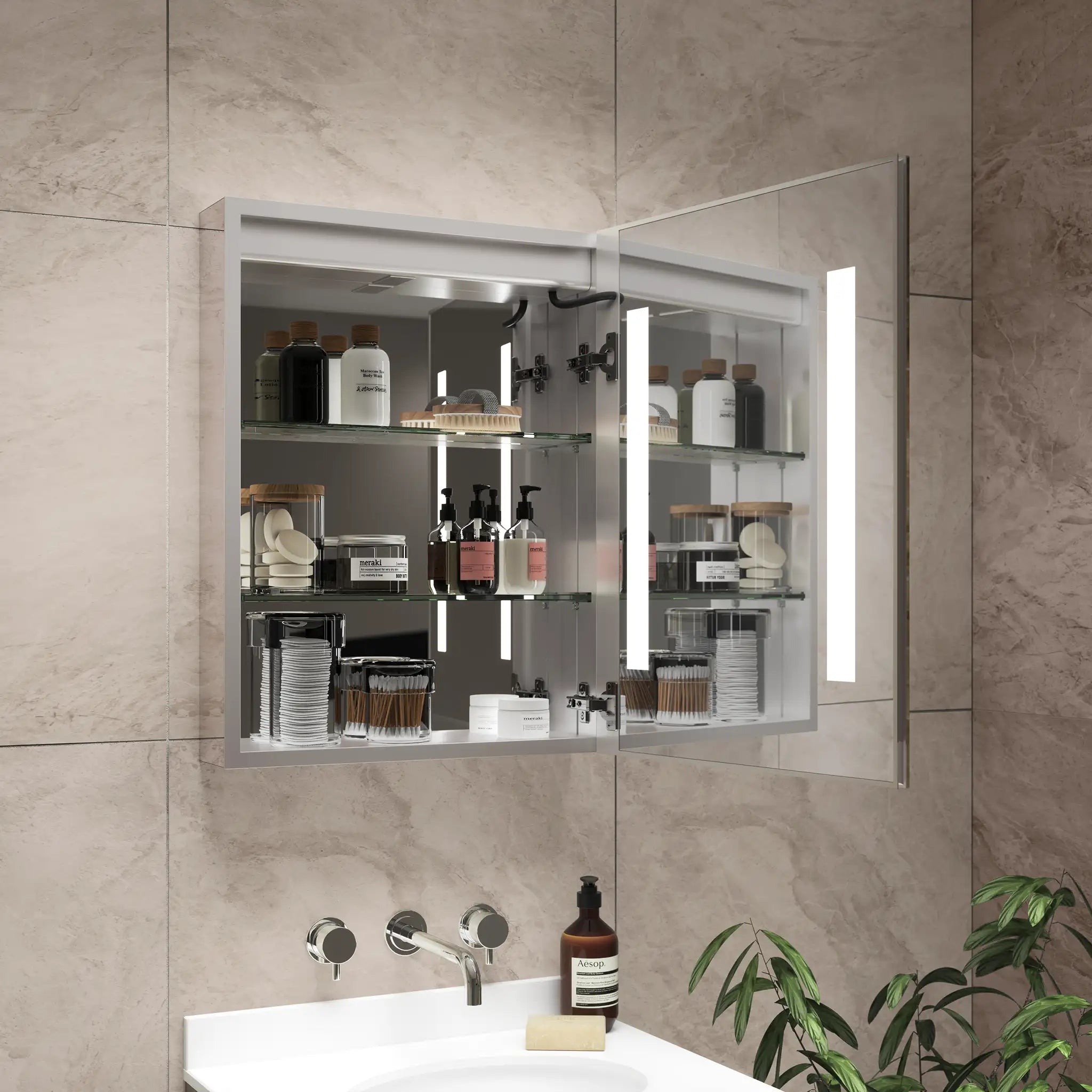
Use the same rule as a mirror: centre at eye level, bottom edge at least 10cm above the taps. Because a cabinet sticks out from the wall (our surface-mounted LED cabinets are roughly 112mm to 140mm deep), also check you won't knock your head on it when leaning over the basin, and that the door can open fully without hitting a light, wall or towel rail. If space is tight, a recessed cabinet sits flush in the wall.
How high should a round mirror be?
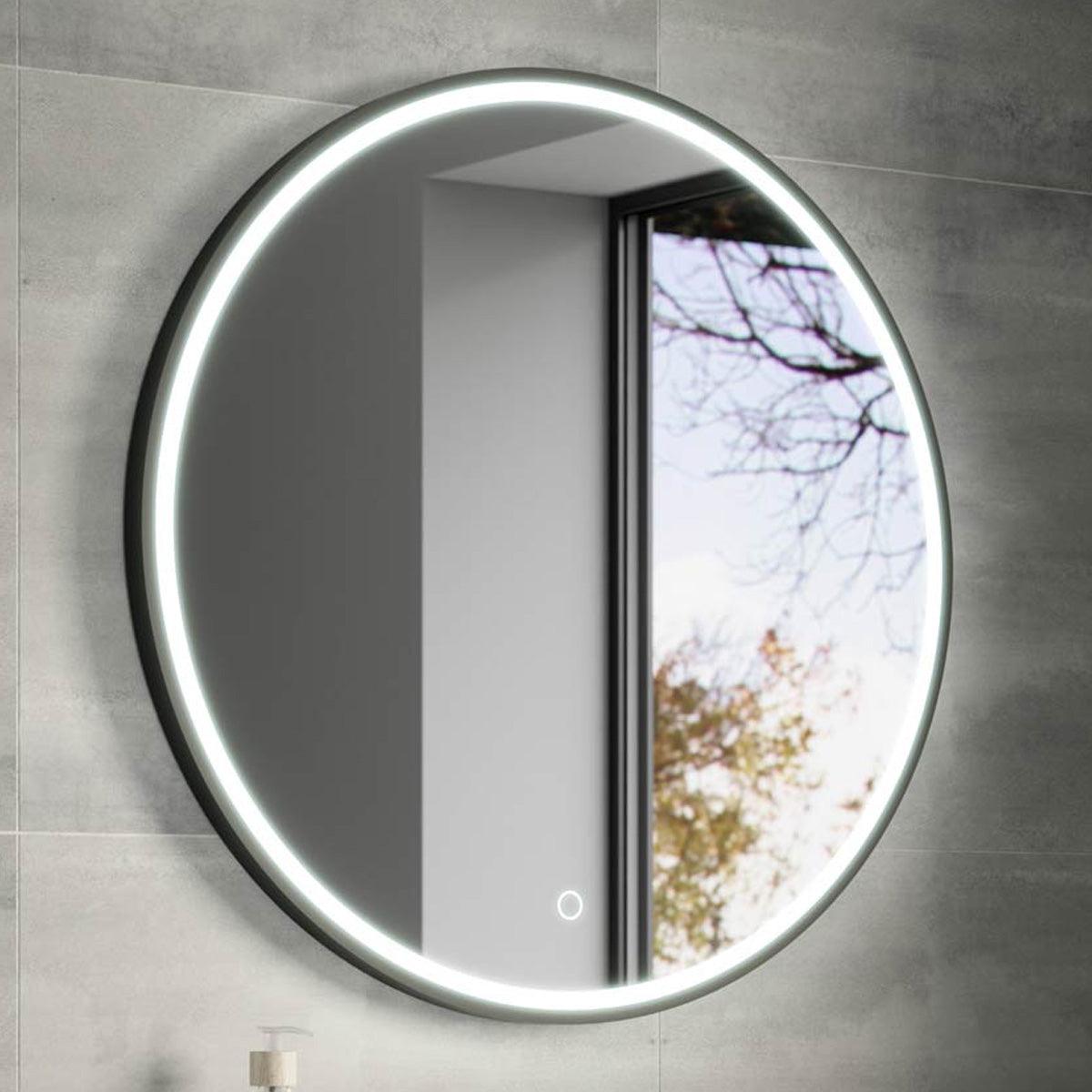
The same as any other shape: centre at eye level, around 150cm to 160cm, with at least 10cm above the taps. Because a round mirror is as tall as it is wide, check the top edge still leaves space below the ceiling, especially with an 800mm or 1000mm round. See our round mirror size guide.
Where is the best place to put a bathroom mirror?
Above the basin is the most useful spot for most people, because that's where you shave, brush your teeth and do your make-up. A few things make a good position even better:
- Catch the light. A mirror opposite or slightly offset from a window bounces daylight around the room, making it feel brighter and larger. In a small bathroom this can make a real difference.
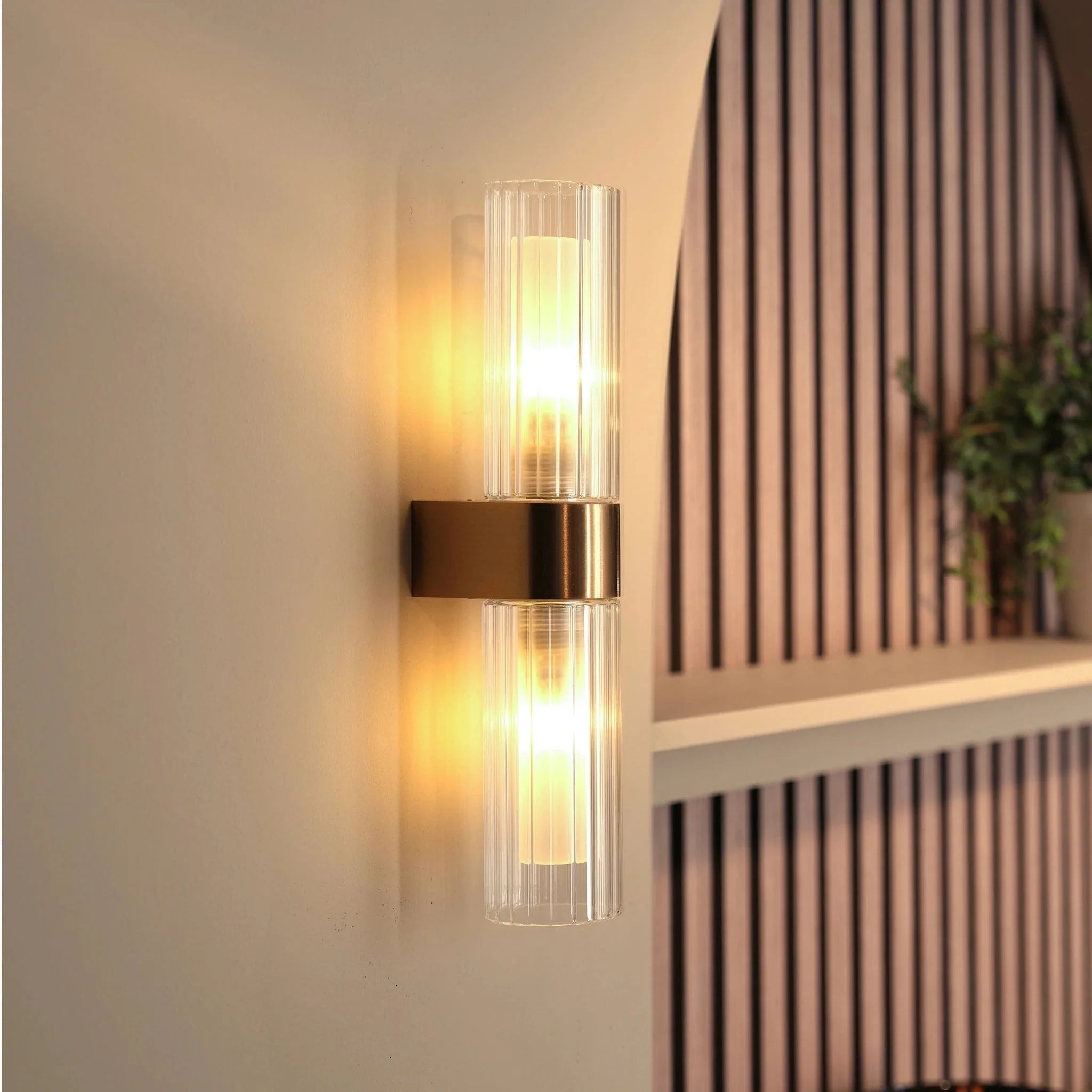
- Light your face, not the back of your head. Ceiling lights directly above you cast shadows on your face. An LED mirror or wall lights either side of the mirror light you from the front.
- Use a second wall. In a busy family bathroom, a second mirror above a radiator or on another wall takes pressure off the basin at peak times.
- Let it complement the room. Centre the mirror over the basin or vanity, and give it space so it doesn't crowd tiles, lights or shelves.
Where can't I put an LED mirror?
LED mirrors with electrical parts must go in Zone 2 or outside the zones, never in Zone 1 directly above a bath or inside a shower. Our LED mirrors are IP44 rated, which suits Zone 2. Non-illuminated mirrors have no electrics, so they can go anywhere. If your mirror has a motion sensor, keep at least 15cm clear between the sensor and the nearest wall, object or tile trim so reflections don't set it off. See IP ratings and bathroom zones explained.
How do I mark the height on the wall?
- Measure up from the floor to your chosen centre height and mark it lightly in pencil.
- Measure half the mirror's height up and down from that mark to find the top and bottom edges.
- Check the bottom edge is at least 10cm above the tallest tap and the top edge is clear of the ceiling.
- Find the fixing points from your mirror's installation guide and mark them with a spirit level.
- Check for pipes and cables behind the wall before drilling.
For the fitting itself, read how to hang a bathroom mirror. If your mirror is wired in, see do I need an electrician to fit an LED mirror?
What guarantee comes with a Pebble Grey mirror?
Every LED mirror and cabinet comes with 12 months' cover as standard, extended free to 10 years when registered within 30 days of purchase (iron and PVC models excluded). See our guarantee page.
Shop the range: LED bathroom mirrors · LED mirror cabinets · non-illuminated mirrors