Quick answer: Spray a little glass cleaner or warm soapy water onto a microfibre cloth, not onto the mirror, and wipe from top to bottom. Buff dry straight away with a second clean, dry microfibre cloth. On an LED mirror, keep liquid away from the edges, sensors and shaver socket, and never use abrasive pads, bleach or solvents.
- Stop steam marks with a demister mirror
- Read do I need a demister pad?
At a glance
- You need: two microfibre cloths, warm water and a mild glass cleaner or a drop of washing-up liquid.
- Golden rule: spray the cloth, not the mirror.
- Direction: wipe top to bottom, then buff dry before streaks form.
- LED mirrors: dry cloth only around sensors, switches and the shaver socket.
- Avoid: scourers, bleach, ammonia-based sprays, acetone and other solvents.
What do I need to clean a bathroom mirror?
You don't need specialist products. Two flat-weave microfibre cloths do most of the work: one slightly damp for cleaning and one dry for buffing. Add warm water with a drop of washing-up liquid, or a mild glass cleaner. If your tap water is hard, distilled water helps avoid leaving chalky marks behind.
Microfibre lifts grease and toothpaste without leaving lint. Wash the cloths without fabric conditioner, which coats the fibres and makes them smear, and keep a pair just for glass.
How do I clean a mirror without streaks?
Streaks come from too much liquid, dirty cloths, or letting the glass dry on its own. Follow these steps:
- Dust first. Wipe the glass with a dry microfibre cloth to remove dust and hair.
- Spray the cloth. Lightly spray your cleaner onto a folded microfibre cloth. Folding it into quarters gives you several clean faces to work with.
- Wipe top to bottom. Work in overlapping strokes from the top of the mirror down, so any drips run onto glass you haven't cleaned yet.
- Buff dry. Straight away, buff the whole mirror with the dry cloth until it squeaks.
- Check from an angle. Look at the glass from the side, ideally with the mirror lights on, and touch up any marks.
How do I remove hairspray, toothpaste and limescale marks?
For sticky marks such as hairspray or toothpaste, hold a cloth dampened with warm soapy water on the spot for a few seconds to soften it, then wipe and buff dry. For chalky limescale marks, a 1:1 mix of white vinegar and water applied to the cloth works well. Wipe gently, follow with a cloth dampened in clean water, then dry. Don't leave vinegar sitting on the glass, and keep it off brass or lacquered frames.
Never use the scouring side of a sponge, wire wool or a razor blade on a bathroom mirror. They scratch the glass and can damage any coating or frame.
Why shouldn't I spray cleaner straight onto the mirror?
Liquid sprayed onto the glass runs down to the edges and can creep behind the mirror. Over time that moisture attacks the silver backing, which shows up as dark spots or cloudy patches around the edge, and once it starts it can't be reversed. On an LED mirror, liquid running into the frame can also reach the electrics. Spraying the cloth instead keeps the edges dry.
How do I clean an LED mirror safely?
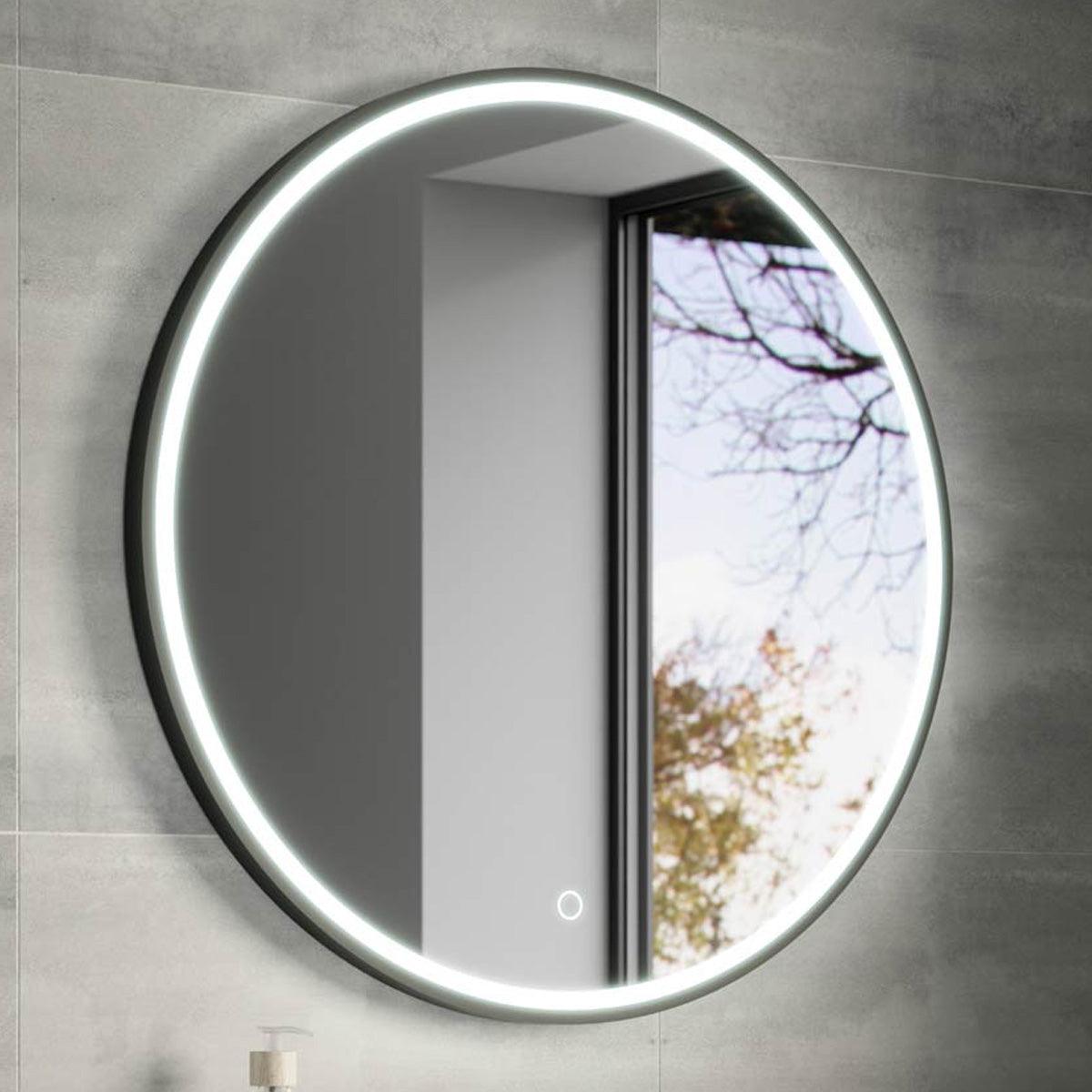
Clean an LED mirror the same way as any mirror, with a few extra precautions. Turn the lights off first so the glass is cool and you're not touching a switch with a wet hand. Use only a dry or barely damp cloth around touch sensors, motion sensors, switches and the shaver socket, and never spray anything near them. Water in a sensor can cause it to switch on and off by itself, stop responding or fail completely.
When you've finished the glass, run a dry cloth over the sensor and socket area as a last step. If you want to check for streaks, turn the lights back on once everything is dry.
How do I clean the frame and cabinet?
Different finishes need different care:
- Brass: a dry cloth for everyday cleaning, or a barely damp one dried straight away. Avoid vinegar, lemon-based products and metal polish, which can dull the finish.
- Chrome: a lightly damp microfibre cloth, then buff dry to avoid water spots.
- Matt black: a dry cloth for dust; a very lightly damp cloth for fingermarks, then dry straight away. Avoid polish or wax, which leaves shiny patches.
- White and gloss: a lightly damp cloth, then dry.
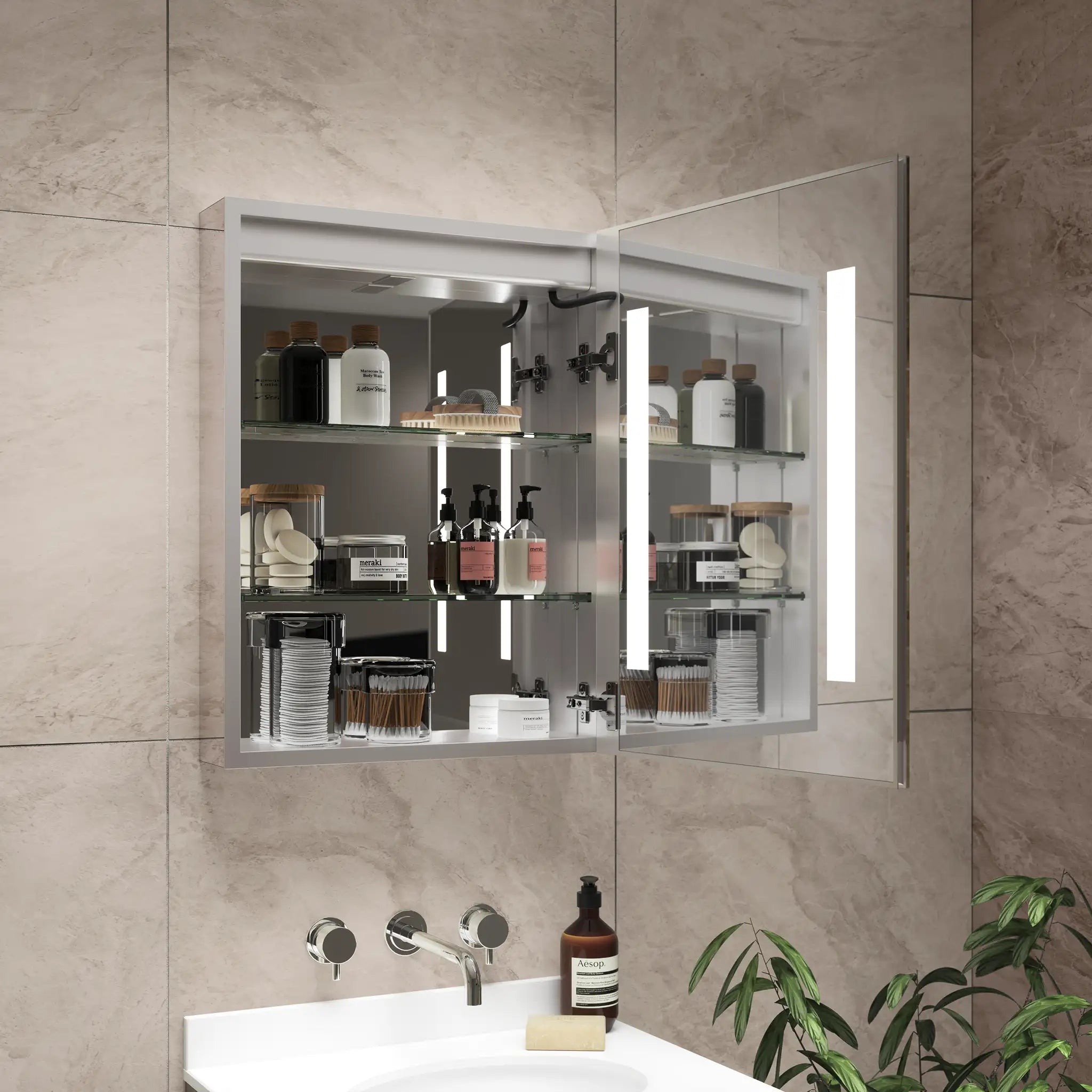
Inside a mirror cabinet, a dry cloth is usually enough. Lift out the glass shelves now and then to wipe behind them, and clean the shelves the same way as the mirror: cloth, not spray. Keep any spray away from hinges and wiring.
How do I stop my mirror steaming up?
The easiest way is a mirror with a built-in demister pad, which gently warms the centre of the glass so it stays clear after a shower. On our LED mirrors the demister switches on with the lights. Good ventilation helps too: run your bathroom extractor fan during and after a shower, which also means less moisture reaches the mirror's seals and electrics. Browse demister mirrors or demister cabinets.


What if I see dark spots or a loose seal at the edge?
Dark spots or cloudiness creeping in from the edge of the glass, or a seal that looks loose, are early signs of moisture getting in. Don't try to fix it yourself with sealant or adhesive. Contact our customer service team with a photo and your order details, and we'll advise on the next step.
Does cleaning affect my guarantee?
Our guarantee covers manufacturing faults, not damage caused by harsh cleaning products, abrasive pads or liquid sprayed into the mirror. Every LED mirror and cabinet comes with 12 months' cover as standard, extended free to 10 years when you register within 30 days of purchase (iron and PVC models excluded). Cleaning the way this guide describes protects both the mirror and the guarantee. See our guarantee page for full details.
Shop the range: LED bathroom mirrors · Demister mirrors · Non-illuminated mirrors