


Small bathrooms and cloakrooms present a particular kind of design challenge. Every centimetre counts, the proportions can feel stubborn, and it's easy to make choices that accidentally make the space feel more cramped rather than less. A well-chosen mirror, though, can do remarkable things for a compact room — not by magic, but by bouncing light, creating the illusion of depth, and serving a practical function without consuming precious floor or surface space.
Here's how to approach the decision.
How Big Should You Actually Go?
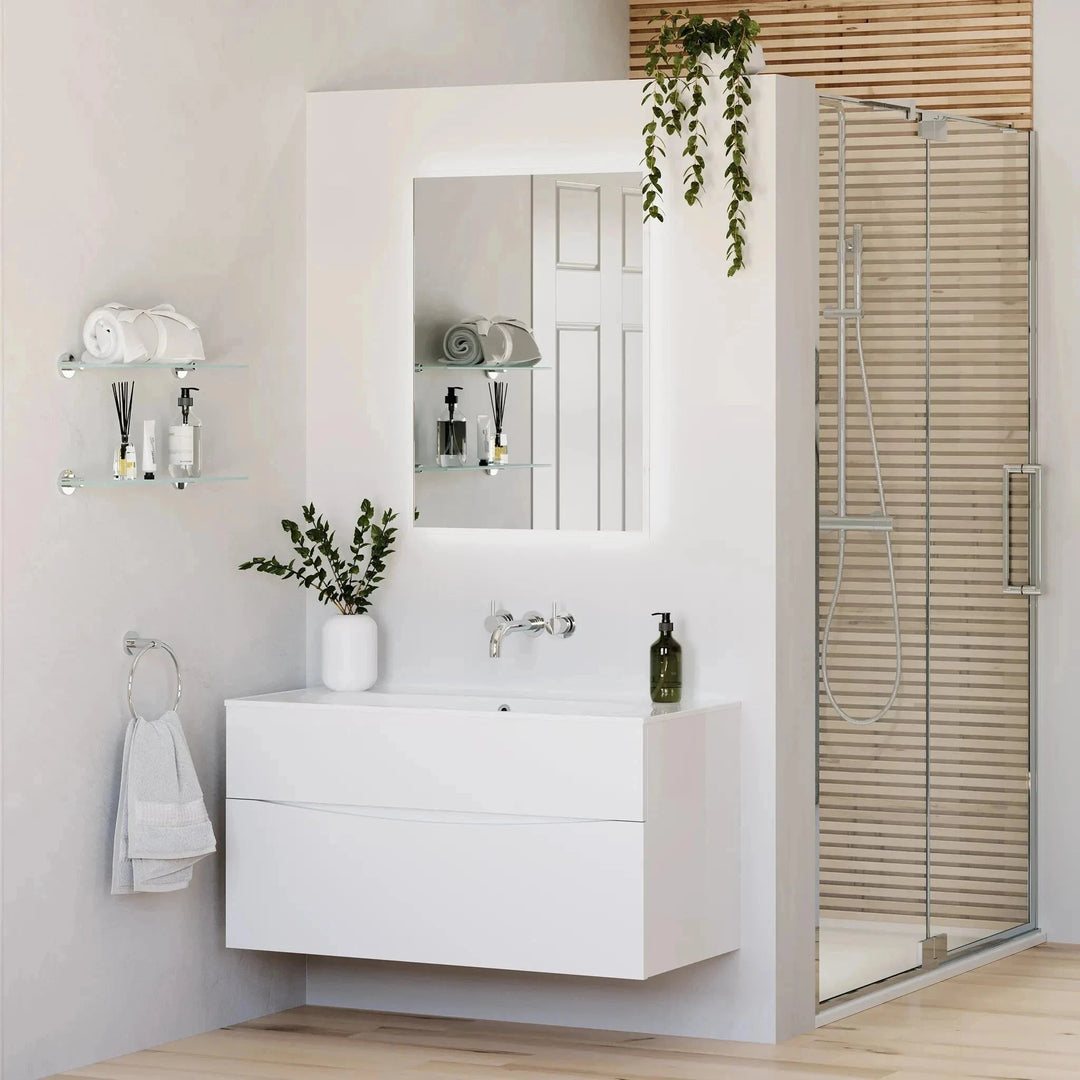
The instinct in a small bathroom is often to choose a smaller mirror, on the basis that a large one will feel overwhelming. In practice, the opposite is frequently true. A generously sized mirror reflects more of the room back at itself, effectively doubling what the eye perceives. The boundary between the wall and the mirror disappears, and the space feels open.
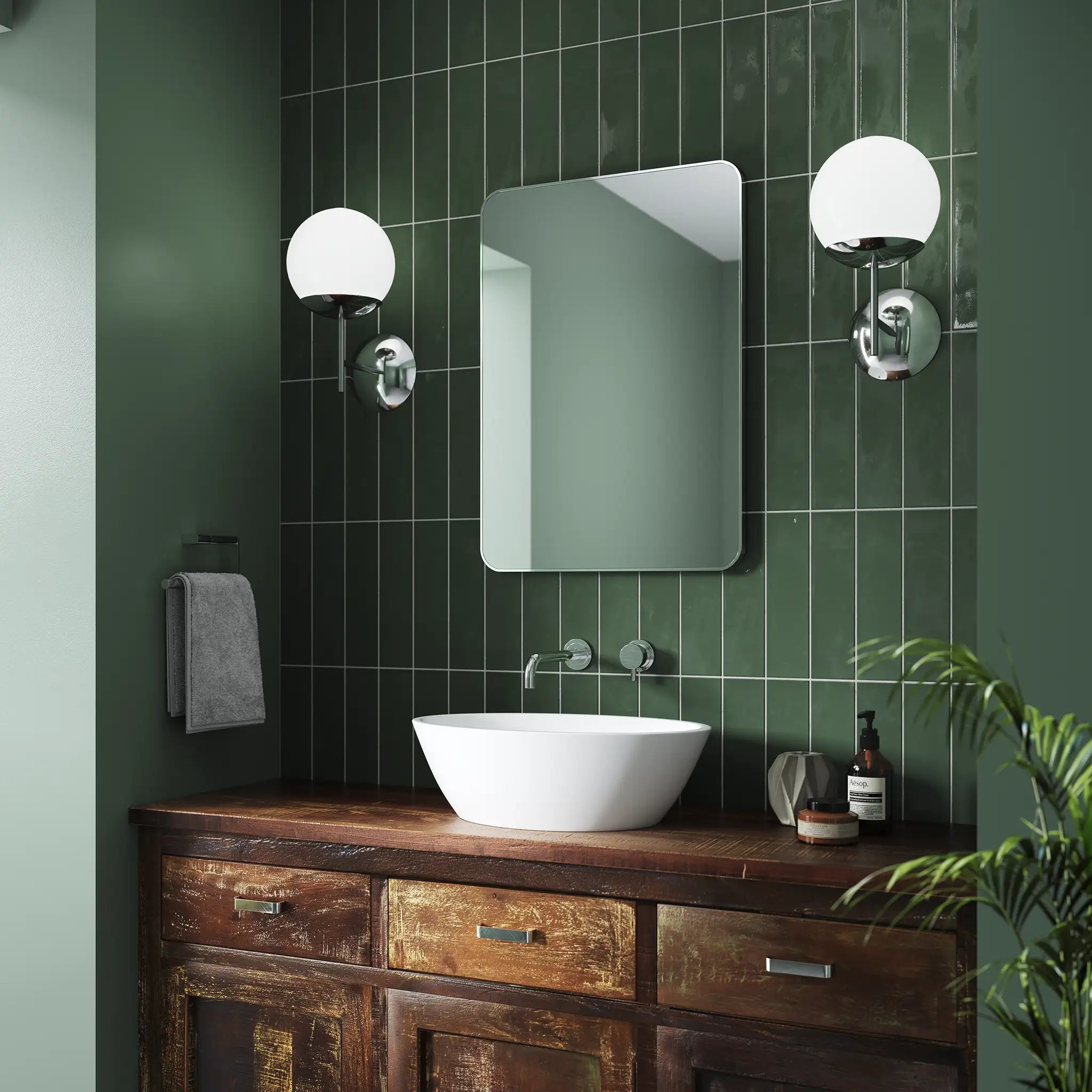
As a rough guide, your mirror should be close to the width of the basin or vanity unit below it — not narrower, and ideally not significantly wider. Going right up to the available wall width can work beautifully in compact bathrooms, particularly if the mirror is frameless or has a very thin surround. What you want to avoid is a small mirror floating in a large expanse of bare wall, which tends to emphasise rather than conceal the room's limitations.
Height matters too. In a cloakroom where ceiling height is your friend, a tall portrait mirror draws the eye upward and makes the room feel less confined. If headroom is the constraint rather than width, a wide landscape mirror set lower on the wall can widen the visual field.
Shape and Frame Considerations
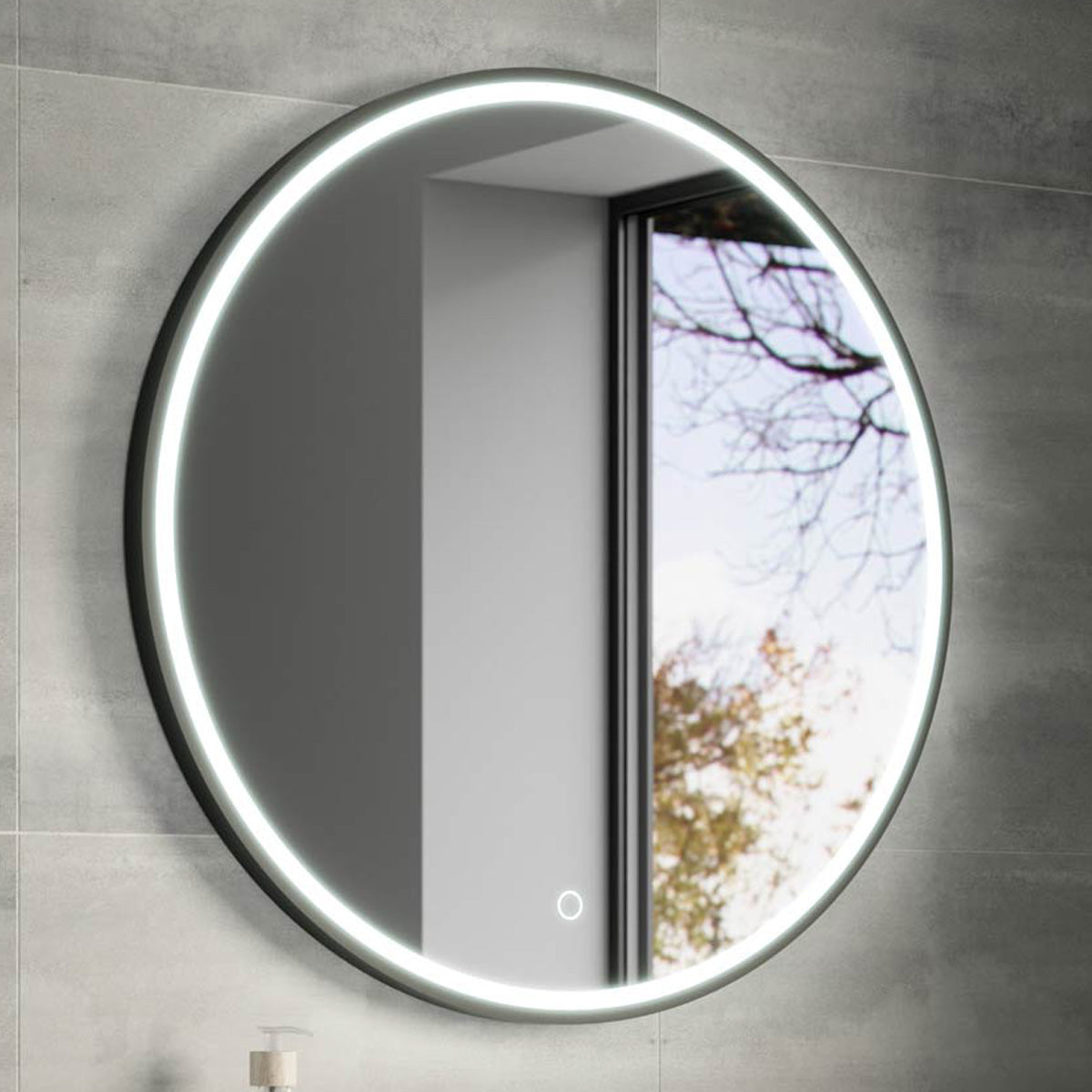
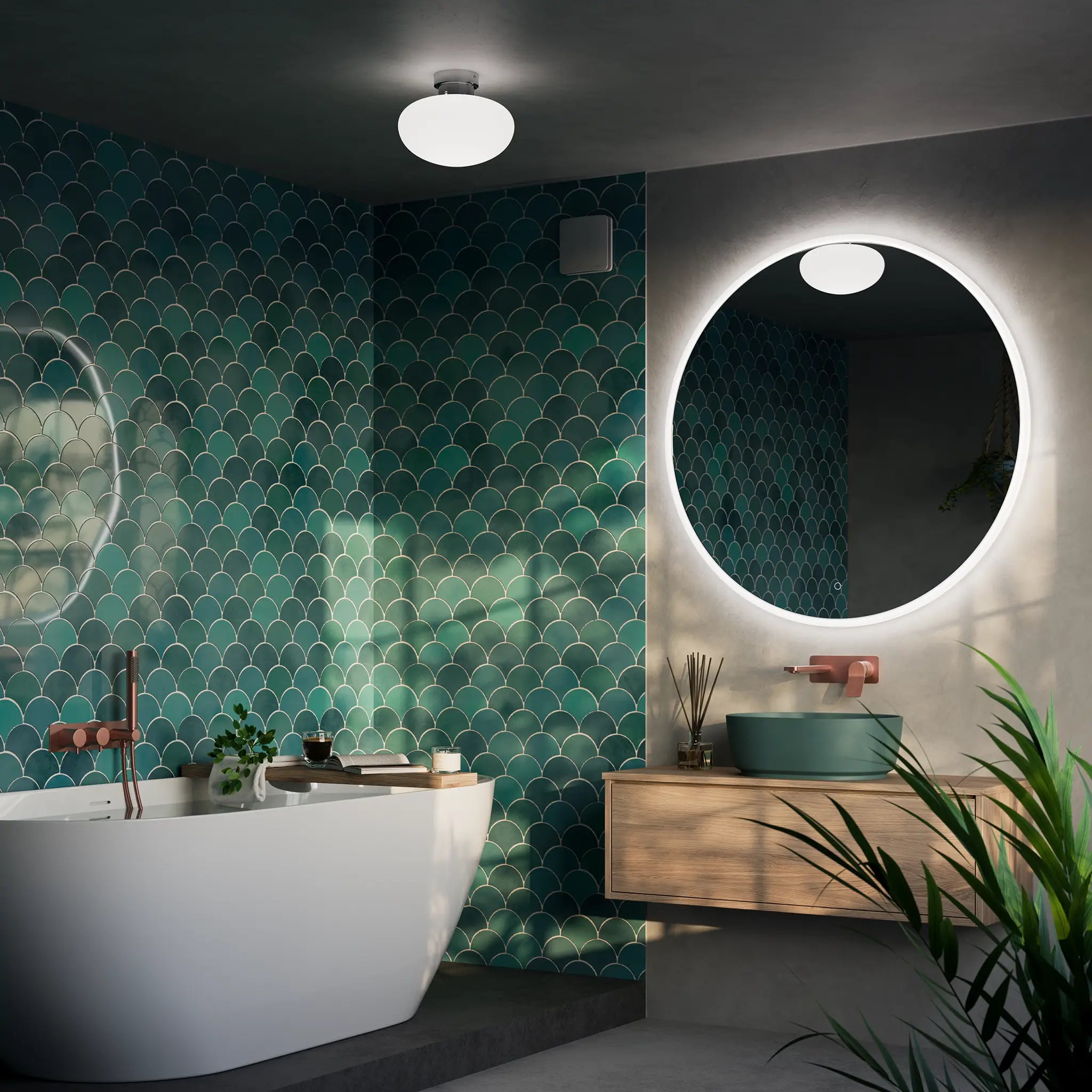
Round and oval mirrors are particularly effective in small bathrooms because their curved edges have no hard corners to echo the geometry of the room. Where a rectangular mirror might reinforce the boxy feeling of a tight space, a circle or pill shape sits more softly against the wall and can make a cloakroom feel considered and deliberate rather than squeezed.
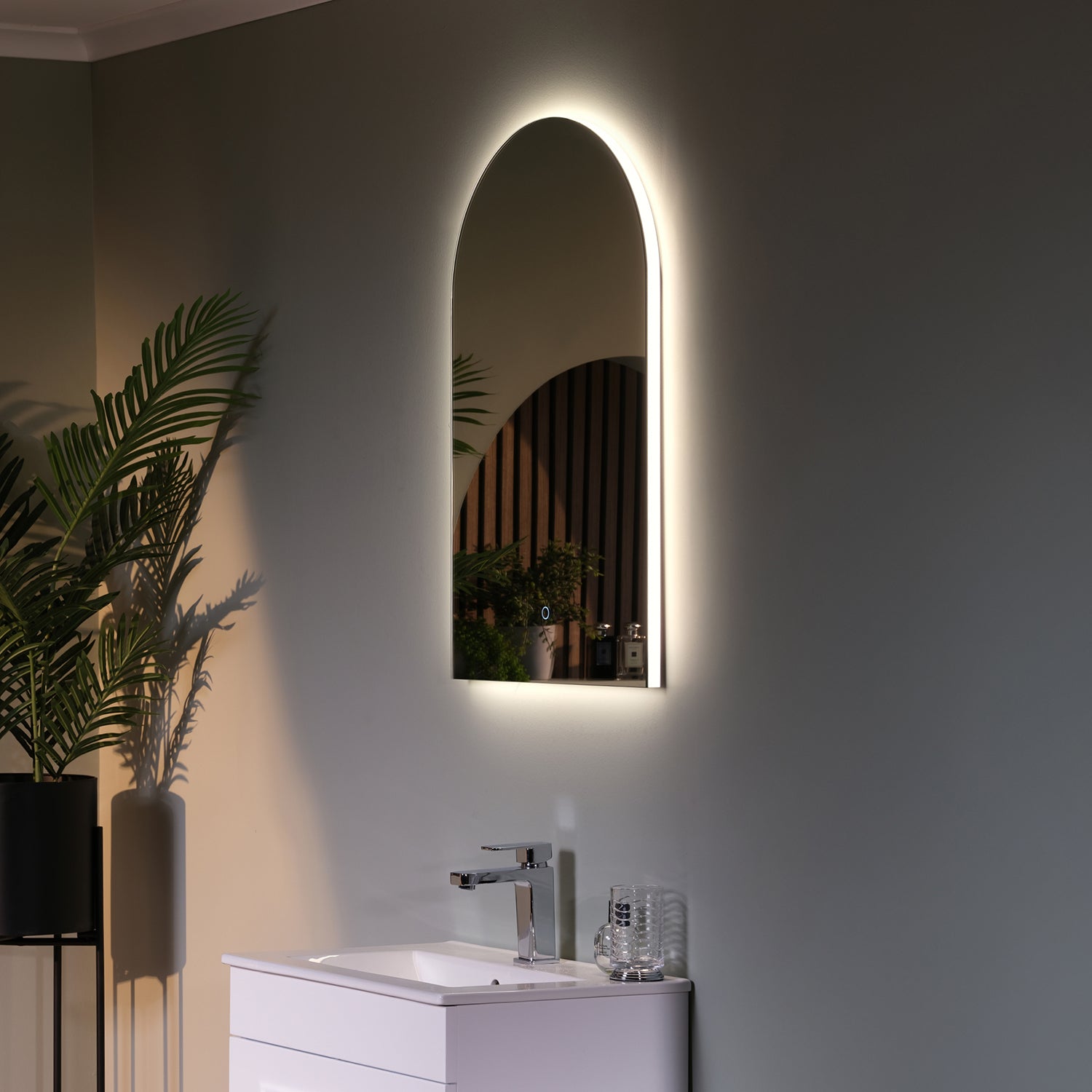
Arched mirrors — with a flat base and a curved top — are a popular middle ground, offering the height of a portrait format while softening the silhouette. They work especially well above pedestal basins or wall-mounted basins, where there's nothing below the mirror to match to a rigid horizontal.
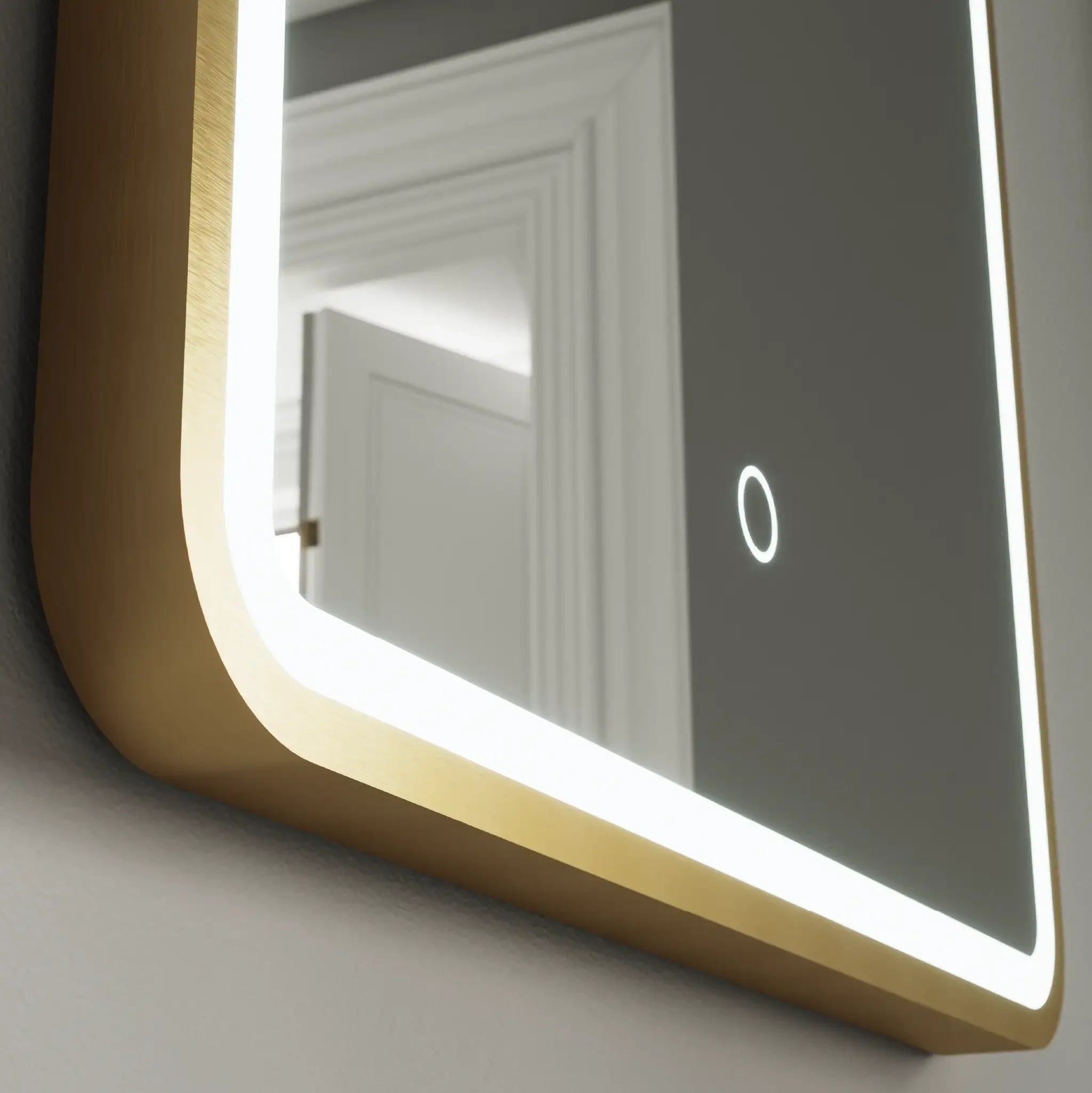
Frame choice has an effect too. A thick, heavy frame adds visual weight that a small room doesn't always have room to carry. Frameless mirrors, or those with a slim black, brass, or chrome surround, sit more lightly on the wall. That said, a statement frame in a cloakroom — which is often a space where you can afford to be bolder, precisely because you don't spend long in it — can turn the mirror into a genuine focal point rather than a functional afterthought.
Storage in a Small Space: The Case for a Shallow Cabinet
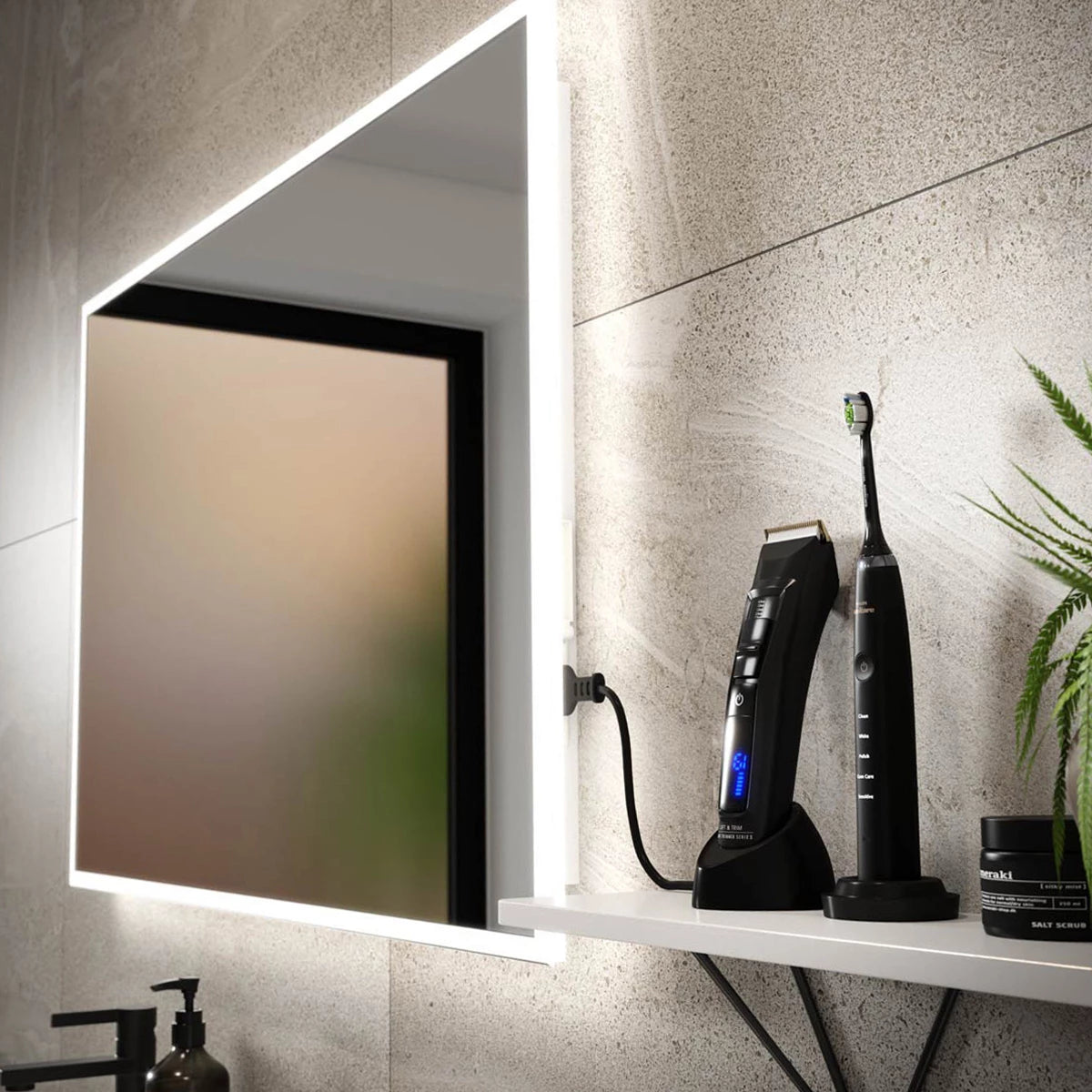
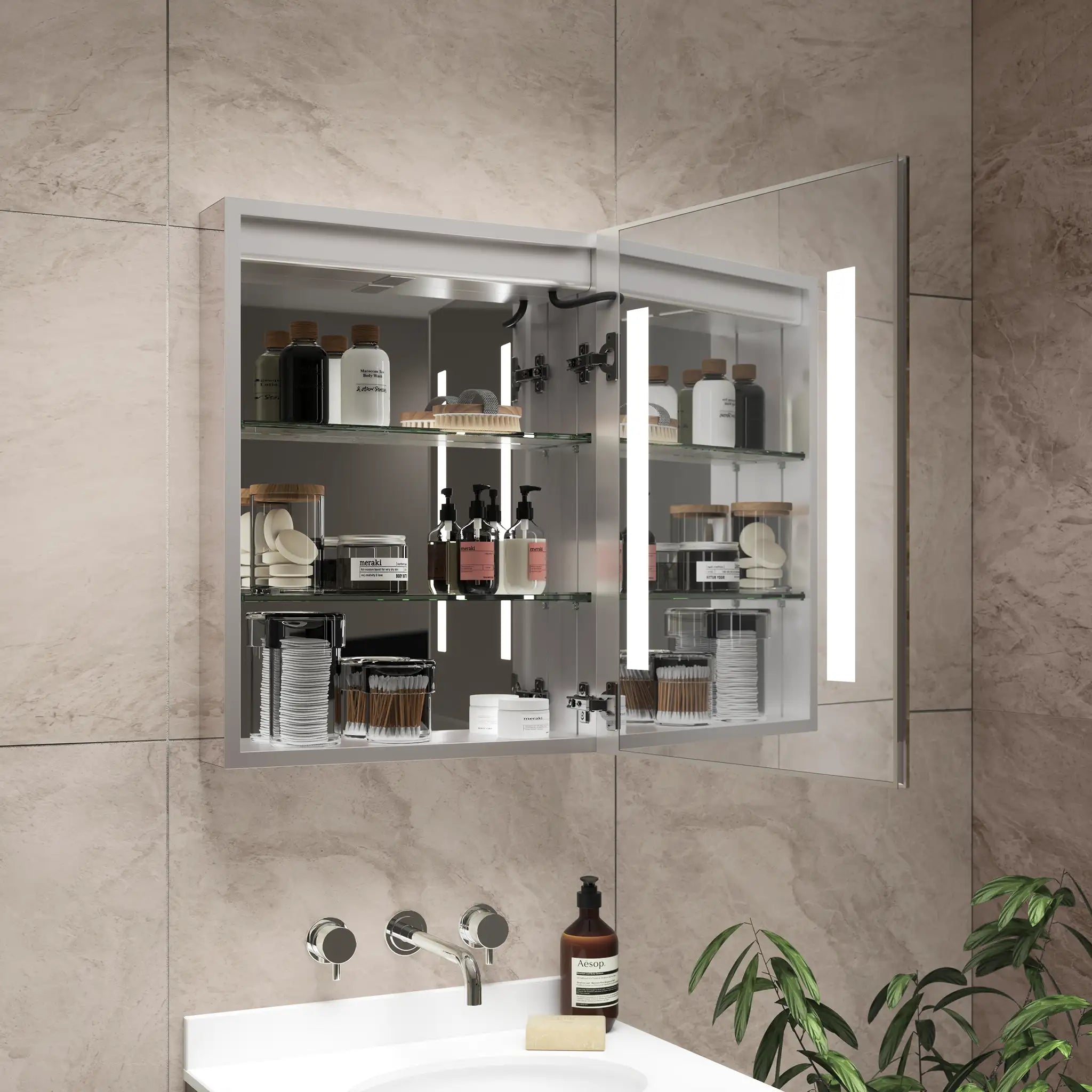
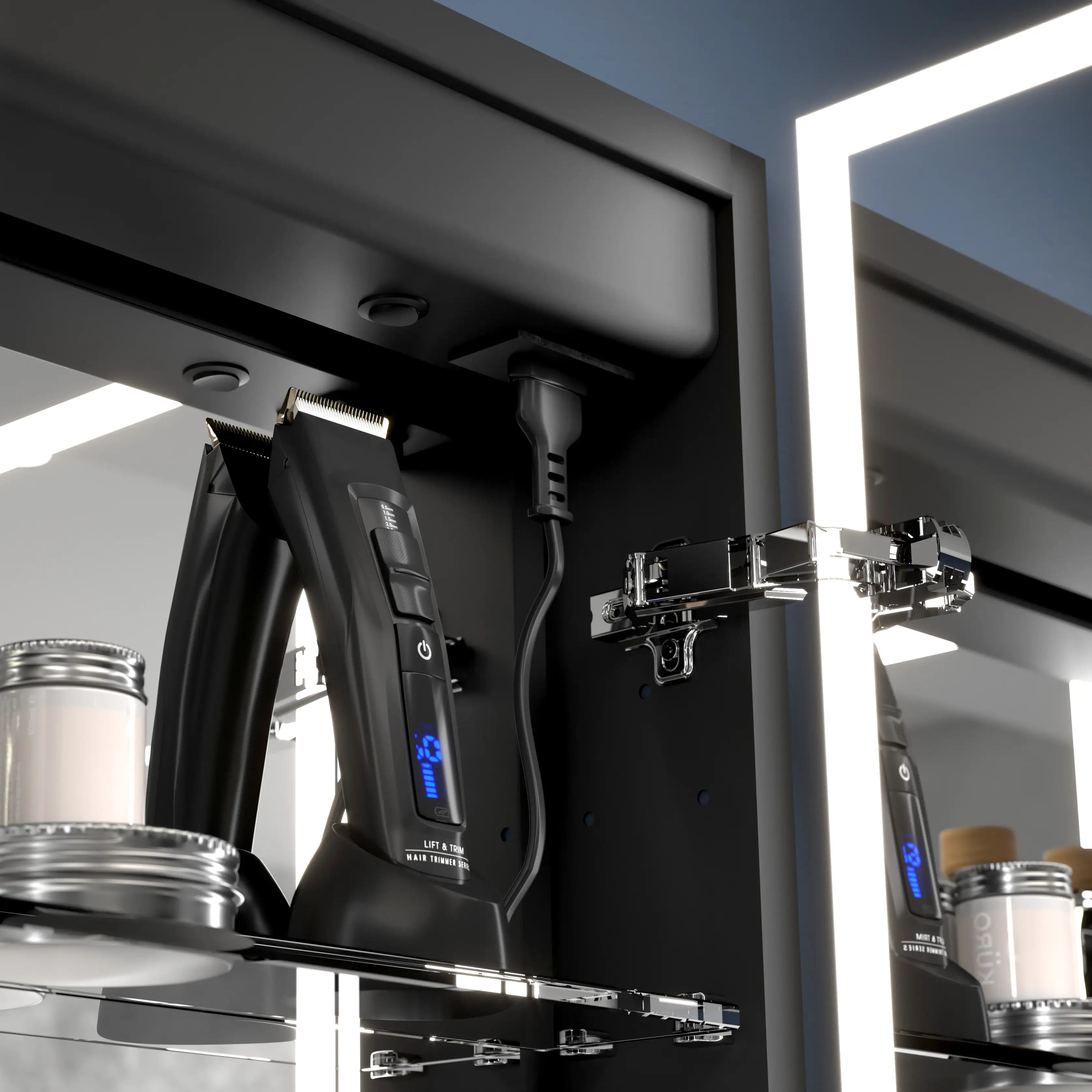
If your cloakroom has nowhere to put hand cream, a spare roll of toilet paper, or a few basics, a compact mirror cabinet can solve the problem without adding anything to the floor plan. Surface-mount cabinets in single-door configurations are typically between 120mm and 145mm deep — enough to store toiletries neatly, but not so deep that they feel like a box on the wall.
In very tight spaces, the question of door swing matters. A single-door cabinet that opens the wrong way can clash with a towel rail, a door frame, or the basin itself. Check the hinge direction against your room layout before ordering. Many models are available in left-hinged or right-hinged versions, and it's a simple thing to get right at the buying stage.


Installation in a Cloakroom: Power and Practicalities
Cloakrooms often have more limited electrical provision than main bathrooms, and some — particularly in older properties — have no convenient wiring point for a hardwired mirror. This is where battery-powered and USB-C rechargeable options come into their own.
A battery-powered illuminated mirror requires no wiring at all: fix it to the wall with the appropriate fixings and it's done. You lose a few features — a shaver socket isn't possible, and a demister pad isn't typically included — but the LED lighting works well, the mirror is fully functional, and installation is genuinely straightforward. For renters, or for anyone who wants to avoid the cost and disruption of electrical work in a secondary space, it's an excellent practical choice.
A Note on Lighting in Windowless Cloakrooms
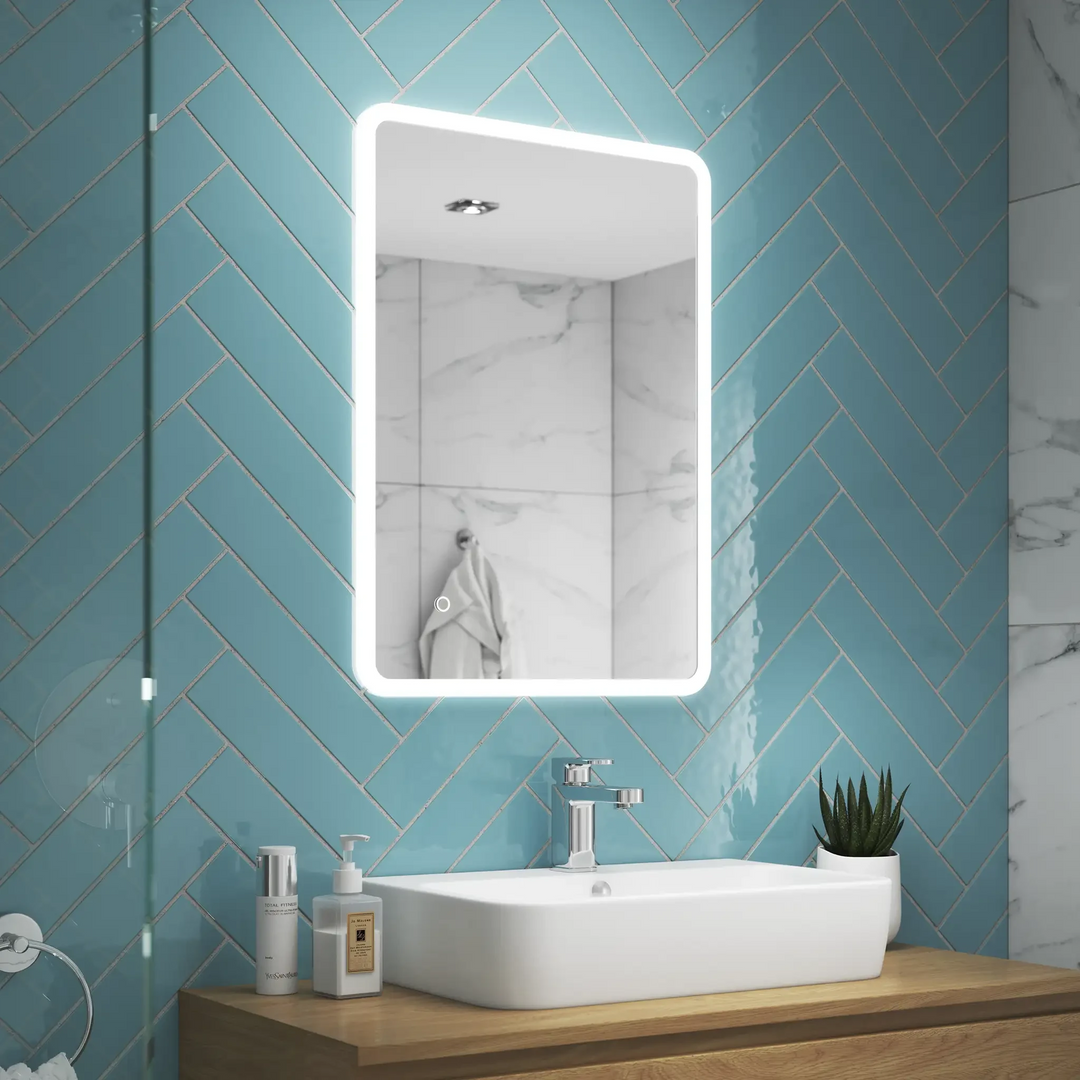
Many downstairs cloakrooms have no natural light, which makes the quality of the mirror's built-in illumination more important than it might otherwise be. An illuminated mirror in a windowless cloakroom becomes the primary light source for checking appearance, and the difference between a warm, flattering glow and a harsh cool light is immediately obvious.
Colour-adjustable LED mirrors, which allow you to choose between warm and cool tones, are worth considering here. For a guest cloakroom especially, offering light that flatters rather than flattens is a quiet but real quality marker.
Ready to find the right fit? Browse compact mirrors by size or explore the full mirror cabinet range — all with free next-day delivery and a 10-year guarantee.