



Most bathroom mirrors are chosen for how they look on the wall. Far fewer are chosen with any real thought for how well they illuminate the person standing in front of them. For people who apply makeup, shave closely, or do any kind of detailed grooming work at the mirror, that's a missed opportunity — because the quality of the light coming from your mirror has a bigger effect on the results than almost any other single factor.
This guide covers what to look for, what to avoid, and why it matters.
The Problem With Most Bathroom Lighting
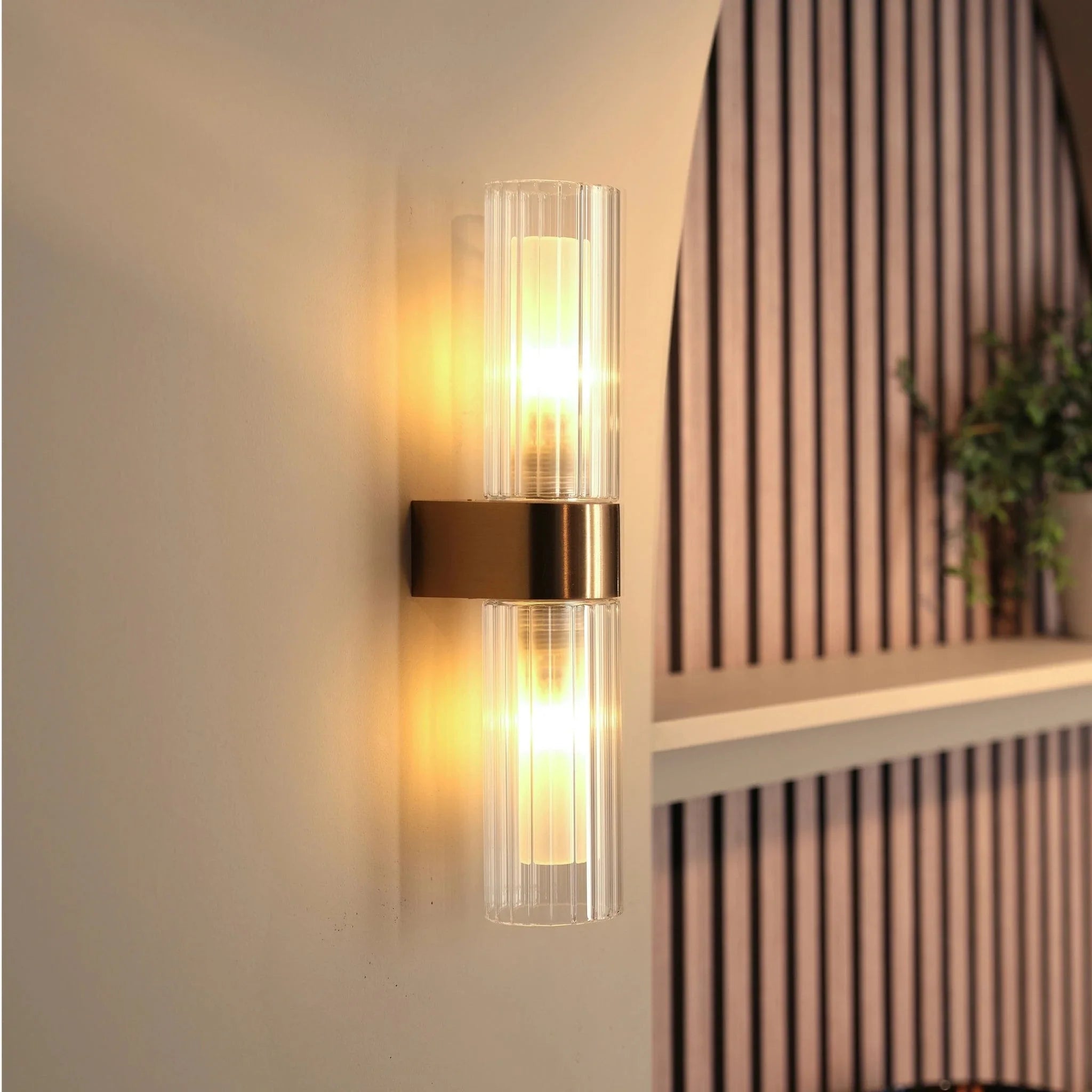
The typical bathroom ceiling light points downward. That's sensible for general illumination, but for a person standing at a basin, it creates shadows under the eyes, nose, and chin — exactly the areas where detail matters most for shaving and makeup application. The more overhead the light source, the more dramatically these shadows fall, and the harder it becomes to work accurately.
A bathroom mirror with its own built-in lighting solves this by providing illumination from the same plane as the mirror face. The light comes from beside or around the mirror surface rather than from above, which means it hits the face more evenly and eliminates the shadowing that ceiling lighting creates.
This is why professional makeup artists work in front of vanity mirrors rather than under ceiling lights. It's not a vanity (in the other sense of the word) — it's a practical choice based on how light needs to fall to be useful.
Lighting Style and What Each Does
The way light is distributed across a mirror varies depending on the design, and different styles suit different tasks.
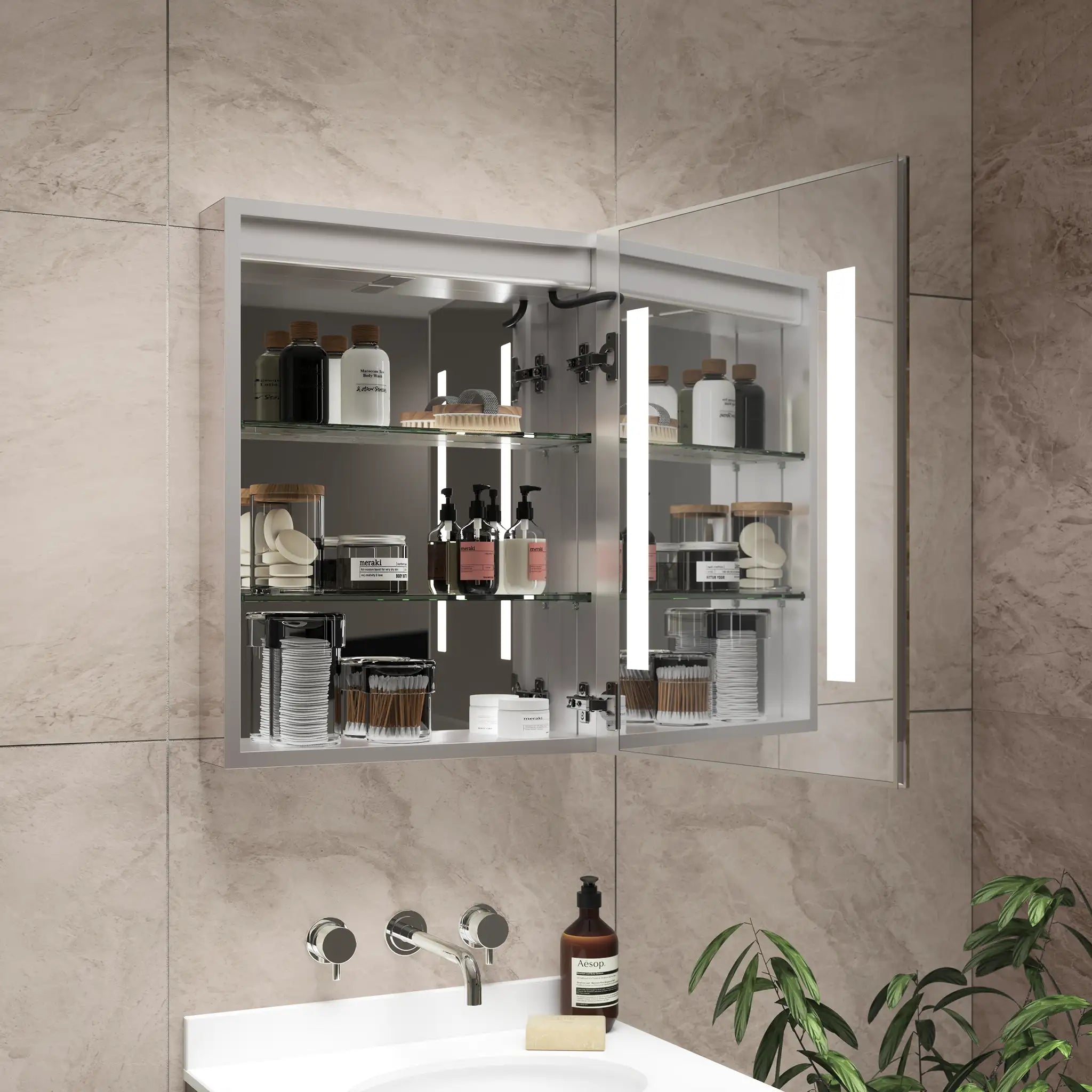
Front-lit mirrors use strips of LEDs positioned around the mirror face, often in a bar configuration along the top and sometimes the sides, or in individual dot-format clusters. The light falls directly onto the face, providing close to the same effect as the classic makeup mirror with bulbs around the perimeter. This is the most functionally effective style for detailed grooming work.
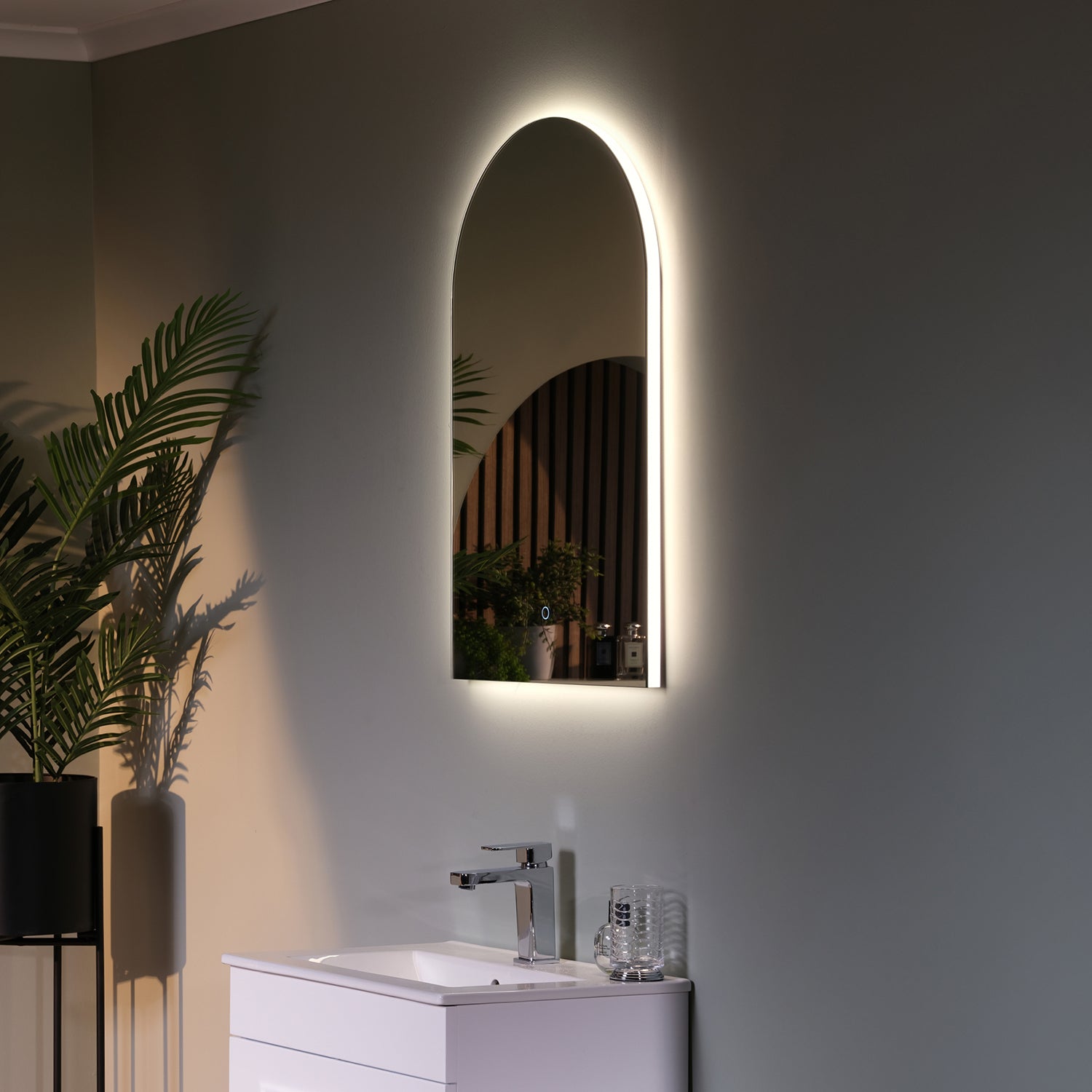
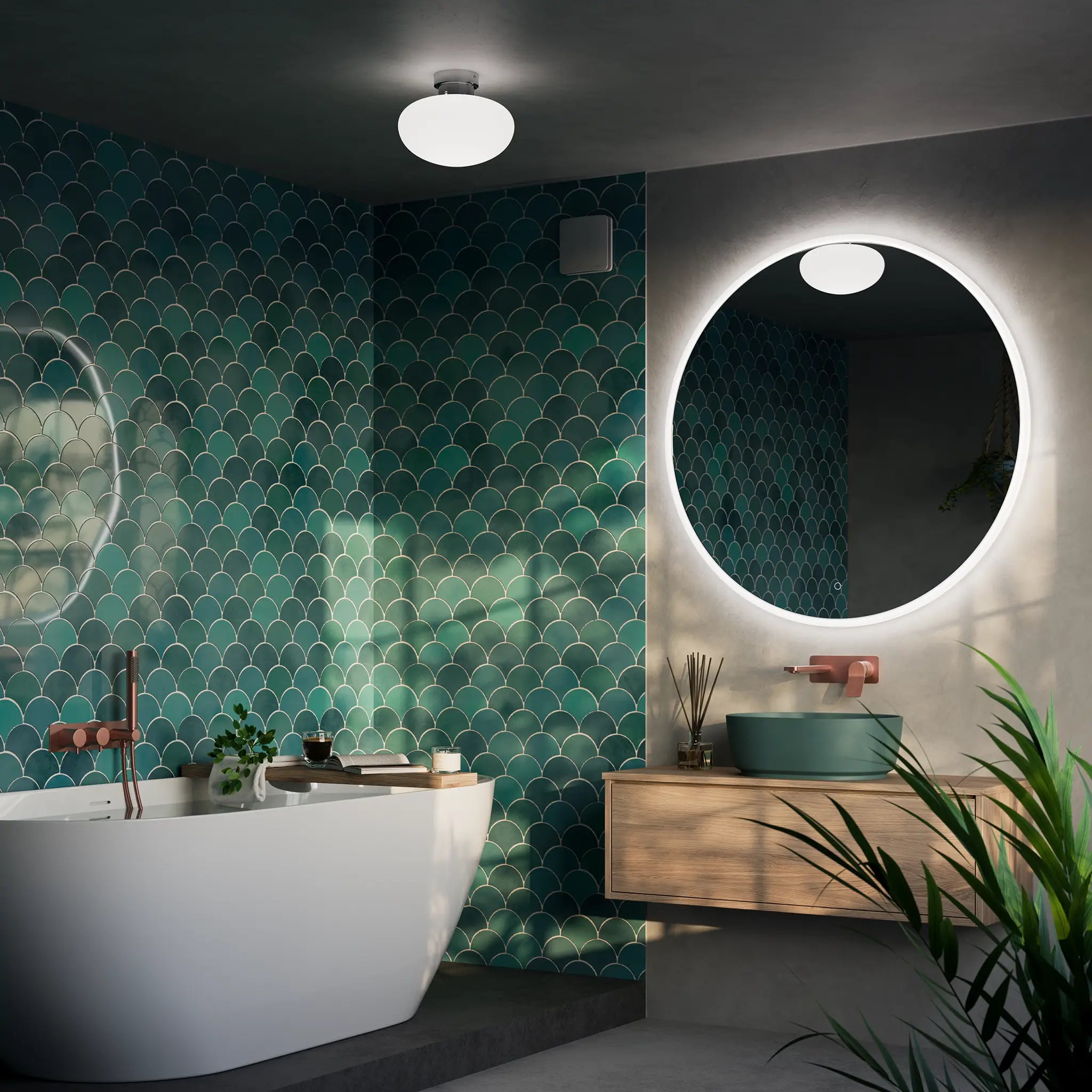
Backlit mirrors illuminate the wall behind the mirror glass, casting a soft halo of light. This is atmospheric and adds to the feel of the room, but it's not particularly useful for close work — the light is ambient rather than task-oriented. Backlit mirrors are excellent for bathrooms where mood and aesthetics are the priority, less so for precision grooming.
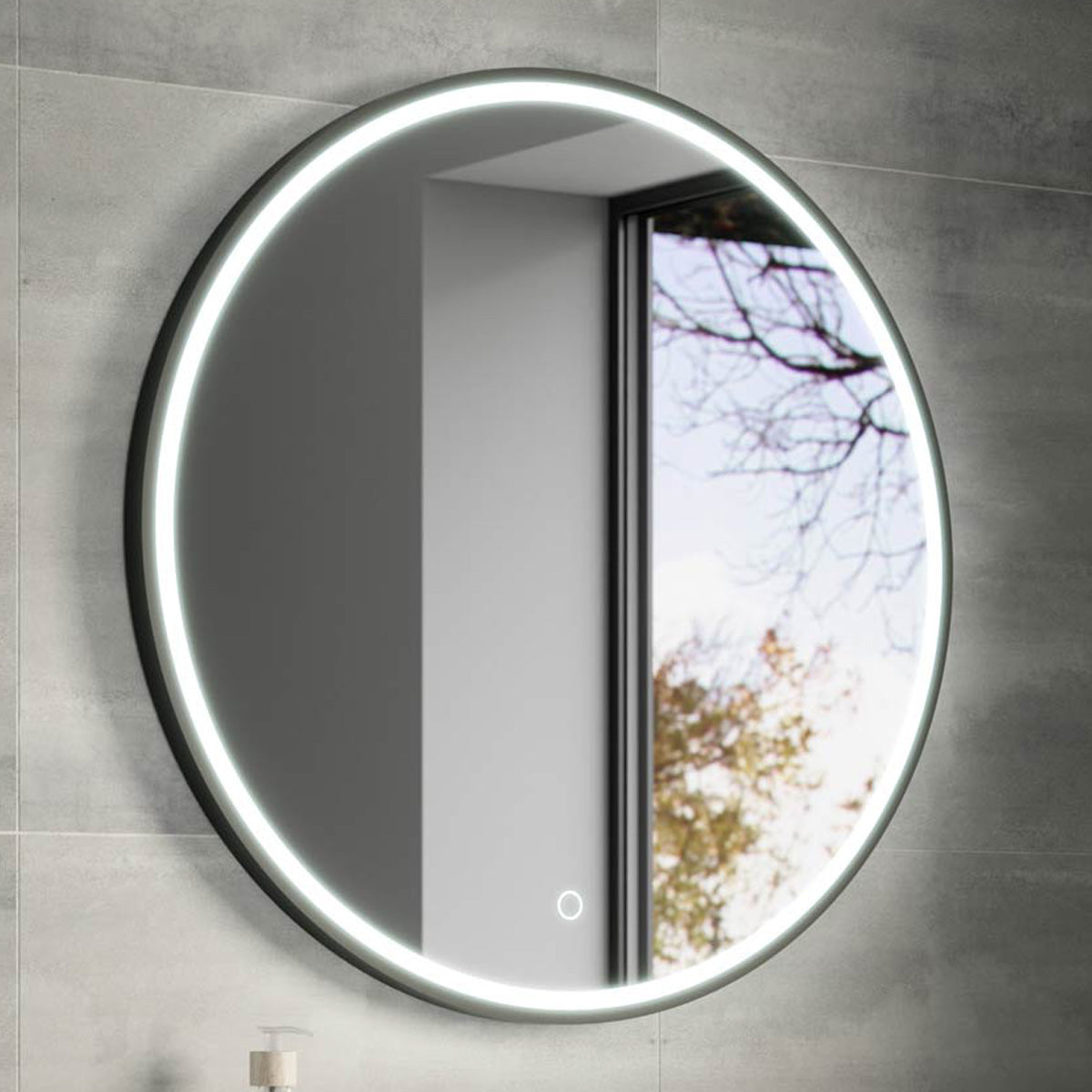
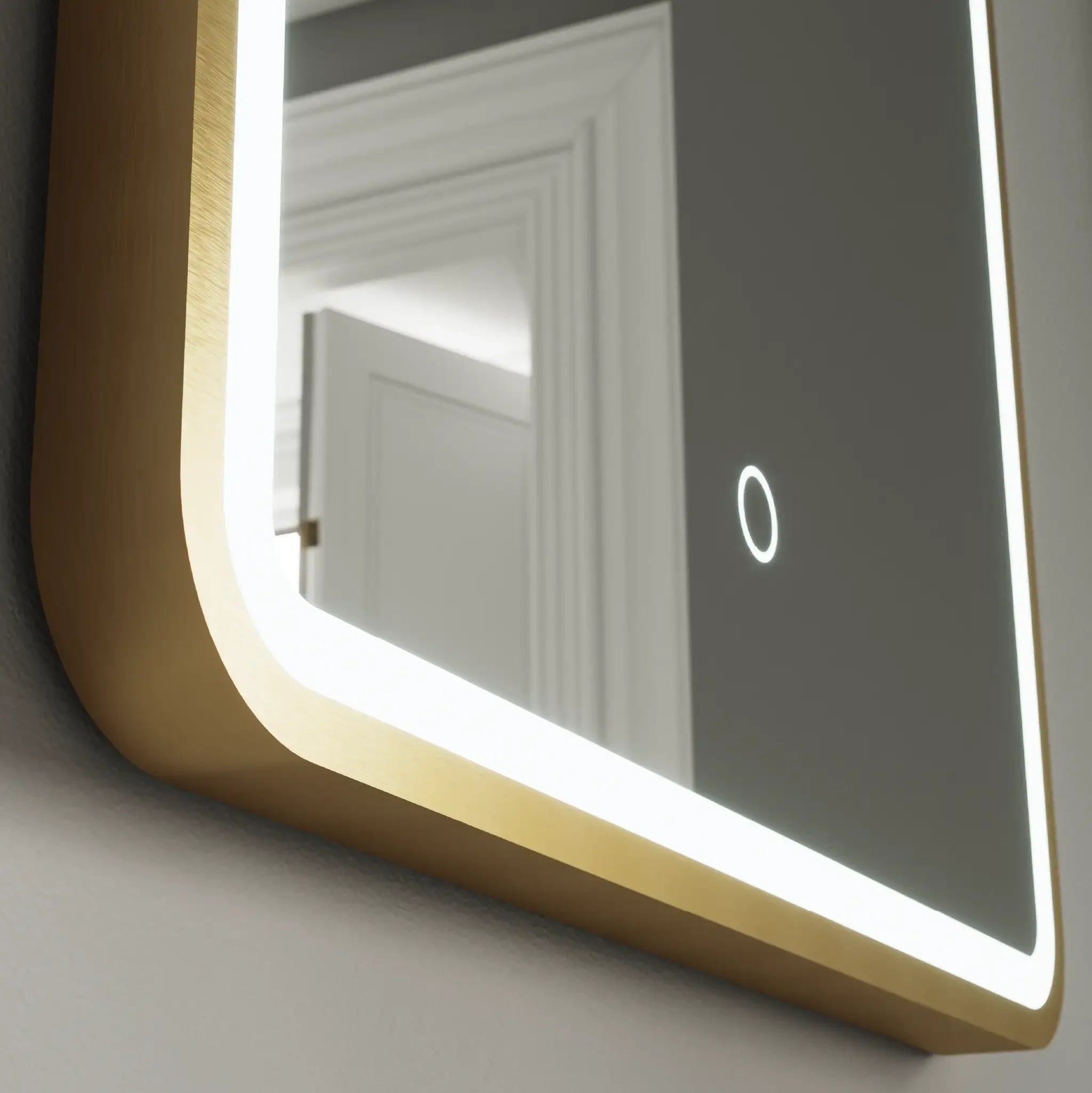
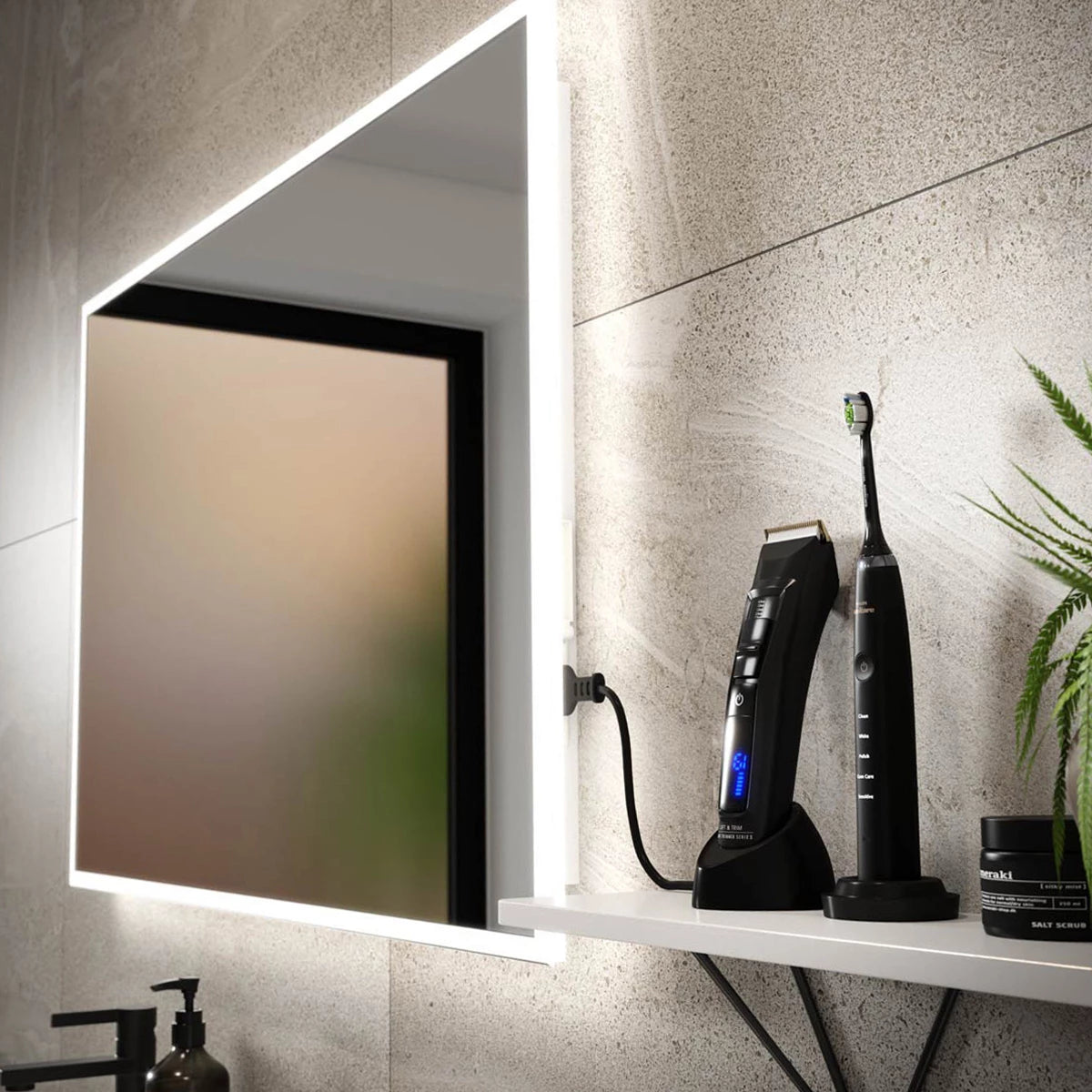
Edge-lit mirrors emit a gentle glow around the frame or the perimeter of the glass. The effect is elegant and even, and works well for everyday use — it removes the worst of the ceiling light shadows without being harsh. It sits between front-lit and backlit in terms of task suitability.
For those who regularly apply makeup or shave closely, the front-lit style is the most reliable choice. The bar or dot configuration that illuminates the face directly produces the even, shadow-free light that makes detailed work accurate.
Colour Temperature: The Detail That Most People Miss
Even if the positioning and style of the light is right, the colour temperature — measured in Kelvin — determines whether what you see in the mirror reflects what you'll look like in the real world.
Light at the cool end of the spectrum (towards 6000K) is very white, sometimes with a slightly blue tint. Under this light, skin tones can look washed out, and colours appear slightly different from how they read in daylight. It's energising and good for alertness, but it can be unflattering and misleading for makeup.
Warm light (towards 2700–3000K) is yellowish and cosy — excellent for evenings and relaxation, but it shifts how colours look. Foundation shades that appear well-matched under warm light may look different in the natural light you encounter outside.
The ideal for makeup application is a neutral or natural white, typically in the 4000–4500K range — sometimes described as "daylight balanced." At this temperature, skin tones look accurate, colour rendering is good, and the light is neither harsh nor flattering in a misleading way.
If you apply makeup to wear outdoors, this neutral range is particularly important. It removes the risk of leaving the house in light that misrepresents how your look actually reads in natural conditions.
Colour-Adjustable Mirrors: The Practical Solution
Rather than committing permanently to one colour temperature, colour-adjustable LED mirrors allow you to switch between settings to suit the moment. A neutral or cool setting for morning makeup and grooming, and a warm setting for a relaxing evening bath, all from the same mirror.
The more sophisticated versions allow continuous adjustment across the full Kelvin scale, so you can fine-tune the temperature to your exact preference. Combined with dimmable brightness control, this gives you genuinely flexible task and ambient lighting from a single product.
Placement and Height
Even the best-lit mirror becomes less effective if it's positioned at the wrong height. The centre of the mirror should align roughly with face height — which means the midpoint sits at around 150–160cm from the floor for most adults. If the mirror is too high, you're back to the same overhead-light problem the mirror was meant to solve.
For makeup application specifically, being close enough to the mirror to see fine detail matters. A mirror positioned at the right height, with front-directed or edge lighting at the appropriate colour temperature, provides working conditions that most home bathrooms have never previously offered.
Pebble Grey's illuminated range includes front-lit, edge-lit, and colour-adjustable options with dimmable controls, all designed to give you the right light for the task at hand. Every mirror and cabinet comes with a 10-year guarantee and free next-day delivery across the UK.
Browse illuminated mirrors with colour-adjustable lighting or explore the full mirror range.