



The assumption most people make when buying an illuminated bathroom mirror is that they'll need an electrician. For the majority of installations, that assumption is correct — but it's not the only option, and understanding when each power method makes sense can save you time, cost, and unnecessary disruption.
How Mains-Powered Mirrors Work
The vast majority of illuminated bathroom mirrors and cabinets are mains-powered, connected to a dedicated electrical spur on the wall. The connection is hardwired — a qualified electrician makes the final connection, not a plug socket — and the result is a reliable, permanent power supply that will run the mirror for as long as you want it.
Mains connection is required by UK wiring regulations (Part P) to be carried out by a Part P-registered electrician, and the installation must be RCD-protected. In practice, this means that when you're fitting an illuminated mirror with a shaver socket, demister pad, or Bluetooth system, you'll typically schedule an electrician as part of the installation. The work usually takes less than an hour and adds a modest amount to the overall project cost.
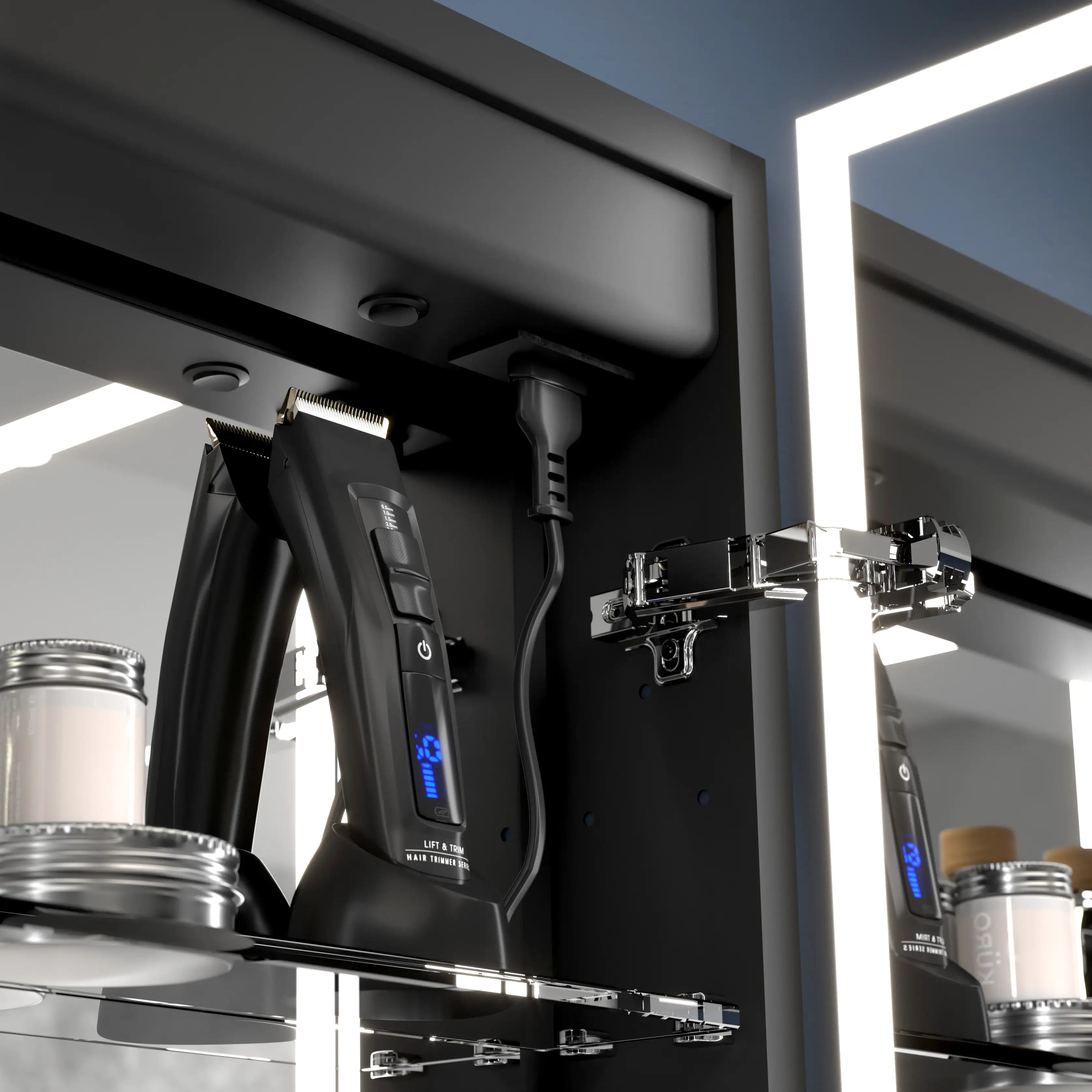
The trade-off for this upfront investment is access to the full feature set. Mains-powered mirrors can include every available technology: adjustable colour temperature, high-output LEDs, integrated demister pads, shaver sockets, Bluetooth audio, motion sensors, and Alexa voice control. There are no limitations imposed by power source, and the light output can be as strong as you like without any concern about draining a battery.
If you own your home, are fitting out a new bathroom, or are undertaking any kind of renovation where an electrician is already involved, a mains-powered mirror is almost always the right choice. The investment is proportionate, the result is permanent, and the features available are comprehensive.
How Battery-Powered Mirrors Work
Battery-powered illuminated mirrors operate on standard AA batteries, typically a set of eight, which power the LED lighting without any connection to the mains. There are no wiring requirements, no need for an electrician, and no obligation to position the mirror near an existing electrical point.
More recently, some models have moved to USB-C rechargeable batteries — essentially a sealed internal battery that you charge periodically using a standard cable. This removes the ongoing cost of replacing batteries and makes the process of recharging more straightforward.
In both cases, installation is genuinely simple: choose your position, fix the mirror to the wall with the appropriate anchors, and it's ready to use. For a renter, for someone fitting out a secondary bathroom on a limited budget, or for anyone fitting a mirror in a space where running a new electrical spur would be disproportionately disruptive, this is a meaningful practical advantage.
What You Give Up With Battery Power
Battery-powered mirrors work well for their intended purpose, but the power limitation does affect the feature set. Without a mains connection, you cannot have a shaver socket — there's simply no way to provide the safe, regulated mains outlet that a shaver socket requires. Demister pads, which heat the mirror glass gently to prevent condensation, are also generally absent from battery-powered models, as the sustained current draw would deplete batteries quickly.
LED brightness and run time depend on the charge level of the batteries, and over time the light may become slightly less bright as batteries approach the end of their life. This is rarely dramatic, but it's worth being aware of if you rely on the mirror for tasks that require good illumination.
USB-C rechargeable models mitigate this more than traditional AA battery versions — you recharge before the output drops, rather than waiting for batteries to run dry.
The Rental and Renovation Question
For renters, battery-powered mirrors solve a specific and common problem. You can't hardwire a mirror in a property you don't own without the landlord's permission, and even with permission, the disruption of calling an electrician for a temporary installation may not be worthwhile. A battery-powered illuminated mirror lets you have the quality and functionality of a proper mirror — LED lighting, a clean look, decent build quality — without any of the commitment.
For renovation projects, the same logic works in reverse. If you're replastering, tiling, or rewiring anyway, the marginal effort of adding a spur for an illuminated mirror is small. Do it once, do it properly, and get access to the full feature set for the life of the bathroom.
A Note on Running Costs
Mains-powered LED mirrors are extremely energy-efficient. The LED technology used in modern illuminated mirrors draws very little current, which means the running cost of leaving the mirror on for an hour a day is genuinely minimal.
Battery-powered mirrors require either periodic battery replacement or occasional recharging, which most people find easy to manage as part of normal household routine. Neither option will add meaningfully to household energy costs.
Pebble Grey's range includes both mains-powered mirrors with the full feature set and battery-powered options — including USB-C rechargeable models — for situations where wired installation isn't practical. All are covered by the 10-year guarantee, and the UK customer service team is available if you have questions about which is right for your installation.