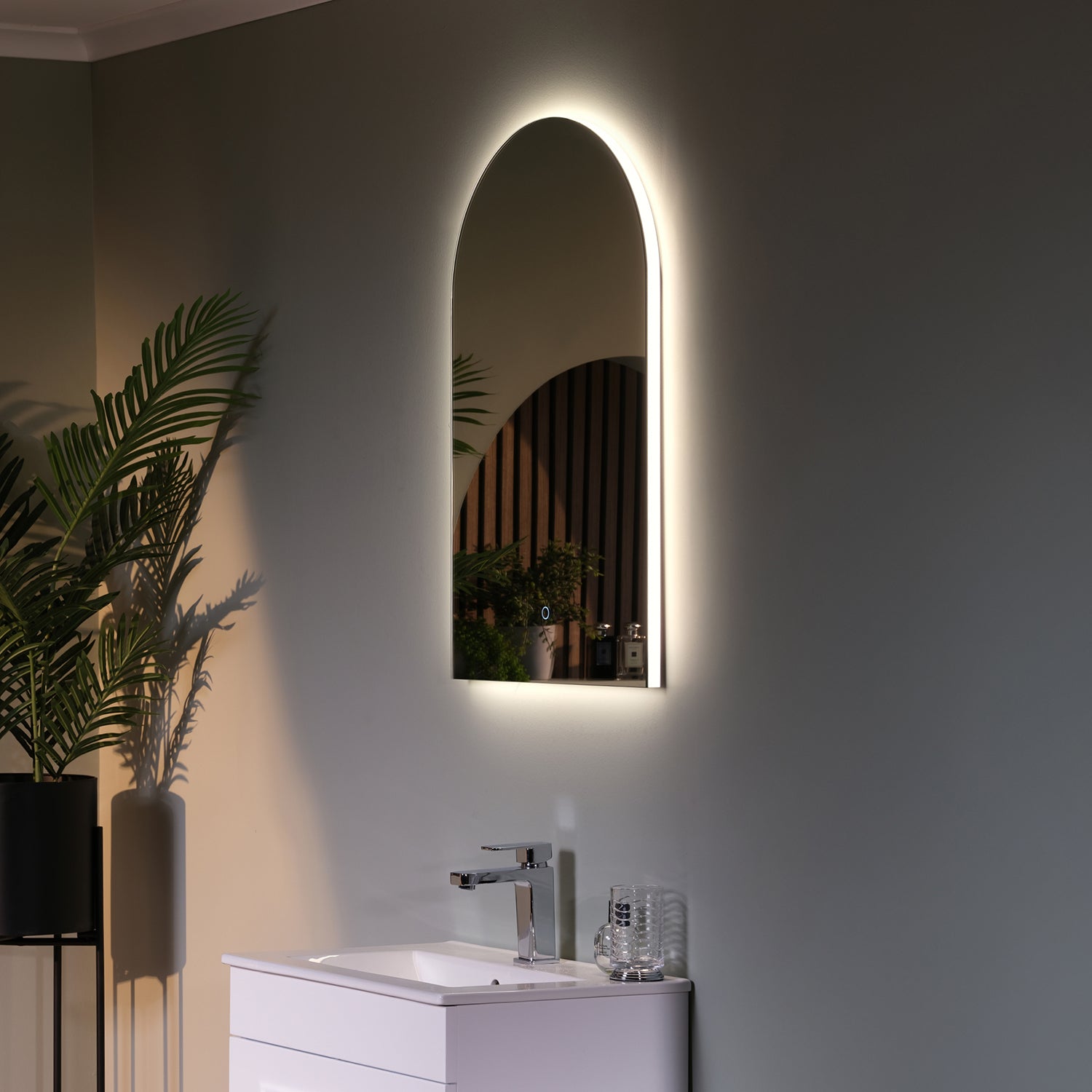
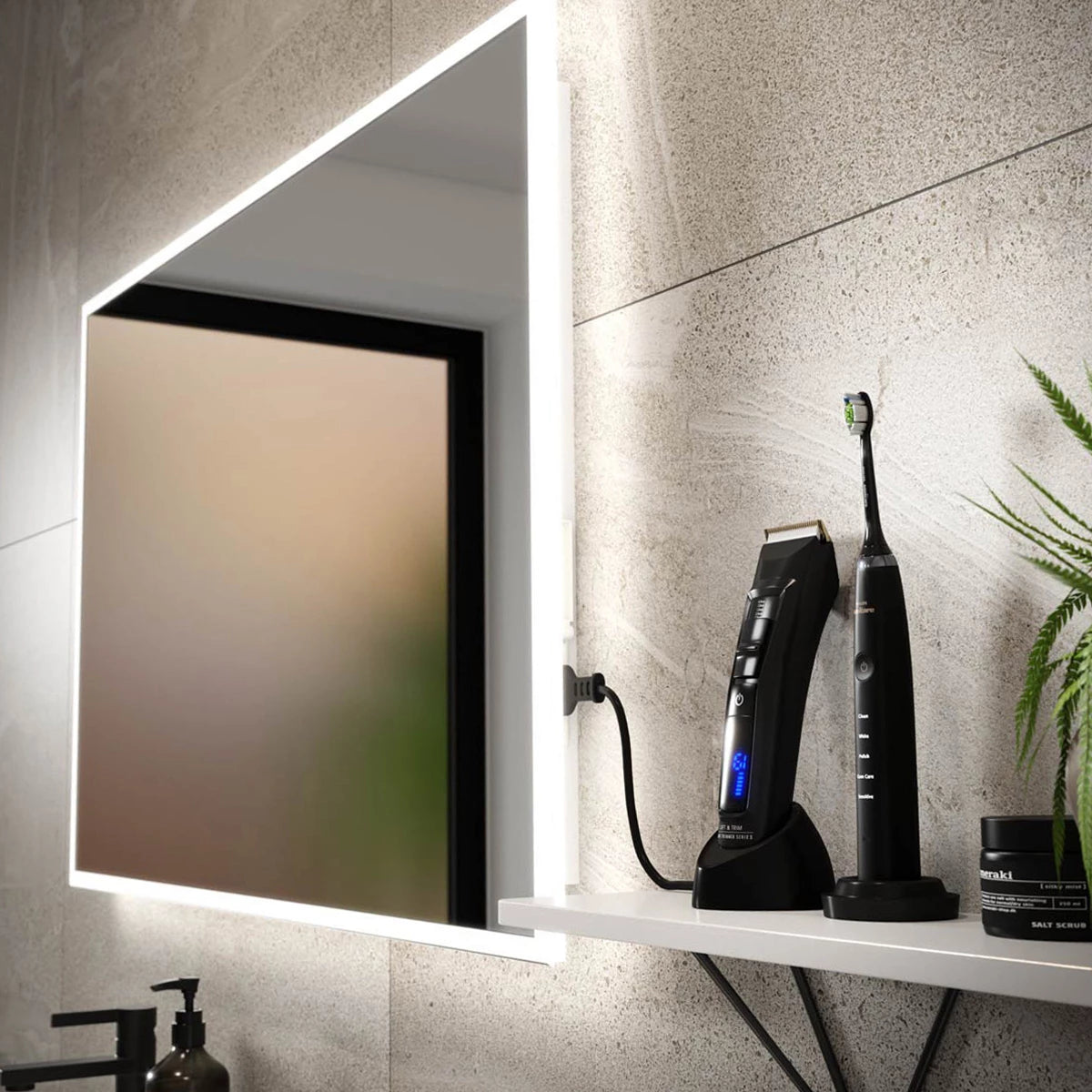
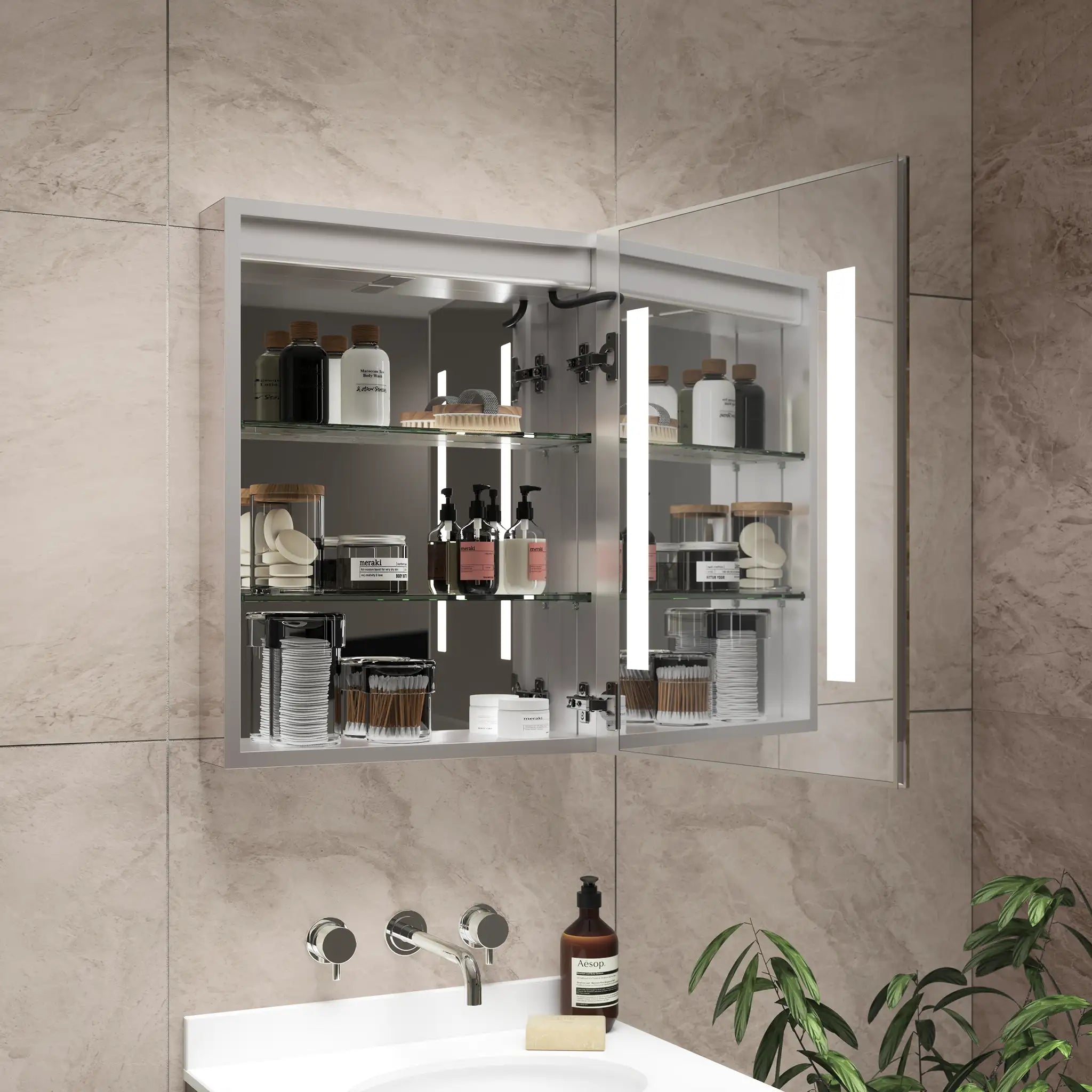

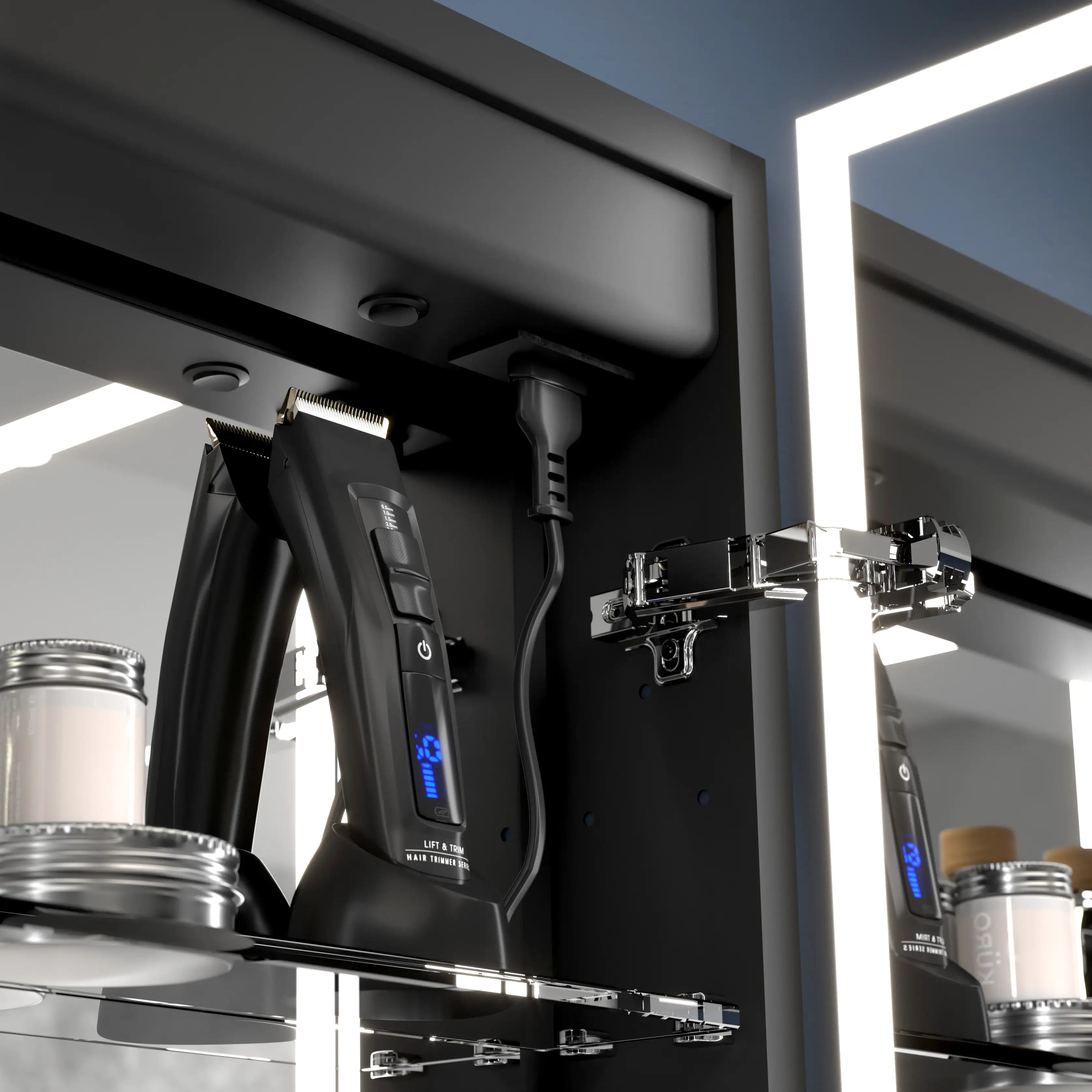



It is a reasonable thing to wonder. An illuminated mirror has LEDs running every time you use it, and energy costs are not something anyone is ignoring at the moment. The good news is that the answer is genuinely reassuring — and the numbers are worth understanding properly.
How Much Electricity Does an LED Mirror Actually Use?
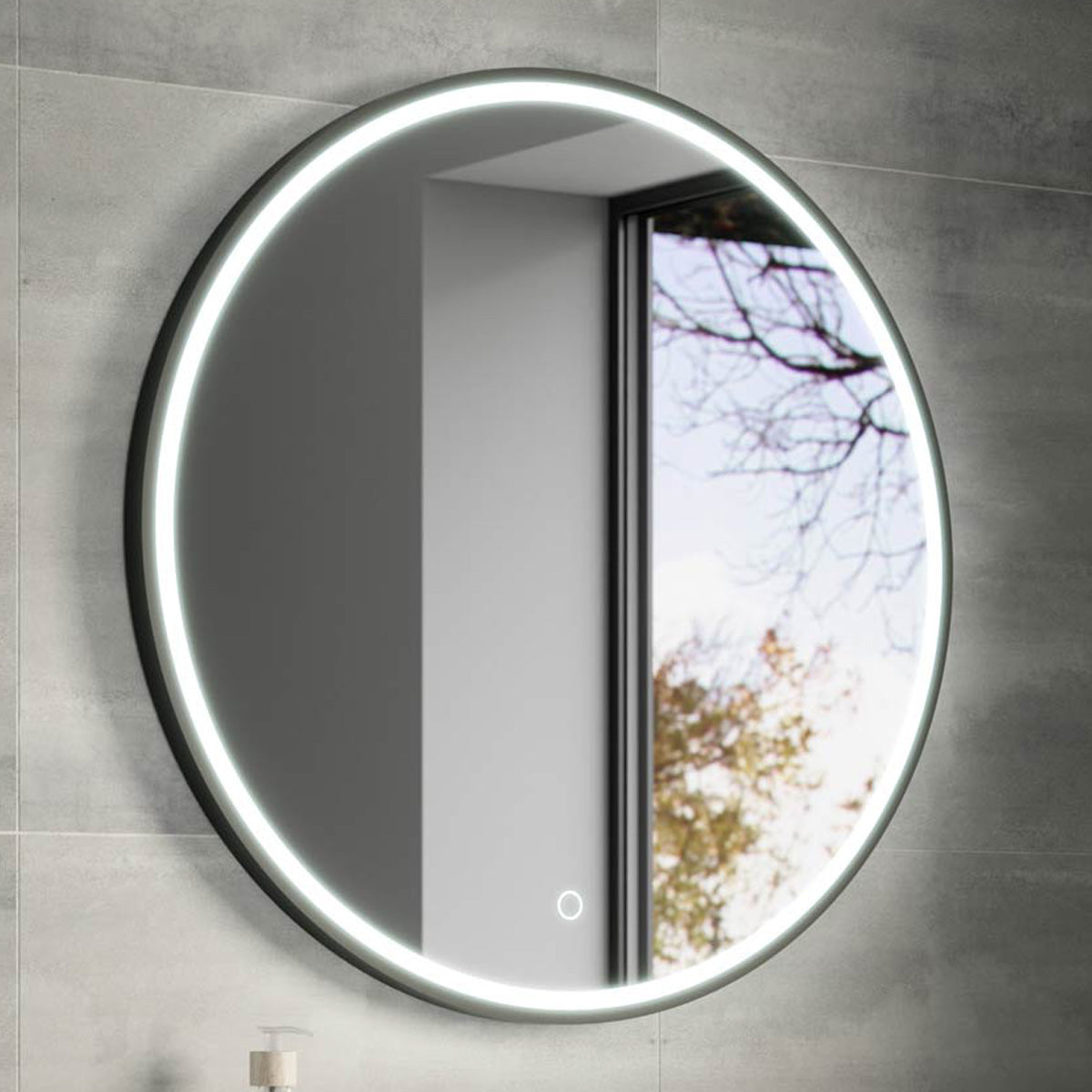
Illuminated bathroom mirrors vary in size and design, and their wattage varies accordingly. A compact mirror — say 500mm wide — might draw as little as 10 to 14 watts. A larger mirror with LEDs along all four sides might use 25 to 35 watts. Most mirrors sold for standard bathroom use fall somewhere in the 15 to 24 watt range.
To put that in context: the average household in the UK pays around 24 to 25 pence per kilowatt-hour for electricity (this fluctuates, so it is worth checking your current rate). A 20-watt mirror used for one hour a day uses 0.02 kilowatt-hours. At 25p per unit, that is half a penny per day, or around £1.80 per year.
Even if your mirror runs for two hours a day — which is generous — you are looking at roughly £3.50 to £4.00 per year for a mid-sized LED mirror. Over ten years, that is less than £40. It is one of the lowest-cost electrical items running in your home.
How Does That Compare to Older Bathroom Lighting?
The comparison with older technology is striking. A traditional incandescent bathroom bulb — the kind found in older over-mirror fittings — might draw 60 watts per bulb, and a fixture with two or three bulbs would use 120 to 180 watts. A fluorescent strip light runs more efficiently than incandescent, but still typically draws 30 to 40 watts, and the light quality is far harsher and less pleasant.
An LED mirror producing excellent, even illumination at 18 to 22 watts represents a significant reduction in running cost compared to the lighting it replaces — especially when you consider that it also eliminates the need for a separate overhead or side light in many bathrooms.
Dimmers Make a Real Difference
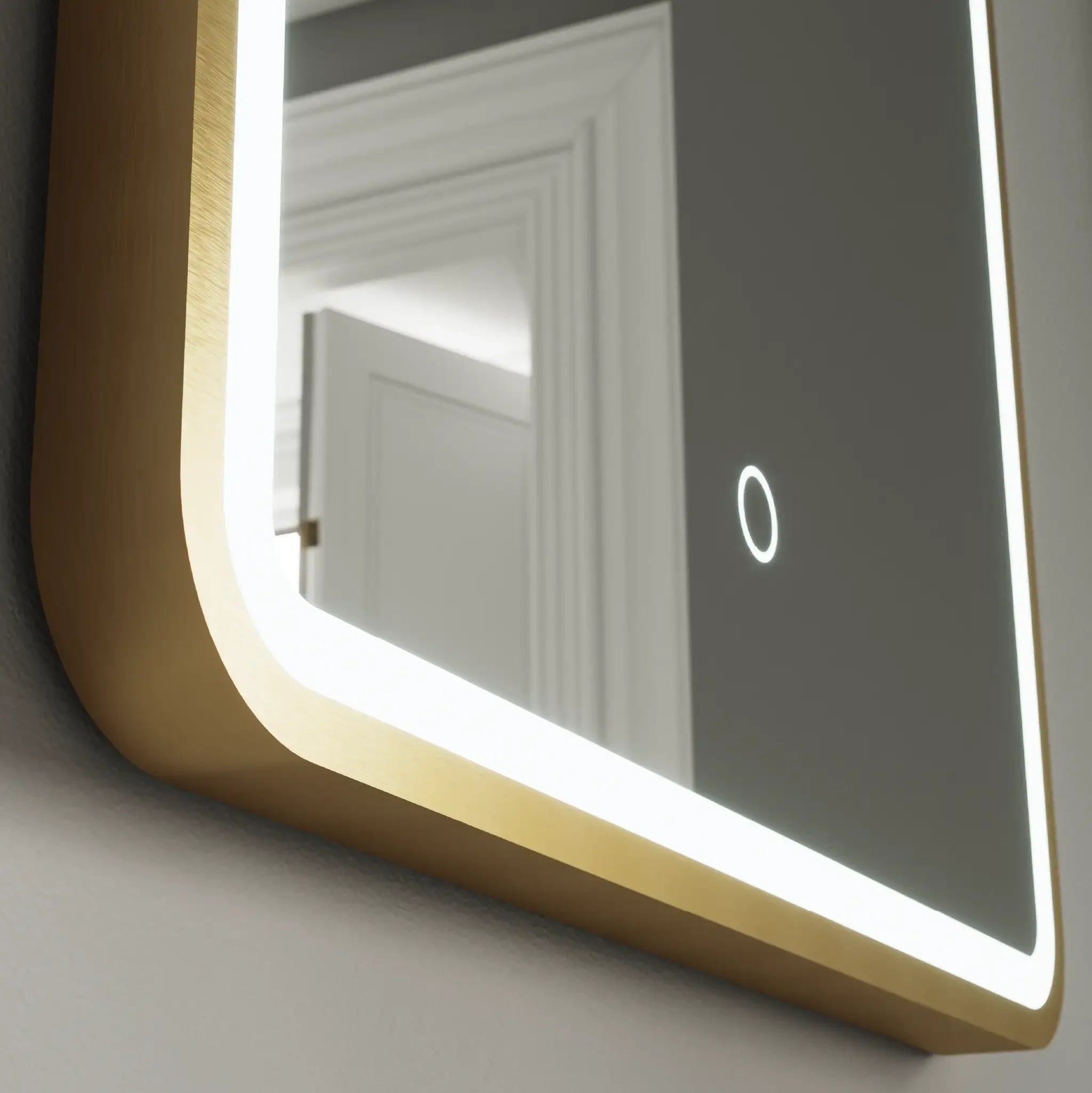
If your mirror includes a touch dimmer — and many quality mirrors do — using it at reduced brightness during lower-demand moments delivers a real saving. Running an LED mirror at 50% brightness does not use exactly 50% of the energy (LED efficiency curves mean the saving is slightly less linear than that), but it gets close. Over a year, the habit of dimming the mirror for a relaxed evening bath rather than running it at full brightness every use adds up.
There is also a comfort argument for dimmers that goes beyond energy. A bathroom at 11pm does not need the same light level as one at 7am. Dimmers let the mirror serve both moments well — and consume only what is needed.
Motion Sensors: Automatic Efficiency
Mirrors with PIR motion sensors offer a different kind of efficiency: they simply turn off when you are not there. The number of times a bathroom light is left on unnecessarily in a busy household is hard to count, but it is not zero. A mirror that switches itself off 60 or 90 seconds after you leave costs nothing to run in your absence.
For family bathrooms, cloakrooms, and en-suites accessed from a shared space, a motion-sensing mirror pays back its slight additional cost quickly through reduced waste. It is also the most friction-free energy saving imaginable — you do not have to think about it at all.
The Anti-Fog Consideration
Some illuminated mirrors include a heated demister pad to prevent the mirror steaming up after a shower. This is a separate electrical element, typically drawing 15 to 20 watts when active, and it is usually controlled independently from the mirror light. Demisters are not inefficient in absolute terms, but it is worth being aware that running a demister for extended periods adds to the running cost of the mirror.
The practical advice is simple: use the demister when you need a clear mirror, not as a permanent setting. Most touch-sensor mirrors make it easy to activate and deactivate separately.
The Overall Picture
An LED illuminated mirror is one of the least expensive electrical items to run in a home. Its energy draw is a fraction of what a traditional bathroom light fitting consumed, and features like dimmers and motion sensors reduce that cost further. For a cost-conscious buyer, energy running cost should be the last thing on the list of concerns — what matters far more is the quality of the light and how long the product lasts.
The upfront investment in a quality mirror pays back in durability, reliability, and the daily pleasure of good light. The running cost is almost incidental.
See the full Pebble Grey range of energy-efficient LED illuminated mirrors — with dimmers, motion sensors, and anti-fog options across every size and style.