Quick answer: Bathroom condensation forms when warm, moist air from a shower or bath meets cold walls, windows and mirrors. The best way to stop it, and the mould that follows, is to remove the moisture at the source. Run an extractor fan while you shower and let it keep running afterwards, keep the door closed while it runs, wipe down wet surfaces and keep the room warm. If mould keeps coming back, get a professional to check for damp.
Why does my bathroom get condensation?
A hot shower or bath fills the air with water vapour. When that warm, damp air touches something cooler, such as a window, a tiled wall or the mirror, it cools and turns back into water droplets. Bathrooms are small and steamy, and they often have cold outside walls, so condensation forms quickly. If the moisture is left to sit, it soaks into paint, grout and sealant, and that is where black mould starts.
How does an extractor fan stop condensation?
An extractor fan pulls the moist air out of the room and sends it outside before it can settle on cold surfaces. It works best when it is the right size for the room. Work out your bathroom's volume (length × width × height in metres) and multiply by 7 to get the airflow you need in cubic metres an hour. In England, Building Regulations set a minimum of 15 litres a second (54m³/hr) for a bathroom fan. Our guide to choosing a bathroom extractor fan explains sizing, axial and inline fans in more detail.
How long should I run my bathroom fan after a shower?
Keep it running until the steam has cleared, not just while the water is on. A run timer does this for you, so the fan carries on after you switch off the light and leave. Every Ventus fan has a run timer, set at installation between 2 and 30 minutes. If the mirror and windows are still wet when the fan stops, ask your electrician to set a longer run time.
Does a demister mirror help with condensation?
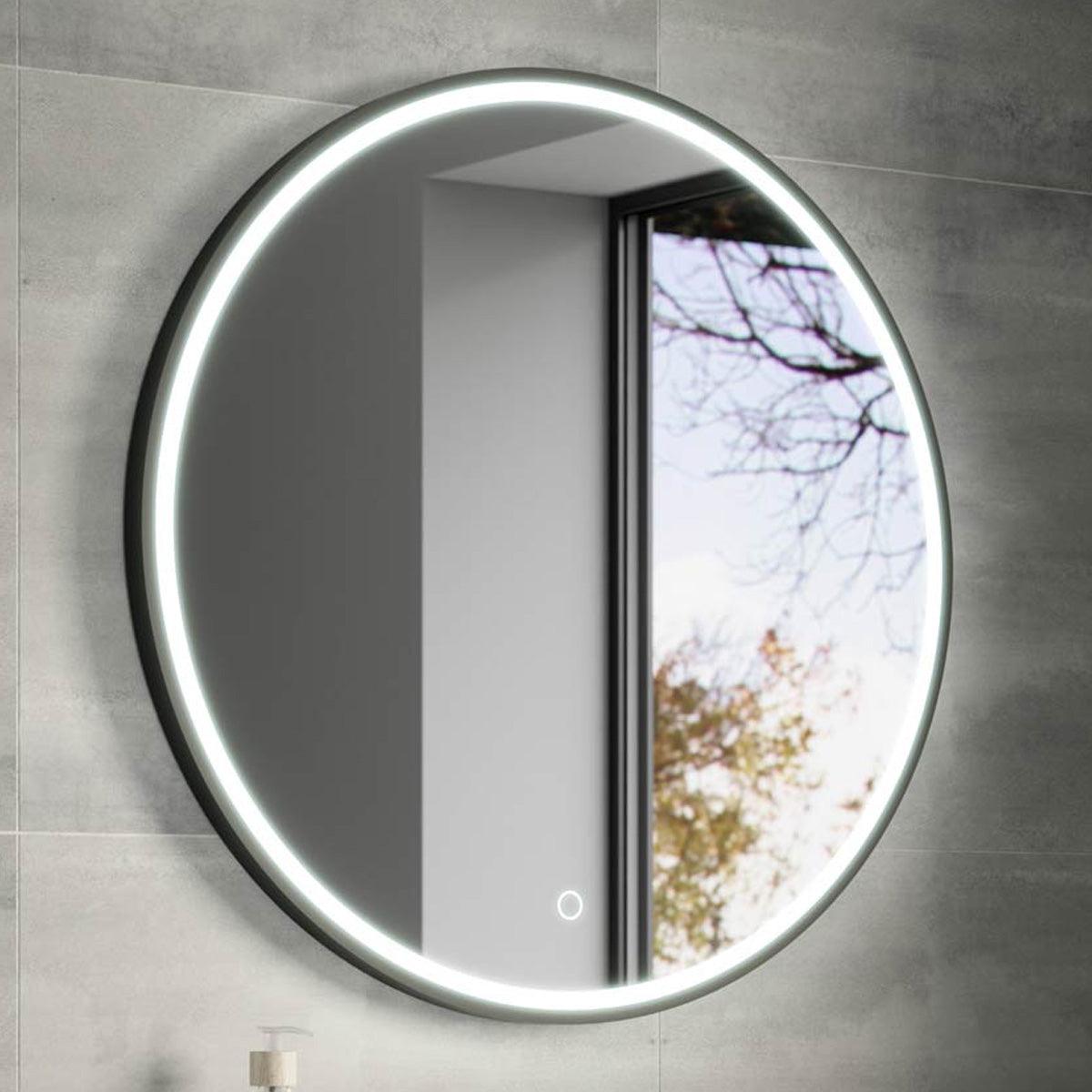
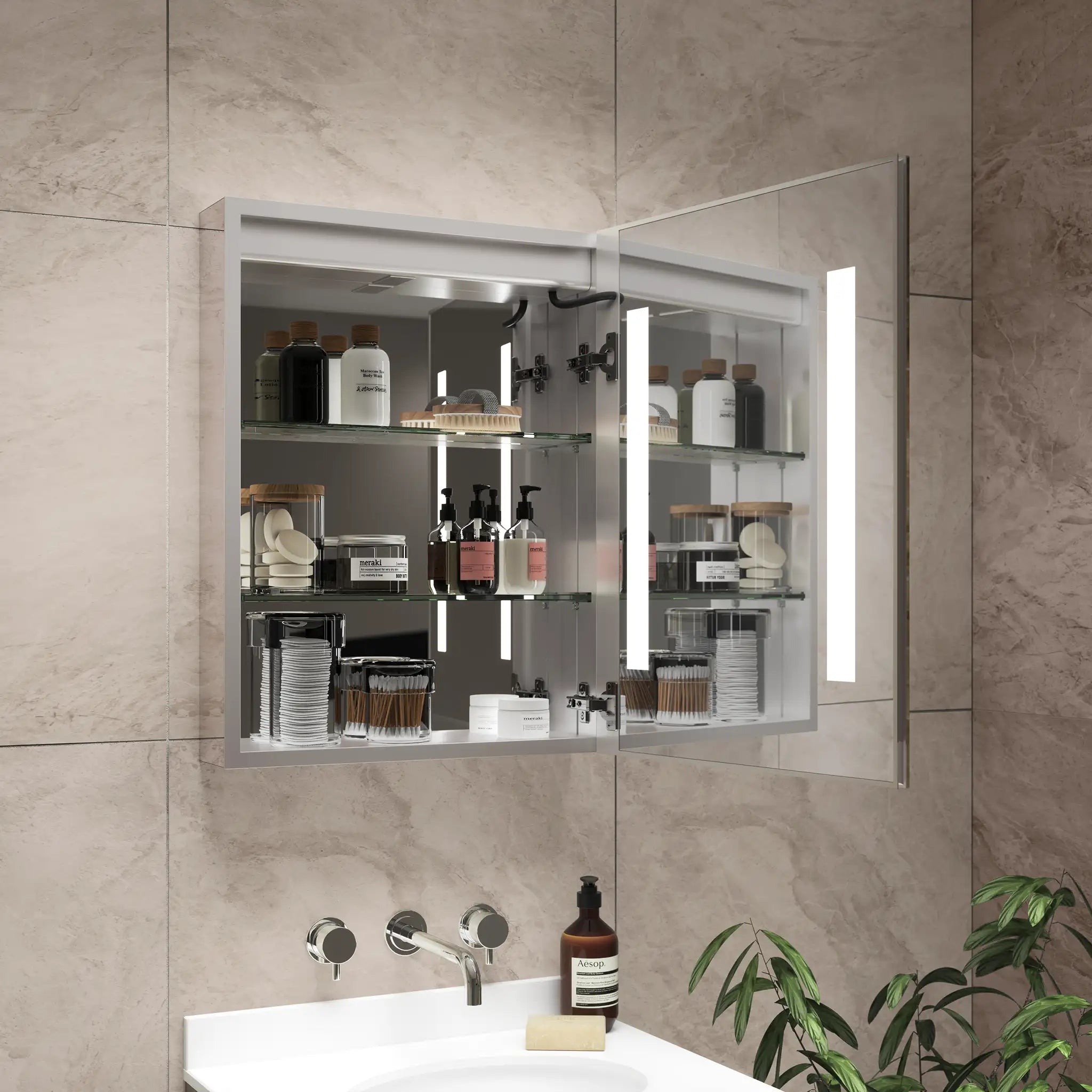
A demister pad warms the mirror glass so it stays clear of steam, which means you can use the mirror straight after a shower. It does not remove moisture from the room, so it works alongside an extractor fan rather than instead of one. On our LED mirrors and cabinets the demister comes on with the lights. Find out more in do I need a demister pad on my bathroom mirror?
What else helps stop condensation and mould?
- Keep the door closed while the fan runs, so it draws the moist air outside rather than pushing it round the house.
- Open the window after your shower if you have one, as well as running the fan.
- Wipe down the shower screen, tiles and windows with a squeegee or towel to take away water the fan can't reach.
- Keep the room warm. Warmer walls and windows attract less condensation, so keep the heating or towel rail on in cold weather.
- Hang wet towels to dry where air can move around them, and keep the fan grille clean so it works properly.
| Cause | What helps | Pebble Grey product |
|---|---|---|
| Steam from showers and baths | Run an extractor fan during and after | Ventus extractor fans |
| Fan stops before the steam clears | A longer run time, set by your electrician | Ventus run timer, 2 to 30 minutes |
| Damp air spreading round the house | Keep the door closed while the fan runs | Any fan with a run timer |
| Mirror steams up | Warm the glass | Demister mirrors |
| Cold walls and windows | Keep the room warm | No product needed |
| Water left on tiles and screens | Wipe down after each use | No product needed |
When is condensation a sign of a bigger problem?
If mould comes back soon after cleaning, or you notice damp patches, a musty smell, peeling plaster or stains spreading across a wall or ceiling, the cause may be more than shower steam. A leak, damp coming through the walls or a blocked fan duct can all be to blame. Get a professional, such as a damp specialist or builder, to check. If your fan seems weak, clean the grille first, then ask an electrician to check it.