Quick answer: The best place for bathroom wall lights is either side of the mirror, at roughly face height, so light falls evenly across your face with no shadows. Choose IP44 or higher for a bathroom, and IP65 if the light will be close to a bath or shower. A sconce is simply a single wall light, often with a glass shade.
- Shop all bathroom wall lights
- Single shaded lights: bathroom sconces
- Light washing up and down the wall: up and down wall lights
Register free within 30 days of purchase to extend the guarantee on our bathroom lights to 5 years. 12 months as standard.
Wall lights do a job a ceiling light can't. A light directly overhead casts shadows under your eyes and chin, which is exactly what you don't want when you're shaving or doing your make-up. Lights on the wall beside the mirror light your face from the front and sides instead. They also add a softer, hotel-style glow in the evening.
Where should bathroom wall lights go?
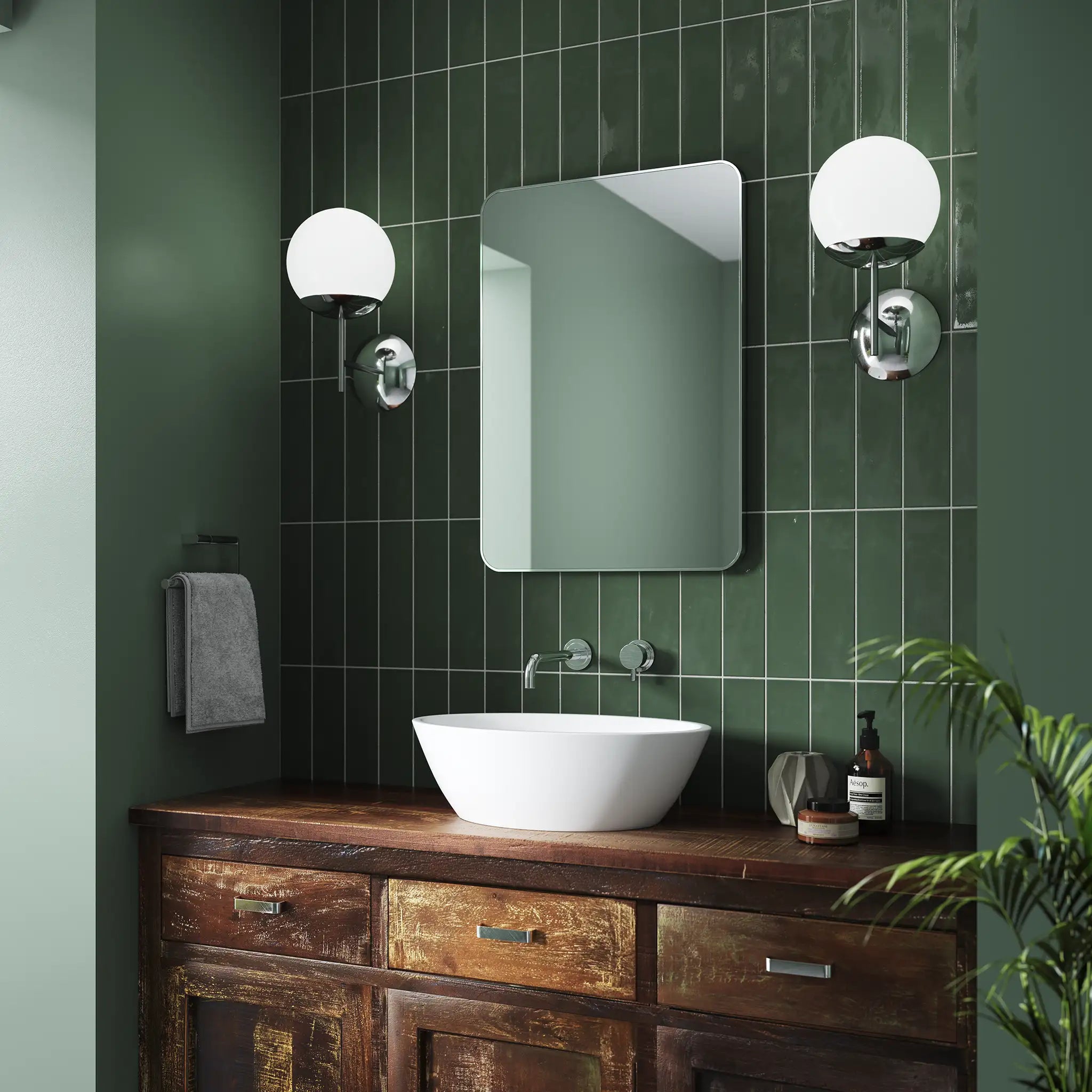
The most useful position is one light either side of the mirror, at about face height for the people who use it most. This lights both sides of your face evenly. Over a wide mirror or a double basin, you can add a third light or use a single linear light above the mirror instead. Wall lights also work on their own walls, for example beside a bath, to add a gentle background light for relaxing.
What IP rating should a bathroom wall light have?
Choose at least IP44, which protects against splashes from any direction. If the light will sit close to the bath or shower, choose IP65, which protects against water jets. Most of our wall lights are IP44, and the Ava up and down wall light is IP65. Our guide to bathroom zones and IP ratings explains how close counts as close, and your electrician will confirm the zones in your room.
What is a sconce?
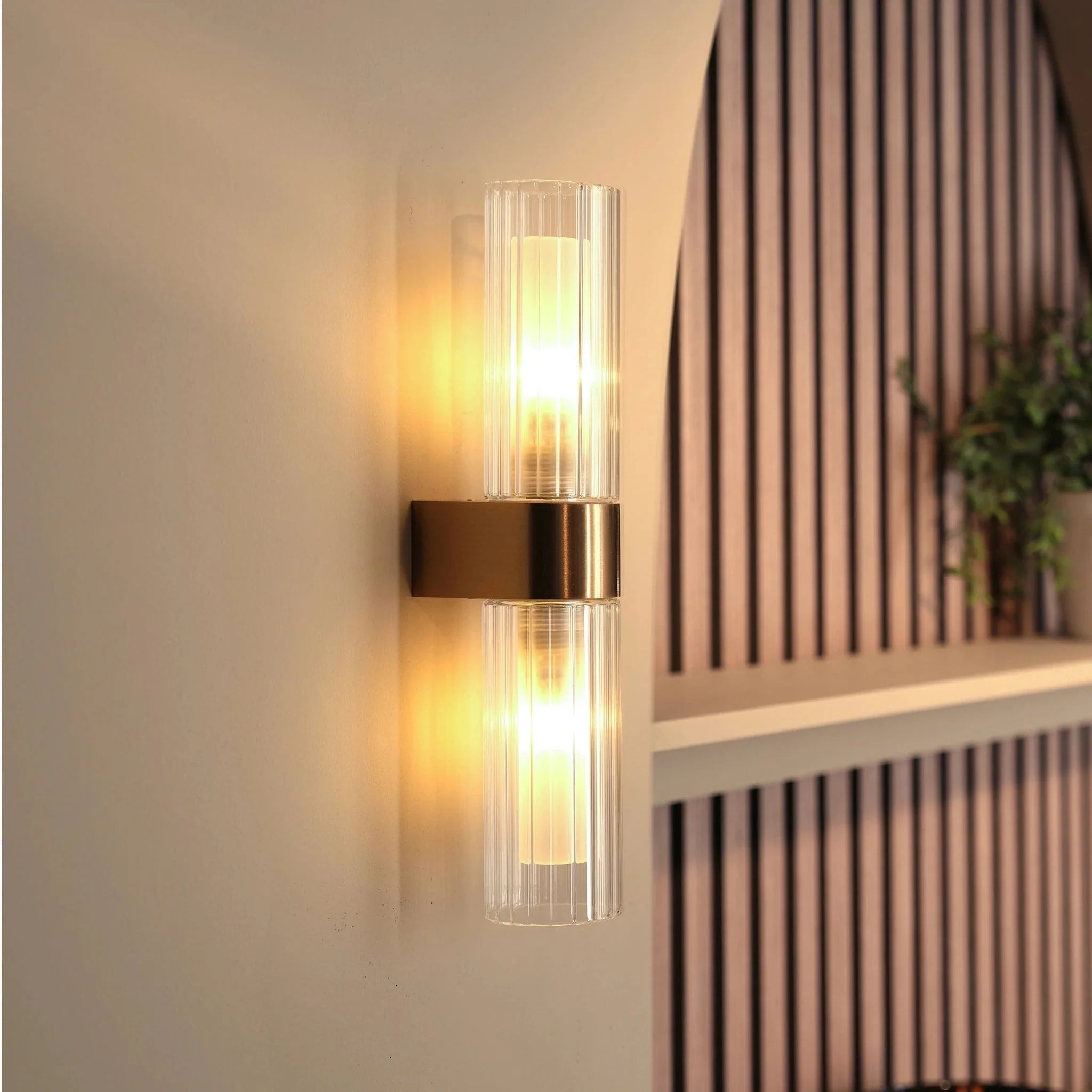
A sconce is a wall light, usually a single fitting with a shade or glass that softens the light. In a bathroom, sconces either side of a mirror give a classic, hotel-style look. Our bathroom sconces include the Solara globe with opal glass, the ribbed-glass Aulos and the Astrae.
Up and down wall lights or a single shade?
- Up and down wall lights wash light both above and below the fitting. They look striking on a plain or tiled wall and suit modern bathrooms. Examples: Edge, Ava and Aulos double.
- Single shaded wall lights (sconces) give a softer, more traditional glow and suit classic or transitional bathrooms.
Can I match wall lights to my ceiling lights?
Yes. Several of our ranges come as matching families, so your wall lights and ceiling lights share the same design and finish. See our lighting families, including Astrae, Aulos, Edge, Hila, Odell and Solara, in black, brass and chrome.
What bulbs do bathroom wall lights use?
It depends on the light. The Solara, Aulos and Astrae take G9 bulbs, so you choose warm, natural or cool white when you buy the bulb. The Edge has built-in LEDs that switch between natural and warm white. Each product page shows the bulb type.
Wall lights or an illuminated mirror?
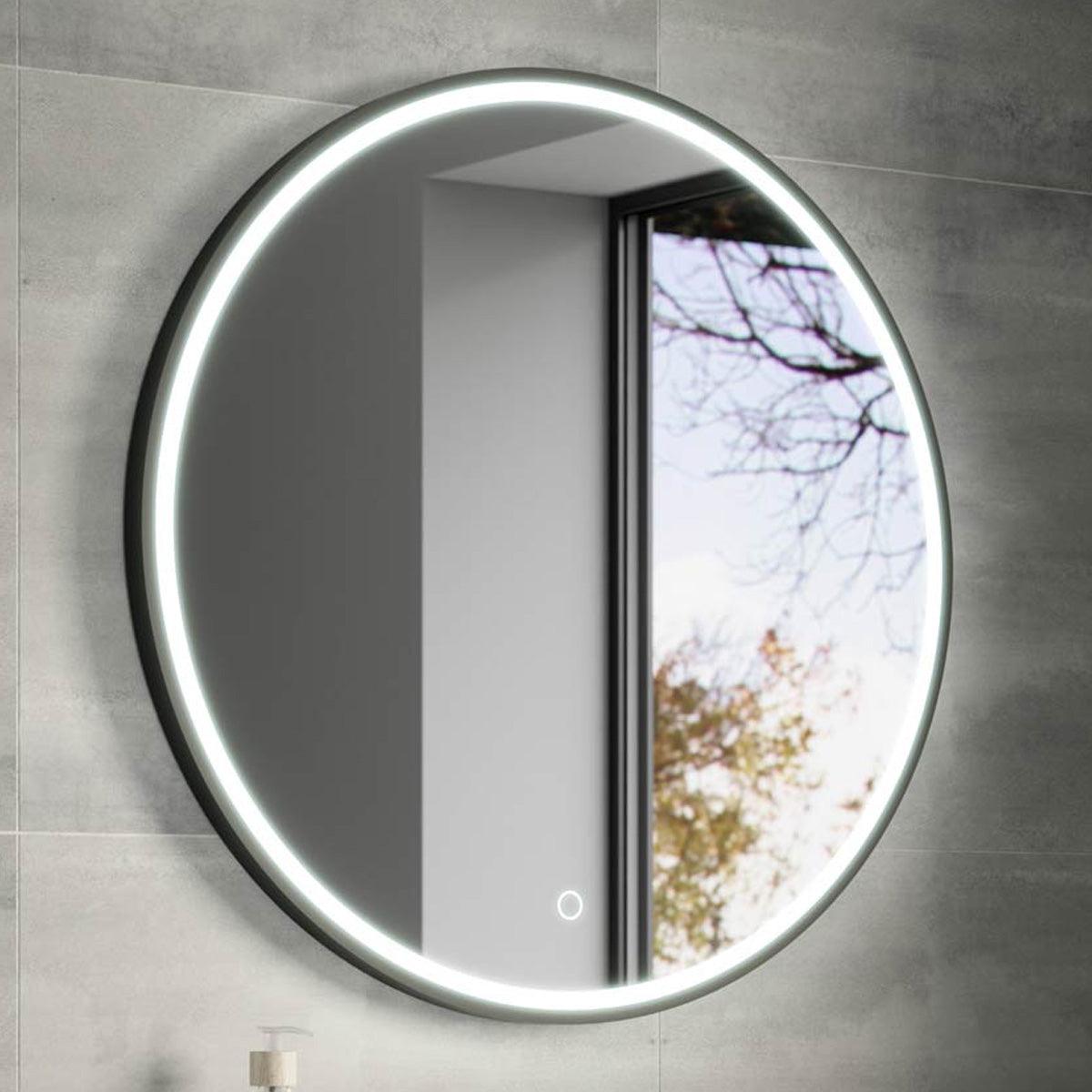
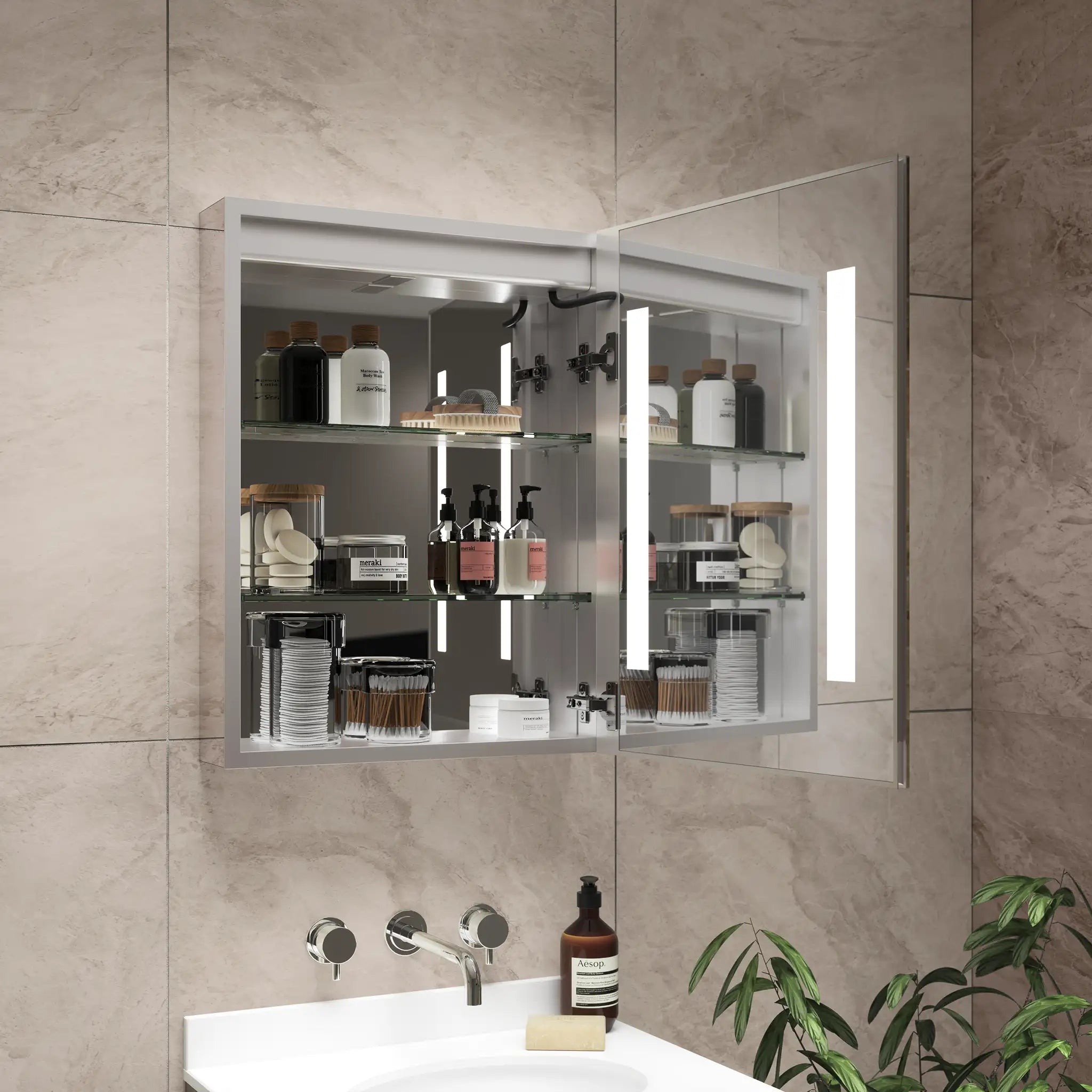
Both light your face from the front. An illuminated mirror is the simpler choice in a small bathroom because it needs only one fitting. Wall lights give you more freedom over the mirror style and add more decorative light to the room. Some people use both: a lit mirror for the task light and wall lights for atmosphere.
Do I need an electrician to fit wall lights?
Yes. Bathroom wall lights are wired into the mains and must be fitted by a qualified electrician in line with Part P of the Building Regulations. Our guarantee also requires it.
What guarantee do your wall lights come with?
Every light comes with 12 months' cover as standard. Register free within 30 days of purchase and it extends to 5 years. Register your guarantee here.
Next steps: shop bathroom wall lights, or read our full bathroom lights buyer's guide.