Quick answer: Choose a mirror cabinet if you need storage at the basin, especially in a family bathroom or a small room with little shelf space. Choose a mirror if you already have storage, want a larger or shaped mirror (round, arched or very wide), or want the most light across your face. Both can have LED lighting, a demister and a shaver socket.
One of the most common questions people ask when refitting a bathroom or freshening up a tired space is a surprisingly simple one: should I get a mirror, or a cabinet? It sounds straightforward, but the answer depends on more than just personal taste. Storage, space, your existing lighting, and the kind of bathroom you have all play a role — and once you've worked through those factors, the decision usually becomes obvious.
What's the difference between a bathroom mirror and a mirror cabinet?
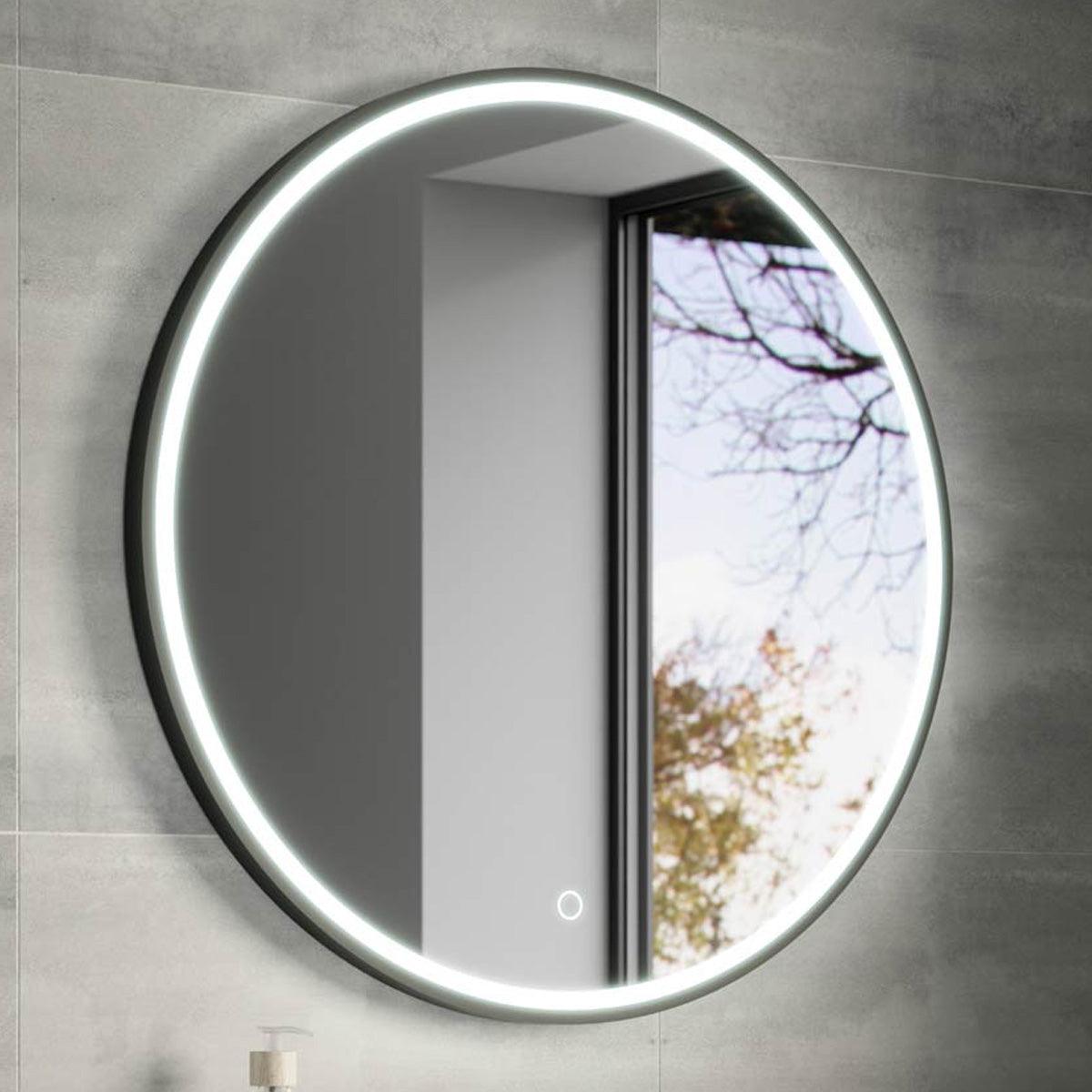
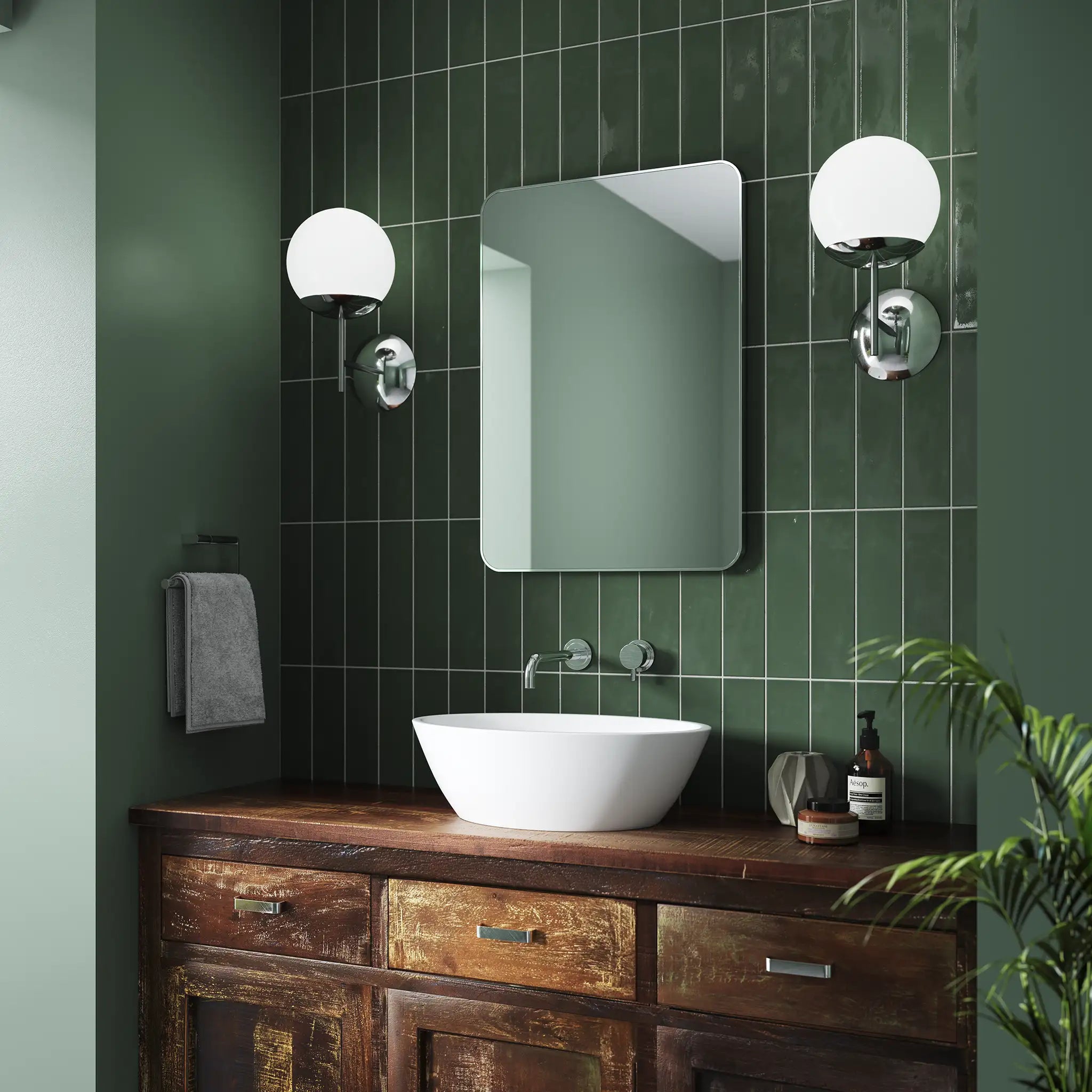
An illuminated bathroom mirror is exactly what it sounds like: a sleek, wall-mounted pane of glass with integrated LED lighting, and often additional features like a demister pad, dimmable controls, or motion sensor activation. There's no storage — just a high-quality reflective surface with excellent light.
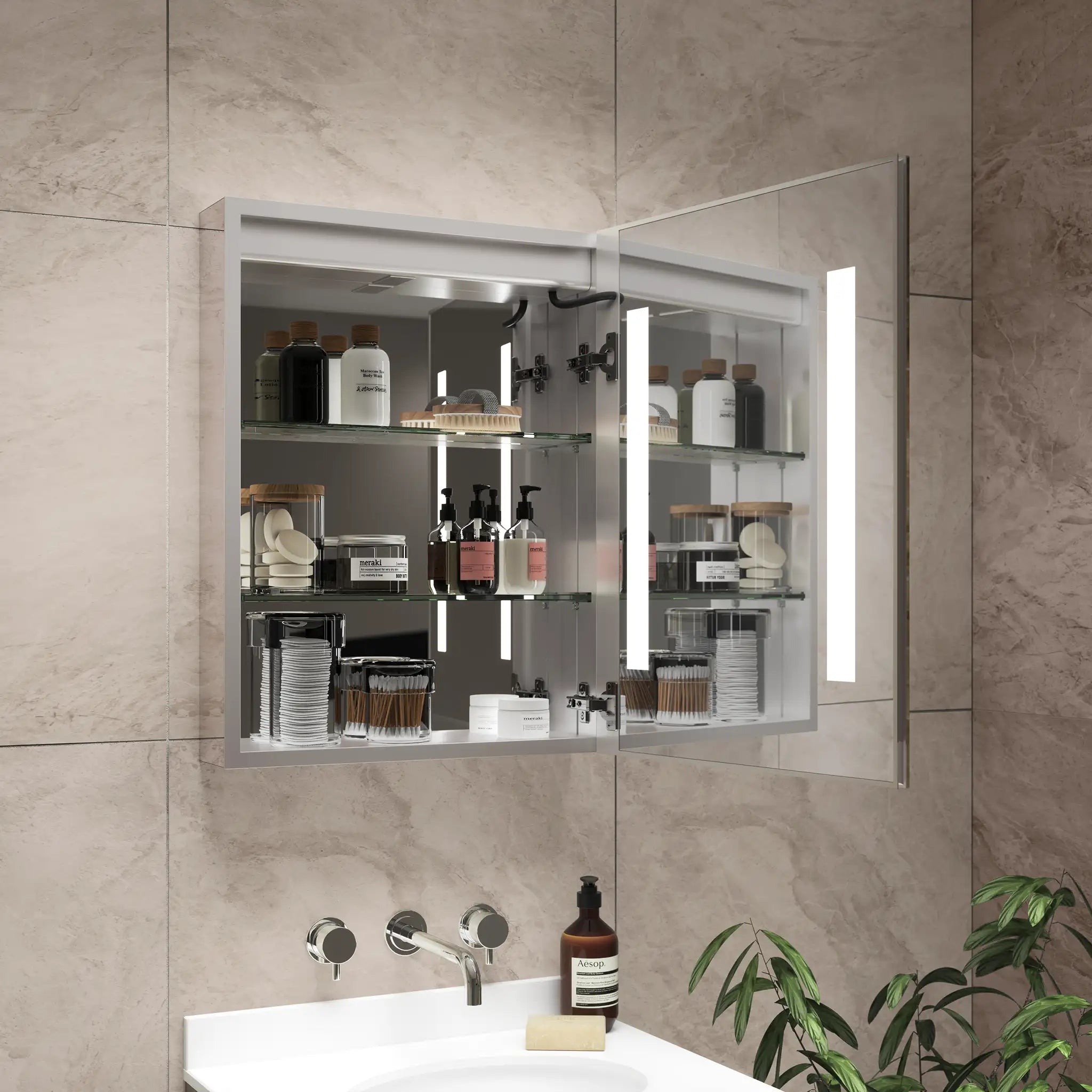
A mirror cabinet combines that reflective surface with concealed storage behind the doors. The front is mirrored, so from across the room it looks much like a standard mirror. Open the door, and you'll find shelves for everything from skincare products to spare toothbrushes.
Both can be illuminated, and both can include features like shaver sockets and anti-condensation demister pads. The question is which one solves your problem better.
Do I need the storage of a cabinet?
This is the most useful place to begin. Ask yourself: where does your bathroom clutter currently live? If the answer is "scattered across the basin surround, the windowsill, and a shelf that's running out of space," a mirror cabinet is almost certainly the right move. It folds your storage and your mirror into a single unit on the wall, which is particularly valuable in bathrooms where floor and surface space is limited.
If, on the other hand, you already have adequate storage — a vanity unit, a separate bathroom cabinet elsewhere, or simply the discipline to keep things minimal — then a pure mirror may serve you better.
Without the door mechanism and the cabinet body, mirrors can be made slimmer, wider, or in shapes that a cabinet cannot easily match. Arched mirrors, large circular mirrors, and very wide landscape mirrors are all more practical as mirror-only designs.
How much wall space does a mirror cabinet need?
A standard illuminated mirror can range from a modest 500mm wide to well over a metre across. Because there's no door swing to worry about, you can position it precisely above a basin without needing extra clearance on either side.
Mirror cabinets need a little more thought. Single-door cabinets hinge to one side, so you'll want enough clear space for the door to open fully — roughly the same width as the cabinet again. Double-door cabinets open symmetrically, which works well in the middle of a wall. If your basin sits close to a wall or a towel rail, check the hinge direction before you buy.
Recessed cabinets are worth mentioning here too, because they offer a particularly elegant solution in tight spaces. Rather than sitting proud of the wall, a recessed cabinet is set into a void in the plasterboard, giving you the same storage but with a flush, almost architectural finish. They require a bit more preparation at installation stage, but the result feels built-in. See our guide to recessed bathroom cabinets.
Which gives better light, a mirror or a cabinet?
One often-overlooked reason to choose a mirror over a cabinet is lighting quality. A large illuminated mirror — particularly a wide, landscape-format one — can provide a sweeping band of evenly distributed light across the face, which is difficult to match with a cabinet of the same width.
If you're fitting out a bathroom from scratch, or planning to reconfigure your main bathroom lighting at the same time, you have more flexibility. But if your ceiling lighting is already doing a reasonable job and you mainly want to improve the mirror position and add a demister, a cabinet with integrated LEDs will serve you well.
Which suits a family bathroom, en-suite or cloakroom?
For a family bathroom, a double-door cabinet almost always wins. The storage is invaluable when multiple people are sharing one space, and the ability to organise shelves by person or by product type makes a real difference to how smooth the morning routine feels.
For an en-suite, the choice is more personal. Many people opt for an illuminated mirror because the en-suite is primarily their own space and they prefer the clean, open look. Others appreciate having a cabinet to keep toiletries out of the bedroom entirely.
For a cloakroom or downstairs WC, a compact single-door cabinet is often the smartest call — it keeps hand soap, a spare toilet roll, and a few basics neatly hidden, without overwhelming a small space.
Related reading
- LED mirror not working? Quick checks and fixes
- 6 black bathroom mirrors you need to see
- The most flattering colours, lights and mirrors for your home
- Shaving tips for a better shave
- Why does breaking a mirror bring bad luck?
Ready to Browse?
Once you know which direction suits your bathroom, choosing the right model becomes much more enjoyable. Every LED mirror and cabinet comes with 12 months' cover as standard, extended free to a 10-year guarantee when you register within 30 days, and comes with free next-day delivery. Browse illuminated mirrors or explore the cabinet range to find the right fit for your space.